


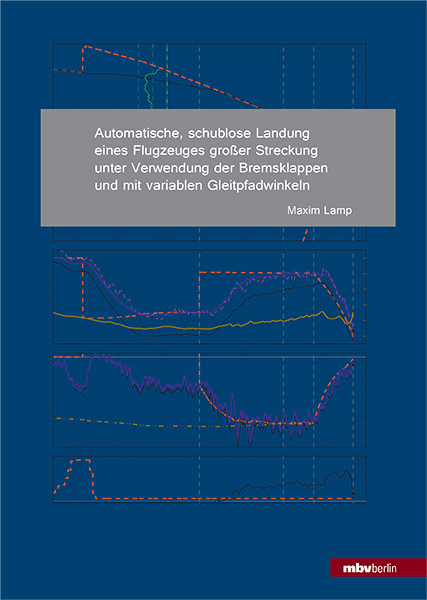
Automatische, schublose Landung eines Flugzeuges großer Streckung unter Verwendung der Bremsklappen und mit variablen Gleitpfadwinkeln
Seiten
2015
|
1., Aufl.
Mensch & Buch (Verlag)
978-3-86387-665-4 (ISBN)
Mensch & Buch (Verlag)
978-3-86387-665-4 (ISBN)
- Keine Verlagsinformationen verfügbar
- Artikel merken
In this thesis a special landing procedure and the associated flight control functions are described that allow full automatic landings without using the thrust. While in existing automatic landings thrust is required, the here presented method corresponds with an automatic landing of a glider.
Compared to existing automatic landing methods, in which a glide slope with a constant glide slope angle is used, the glide slope angle and the glide slope are here l adapted to the prevailing wind conditions.
It is adjusted in that way, that the approach along the glide slope can be done without thrust. Instead of using the thrust, the airbrakes in combination with the elevator are used as control elements to control the longitudinal motion of the aircraft.
At landing approaches without wind the used glide slope is already relative steep. At headwind conditions it becomes steeper, at tailwind it flattens. Due to continuous changing wind conditions it becomes bended.
The functions and algorithms are described for the longitudinal motion of the aircraft and for the individual phases of the automatic landing: for the approach towards the glide slope, the approach along the glide slope and the flare.
Without thrust the approach towards the glide slope is done by using the best glide speed. This is calculated by using the wind speed, which is calculated in the flight control functions.
Then the aircraft sinks to the runway along an adapted glide slope, as described above.
During the flare the height and the air speed are controlled at the same time. For the vertical flare path time dependent algorithms and algorithms depending on the distance to the runway threshold are compared. Afterwards a time dependent flare algorithm is elected.
For the control of the longitudinal motion of the aircraft the TECS (Total Energy Control System) is used. It was introduced in [Lam83]. Here it is modified and extended. Extensions are among other things the control of the airbrakes and the compensation of the lift changing, which occurs as a result of airbrake deflections. The modified TECS is used in all phases of the landing, especially also during the flare to control the vertical path and the air speed at the same time by using the airbrakes in combination with the elevator.
The presented flight control functions are a part of a complete flight control system, which was developed in the project LAPAZ2 for the demonstrator aircraft STEMME S15 of the company Stemme.
They have been successfully tested and validated in simulations and in test flights. Based on these results the controlled behavior of the aircraft is presented and discussed. In der vorliegenden Arbeit werden ein spezielles Landeverfahren und die dazugehörigen Flugregelungsfunktionen beschrieben, mit denen vollautomatische Landungen ohne vorhandenen Schub möglich sind. Während existierende automatische Landungen nach Art einer Schleppgaslandung erfolgen und bei Bedarf Schub verwendet wird, entspricht das hier vorgestellte Verfahren einer automatischen Segelfluglandung.
Im Vergleich zu bestehenden automatischen Landeverfahren, bei denen ein Gleitpfad mit konstantem Gleitpfadwinkel vorgegeben wird, wird hier der Gleitpfadwinkel an die vorherrschenden Windbedingungen angepasst. Die Anpassung erfolgt in der Art, dass auch bei Landungen mit Gegenwind kein Schub notwendig ist. Statt des Schubes werden die Bremsklappen in Kombination mit dem Höhenruder als Stellelemente zur Regelung des Flugzeuges in der Längsbewegung verwendet. Bereits bei Anflügen ohne Wind wird ein relativ steiler Gleitpfad vorgegeben, der bei Gegenwind steiler und bei Rückenwind abgeflacht wird. Bei sich ändernden Windbedingungen resultiert ein gekrümmter Gleitpfad.
Es werden die Funktionen und Algorithmen für die automatische Landung für die Längsbewegung des Flugzeuges und für die einzelnen Phasen des Anfluges bis zum Gleitpfad, den Flug entlang des Gleitpfades und das Abfangen beschrieben.
Der Anflug bis zum Gleitpfad erfolgt ohne Schub mit der Geschwindigkeit des besten Gleitens. Die zur Bestimmung der Geschwindigkeit des besten Gleitens notwendigen Komponenten der Windgeschwindigkeit werden mit den an Board des Flugzeuges zur Verfügung stehenden Sensoren berechnet.
Das Sinken bis zur Landebahn erfolgt anschließend, wie oben beschrieben, entlang eines an den Wind angepassten, variablen Gleitpfades.
Im Abfangen erfolgt eine Höhenregelung. Es werden zeitlich und räumlich definierte Abfangalgorithmen für die Vertikalbewegung verglichen und für die Regelung ein zeitlich definierter Höhenverlauf gewählt. Während des Abfangens wird ebenfalls die Geschwindigkeit geregelt.
Für die Regelung der Bahn des Flugzeuges in der Längsbewegung wird das in [Lam83] vorgestellte TECS (Total Energy Control System) aufgegriffen, modifiziert und erweitert. Erweiterungen sind unter anderem die Ansteuerung der sowie eine Funktion zur Kompensation der Auftriebsänderung infolge des Verstellens der Bremsklappen. Das modifizierte TECS wird in allen Phasen der Landung verwendet, insbesondere auch während des Abfangens, wobei die Vertikalbewegung des Flugzeuges und die Fluggeschwindigkeit gleichzeitig und unter Verwendung der Bremsklappen und des Höhenruders geregelt werden.
Die vorgestellten Flugregelungsfunktionen sind Bestandteil eines kompletten Flugregelungssystems, welches im Projekt LAPAZ1 für das Versuchsflugzeug STEMME S15 der Firma Stemme entwickelt wurde. Sie wurden in Flugversuchen erfolgreich erprobt und validiert. Anhand von Flugversuchsergebnissen sowie Simulationsergebnissen werden das geregelte Verhalten des Flugzeuges dargestellt und diskutiert sowie Verbesserungspotenzial genannt.
Compared to existing automatic landing methods, in which a glide slope with a constant glide slope angle is used, the glide slope angle and the glide slope are here l adapted to the prevailing wind conditions.
It is adjusted in that way, that the approach along the glide slope can be done without thrust. Instead of using the thrust, the airbrakes in combination with the elevator are used as control elements to control the longitudinal motion of the aircraft.
At landing approaches without wind the used glide slope is already relative steep. At headwind conditions it becomes steeper, at tailwind it flattens. Due to continuous changing wind conditions it becomes bended.
The functions and algorithms are described for the longitudinal motion of the aircraft and for the individual phases of the automatic landing: for the approach towards the glide slope, the approach along the glide slope and the flare.
Without thrust the approach towards the glide slope is done by using the best glide speed. This is calculated by using the wind speed, which is calculated in the flight control functions.
Then the aircraft sinks to the runway along an adapted glide slope, as described above.
During the flare the height and the air speed are controlled at the same time. For the vertical flare path time dependent algorithms and algorithms depending on the distance to the runway threshold are compared. Afterwards a time dependent flare algorithm is elected.
For the control of the longitudinal motion of the aircraft the TECS (Total Energy Control System) is used. It was introduced in [Lam83]. Here it is modified and extended. Extensions are among other things the control of the airbrakes and the compensation of the lift changing, which occurs as a result of airbrake deflections. The modified TECS is used in all phases of the landing, especially also during the flare to control the vertical path and the air speed at the same time by using the airbrakes in combination with the elevator.
The presented flight control functions are a part of a complete flight control system, which was developed in the project LAPAZ2 for the demonstrator aircraft STEMME S15 of the company Stemme.
They have been successfully tested and validated in simulations and in test flights. Based on these results the controlled behavior of the aircraft is presented and discussed. In der vorliegenden Arbeit werden ein spezielles Landeverfahren und die dazugehörigen Flugregelungsfunktionen beschrieben, mit denen vollautomatische Landungen ohne vorhandenen Schub möglich sind. Während existierende automatische Landungen nach Art einer Schleppgaslandung erfolgen und bei Bedarf Schub verwendet wird, entspricht das hier vorgestellte Verfahren einer automatischen Segelfluglandung.
Im Vergleich zu bestehenden automatischen Landeverfahren, bei denen ein Gleitpfad mit konstantem Gleitpfadwinkel vorgegeben wird, wird hier der Gleitpfadwinkel an die vorherrschenden Windbedingungen angepasst. Die Anpassung erfolgt in der Art, dass auch bei Landungen mit Gegenwind kein Schub notwendig ist. Statt des Schubes werden die Bremsklappen in Kombination mit dem Höhenruder als Stellelemente zur Regelung des Flugzeuges in der Längsbewegung verwendet. Bereits bei Anflügen ohne Wind wird ein relativ steiler Gleitpfad vorgegeben, der bei Gegenwind steiler und bei Rückenwind abgeflacht wird. Bei sich ändernden Windbedingungen resultiert ein gekrümmter Gleitpfad.
Es werden die Funktionen und Algorithmen für die automatische Landung für die Längsbewegung des Flugzeuges und für die einzelnen Phasen des Anfluges bis zum Gleitpfad, den Flug entlang des Gleitpfades und das Abfangen beschrieben.
Der Anflug bis zum Gleitpfad erfolgt ohne Schub mit der Geschwindigkeit des besten Gleitens. Die zur Bestimmung der Geschwindigkeit des besten Gleitens notwendigen Komponenten der Windgeschwindigkeit werden mit den an Board des Flugzeuges zur Verfügung stehenden Sensoren berechnet.
Das Sinken bis zur Landebahn erfolgt anschließend, wie oben beschrieben, entlang eines an den Wind angepassten, variablen Gleitpfades.
Im Abfangen erfolgt eine Höhenregelung. Es werden zeitlich und räumlich definierte Abfangalgorithmen für die Vertikalbewegung verglichen und für die Regelung ein zeitlich definierter Höhenverlauf gewählt. Während des Abfangens wird ebenfalls die Geschwindigkeit geregelt.
Für die Regelung der Bahn des Flugzeuges in der Längsbewegung wird das in [Lam83] vorgestellte TECS (Total Energy Control System) aufgegriffen, modifiziert und erweitert. Erweiterungen sind unter anderem die Ansteuerung der sowie eine Funktion zur Kompensation der Auftriebsänderung infolge des Verstellens der Bremsklappen. Das modifizierte TECS wird in allen Phasen der Landung verwendet, insbesondere auch während des Abfangens, wobei die Vertikalbewegung des Flugzeuges und die Fluggeschwindigkeit gleichzeitig und unter Verwendung der Bremsklappen und des Höhenruders geregelt werden.
Die vorgestellten Flugregelungsfunktionen sind Bestandteil eines kompletten Flugregelungssystems, welches im Projekt LAPAZ1 für das Versuchsflugzeug STEMME S15 der Firma Stemme entwickelt wurde. Sie wurden in Flugversuchen erfolgreich erprobt und validiert. Anhand von Flugversuchsergebnissen sowie Simulationsergebnissen werden das geregelte Verhalten des Flugzeuges dargestellt und diskutiert sowie Verbesserungspotenzial genannt.
| Erscheinungsdatum | 04.11.2016 |
|---|---|
| Verlagsort | Berlin |
| Sprache | deutsch |
| Einbandart | gebunden |
| Themenwelt | Technik ► Luft- / Raumfahrttechnik |
| Schlagworte | Bremsklappen • Flugregelungsfunktionen • Landeverfahren • schublose Landung • variable Gleitpfadwinkel |
| ISBN-10 | 3-86387-665-2 / 3863876652 |
| ISBN-13 | 978-3-86387-665-4 / 9783863876654 |
| Zustand | Neuware |
| Informationen gemäß Produktsicherheitsverordnung (GPSR) | |
| Haben Sie eine Frage zum Produkt? |
Mehr entdecken
aus dem Bereich


aus dem Bereich
Prozessautomatisierung, Bioverfahrenstechnik, Advanced Process …
Buch | Softcover (2025)
De Gruyter Oldenbourg (Verlag)
CHF 76,90
Grundlagen, Mathematik, Kartenkunde, leistungsbasierte Navigation
Buch | Softcover (2022)
De Gruyter Oldenbourg (Verlag)
CHF 102,10
Learning-Based BI-Level Models and Algorithms
Buch | Softcover (2025)
De Gruyter (Verlag)
CHF 125,90


