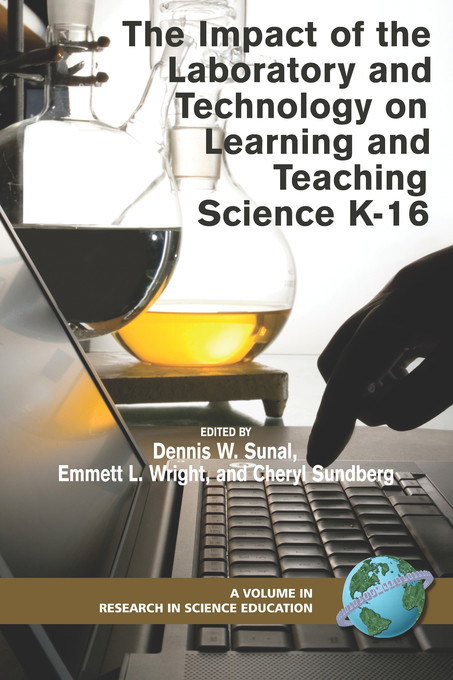
The Impact of the Laboratory and Technology on K-12 Science Learning and Teaching examines the development, use, and influence of active laboratory experiences and the integration of technology in science teaching. This examination involves the viewpoints of policymakers, researchers, and teachers that are expressed through research involving original documents, interviews, analysis and synthesis of the literature, case studies, narrative studies, observations of teachers and students, and assessment of student learning outcomes. Volume 3 of the series, Research in Science Education, addresses the needs of various constituencies including teachers, administrators, higher education science and science education faculty, policymakers, governmental and professional agencies, and the business community.The guiding theme of this volume is the role of practical laboratory work and the use of technology in science learning and teaching, K-16. The volume investigates issues and concerns related to this theme through various perspectives addressing design, research, professional practice, and evaluation. Beginning with definitions, the historical evolution and policy guiding these learning experiences are explored from several viewpoints. Effective design and implementation of laboratory work and technology experiences is examined for elementary and high school classrooms as well as for undergraduate science laboratories, informal settings, and science education courses and programs. In general, recent research provides evidence that students do benefit from inquirybased laboratory and technology experiences that are integrated with classroom science curricula. The impact and status of laboratory and technology experiences is addressed by exploring specific strategies in a variety of scientific fields and courses. The chapters outline and describe in detail researchbased best practices for a variety of settings.
Cover 1
Contents 5
Preface to the Series 7
Preface 9
Acknowledgements 11
Chapter 1. The Importance of Laboratory Work and Technology in Science Teaching 13
Part I - Development and Use of Science Laboratory Work in Learning and Teaching 41
Introduction 43
Chapter 2. Design Principles for Effective Laboratory Instruction 47
Chapter 3. The Use of Specialized Facilities for Laboratory Science Instruction in Elementary Schools 69
Part II - the Status and Impact of Laboratory Work in Learning and Teaching Science 83
Introduction 85
Chapter 4. Long-Term Laboratory Inquiry: Promoting Understanding of Ecology 89
Chapter 5. Students' Perceptions of the Science Laboratory Learning Enviroment 123
Chapter 6. Investigating Process-Based Writing in Chemistry Laboratories 147
Chapter 7. The Effect of the VEE Heuristic on Students' Meaningful Learning in Physics Laboratories 179
Part III - The Status and Impact of Technology Integration in Learning and Teaching Science 213
Introduction 215
Chapter 8. Integrating Technology into a Science Classroom: An Evaluation of Inquiry-Based Technology Integration 219
Chapter 9. Impact of Technology on Informal Science Learning 251
Chapter 10. The Impact of Technology on Science Preservice Preparation and Inservice Professional Development 279
About the Authors 301
| Erscheint lt. Verlag | 1.2.2008 |
|---|---|
| Sprache | englisch |
| Themenwelt | Schulbuch / Wörterbuch ► Lexikon / Chroniken |
| Schulbuch / Wörterbuch ► Unterrichtsvorbereitung ► Unterrichts-Handreichungen | |
| Sozialwissenschaften ► Pädagogik | |
| Technik | |
| ISBN-10 | 1-60752-645-X / 160752645X |
| ISBN-13 | 978-1-60752-645-2 / 9781607526452 |
| Informationen gemäß Produktsicherheitsverordnung (GPSR) | |
| Haben Sie eine Frage zum Produkt? |
 PDF (Adobe DRM)
Größe: 1,4 MB
Kopierschutz: Adobe-DRM
Adobe-DRM ist ein Kopierschutz, der das eBook vor Mißbrauch schützen soll. Dabei wird das eBook bereits beim Download auf Ihre persönliche Adobe-ID autorisiert. Lesen können Sie das eBook dann nur auf den Geräten, welche ebenfalls auf Ihre Adobe-ID registriert sind.
Details zum Adobe-DRM
Dateiformat: PDF (Portable Document Format)
Mit einem festen Seitenlayout eignet sich die PDF besonders für Fachbücher mit Spalten, Tabellen und Abbildungen. Eine PDF kann auf fast allen Geräten angezeigt werden, ist aber für kleine Displays (Smartphone, eReader) nur eingeschränkt geeignet.
Systemvoraussetzungen:
PC/Mac: Mit einem PC oder Mac können Sie dieses eBook lesen. Sie benötigen eine
eReader: Dieses eBook kann mit (fast) allen eBook-Readern gelesen werden. Mit dem amazon-Kindle ist es aber nicht kompatibel.
Smartphone/Tablet: Egal ob Apple oder Android, dieses eBook können Sie lesen. Sie benötigen eine
Geräteliste und zusätzliche Hinweise
Buying eBooks from abroad
For tax law reasons we can sell eBooks just within Germany and Switzerland. Regrettably we cannot fulfill eBook-orders from other countries.
 EPUB (Adobe DRM)
Kopierschutz: Adobe-DRM
Adobe-DRM ist ein Kopierschutz, der das eBook vor Mißbrauch schützen soll. Dabei wird das eBook bereits beim Download auf Ihre persönliche Adobe-ID autorisiert. Lesen können Sie das eBook dann nur auf den Geräten, welche ebenfalls auf Ihre Adobe-ID registriert sind.
Details zum Adobe-DRM
Dateiformat: EPUB (Electronic Publication)
EPUB ist ein offener Standard für eBooks und eignet sich besonders zur Darstellung von Belletristik und Sachbüchern. Der Fließtext wird dynamisch an die Display- und Schriftgröße angepasst. Auch für mobile Lesegeräte ist EPUB daher gut geeignet.
Systemvoraussetzungen:
PC/Mac: Mit einem PC oder Mac können Sie dieses eBook lesen. Sie benötigen eine
eReader: Dieses eBook kann mit (fast) allen eBook-Readern gelesen werden. Mit dem amazon-Kindle ist es aber nicht kompatibel.
Smartphone/Tablet: Egal ob Apple oder Android, dieses eBook können Sie lesen. Sie benötigen eine
Geräteliste und zusätzliche Hinweise
Buying eBooks from abroad
For tax law reasons we can sell eBooks just within Germany and Switzerland. Regrettably we cannot fulfill eBook-orders from other countries.
aus dem Bereich