


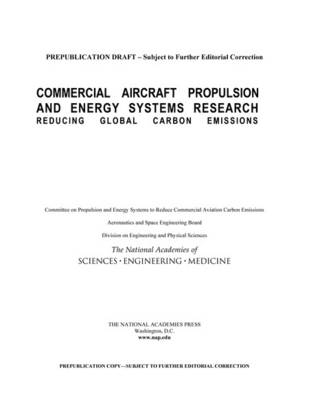
Commercial Aircraft Propulsion and Energy Systems Research
Reducing Global Carbon Emissions
Seiten
2016
National Academies Press (Verlag)
978-0-309-44096-7 (ISBN)
National Academies Press (Verlag)
978-0-309-44096-7 (ISBN)
The primary human activities that release carbon dioxide (CO2) into the atmosphere are the combustion of fossil fuels (coal, natural gas, and oil) to generate electricity, the provision of energy for transportation, and as a consequence of some industrial processes. Although aviation CO2 emissions only make up approximately 2.0 to 2.5 percent of total global annual CO2 emissions, research to reduce CO2 emissions is urgent because (1) such reductions may be legislated even as commercial air travel grows, (2) because it takes new technology a long time to propagate into and through the aviation fleet, and (3) because of the ongoing impact of global CO2 emissions.
Commercial Aircraft Propulsion and Energy Systems Research develops a national research agenda for reducing CO2 emissions from commercial aviation. This report focuses on propulsion and energy technologies for reducing carbon emissions from large, commercial aircraft— single-aisle and twin-aisle aircraft that carry 100 or more passengers—because such aircraft account for more than 90 percent of global emissions from commercial aircraft. Moreover, while smaller aircraft also emit CO2, they make only a minor contribution to global emissions, and many technologies that reduce CO2 emissions for large aircraft also apply to smaller aircraft.
As commercial aviation continues to grow in terms of revenue-passenger miles and cargo ton miles, CO2 emissions are expected to increase. To reduce the contribution of aviation to climate change, it is essential to improve the effectiveness of ongoing efforts to reduce emissions and initiate research into new approaches.
Table of Contents
Front Matter
Synopsis
Summary
1 Introduction
2 AircraftPropulsion Integration
3 Aircraft Gas Turbine Engines
4 Electric Propulsion
5 Sustainable Alternative Jet Fuels
6 Findings, Recommendations, Roles, and Resources
Appendixes
Appendix A: Statement of Task
Appendix B: Committee and Staff Biographical Information
Appendix C: Acronyms
Commercial Aircraft Propulsion and Energy Systems Research develops a national research agenda for reducing CO2 emissions from commercial aviation. This report focuses on propulsion and energy technologies for reducing carbon emissions from large, commercial aircraft— single-aisle and twin-aisle aircraft that carry 100 or more passengers—because such aircraft account for more than 90 percent of global emissions from commercial aircraft. Moreover, while smaller aircraft also emit CO2, they make only a minor contribution to global emissions, and many technologies that reduce CO2 emissions for large aircraft also apply to smaller aircraft.
As commercial aviation continues to grow in terms of revenue-passenger miles and cargo ton miles, CO2 emissions are expected to increase. To reduce the contribution of aviation to climate change, it is essential to improve the effectiveness of ongoing efforts to reduce emissions and initiate research into new approaches.
Table of Contents
Front Matter
Synopsis
Summary
1 Introduction
2 AircraftPropulsion Integration
3 Aircraft Gas Turbine Engines
4 Electric Propulsion
5 Sustainable Alternative Jet Fuels
6 Findings, Recommendations, Roles, and Resources
Appendixes
Appendix A: Statement of Task
Appendix B: Committee and Staff Biographical Information
Appendix C: Acronyms
1 Front Matter; 2 Synopsis; 3 Summary; 4 1 Introduction; 5 2 AircraftPropulsion Integration; 6 3 Aircraft Gas Turbine Engines; 7 4 Electric Propulsion; 8 5 Sustainable Alternative Jet Fuels; 9 6 Findings, Recommendations, Roles, and Resources; 10 Appendixes; 11 Appendix A: Statement of Task; 12 Appendix B: Committee and Staff Biographical Information; 13 Appendix C: Acronyms
| Erscheinungsdatum | 16.09.2016 |
|---|---|
| Verlagsort | Washington |
| Sprache | englisch |
| Maße | 216 x 279 mm |
| Themenwelt | Technik ► Elektrotechnik / Energietechnik |
| Technik ► Fahrzeugbau / Schiffbau | |
| Technik ► Luft- / Raumfahrttechnik | |
| ISBN-10 | 0-309-44096-3 / 0309440963 |
| ISBN-13 | 978-0-309-44096-7 / 9780309440967 |
| Zustand | Neuware |
| Informationen gemäß Produktsicherheitsverordnung (GPSR) | |
| Haben Sie eine Frage zum Produkt? |
Mehr entdecken
aus dem Bereich

aus dem Bereich
Grundlagen, Systemtechnik und Analysen ausgeführter Beispiele …
Buch | Softcover (2025)
Springer Vieweg (Verlag)
CHF 55,95
Wegweiser für Elektrofachkräfte
Buch | Hardcover (2024)
VDE VERLAG
CHF 67,20


