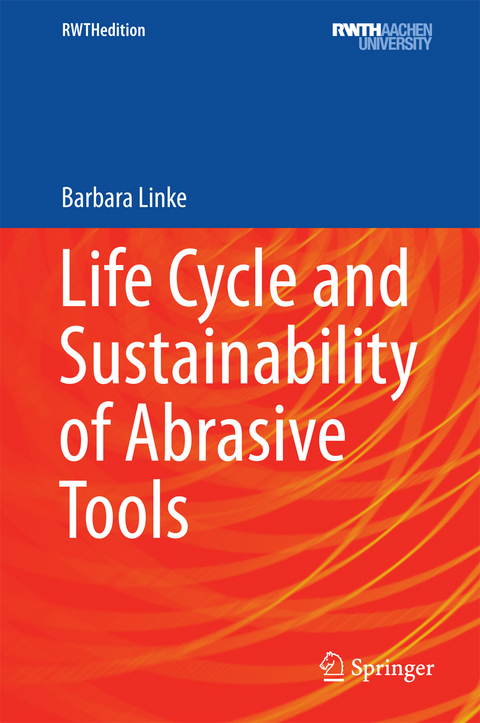
Life Cycle and Sustainability of Abrasive Tools (eBook)
XVII, 265 Seiten
Springer International Publishing (Verlag)
978-3-319-28346-3 (ISBN)
Acknowledgments 7
Contents 9
Symbols and Abbreviations 15
Uppercase Letters 15
Lowercase Letters 16
Greek Letters 16
Conversions 17
1 Introduction 18
2 Abrasives 23
2.1 Corundum 24
2.1.1 Chemistry, Types and Characteristics of Corundum 24
2.1.1.1 Shape, Morphology 25
2.1.1.2 Toughness, Breaking Behavior, Friability, Hardness 25
2.1.1.3 Temperature Stability, Chemical Reactions 27
2.1.1.4 Thermal Conductivity, Electric and Magnetic Properties 28
2.1.2 Manufacture of Corundum by Electrofusing 28
2.1.3 Manufacture of Corundum by Sintering 31
2.1.3.1 Sintering of Bauxite 31
2.1.3.2 Sintering of Fused Corundum 32
2.1.4 Manufacture of Corundum by Sol-Gel Process 32
2.1.5 Performance of Corundum 33
2.1.5.1 Molten Corundum 33
2.1.5.2 Comparison of Sintered Corundum and Molten Corundum 33
2.1.5.3 Comparison of Sol-Gel Corundum and Molten Corundum 34
2.2 Silicon Carbide 35
2.2.1 Chemistry, Types and Characteristics of Silicon Carbide 35
2.2.1.1 Shape, Morphology 36
2.2.1.2 Toughness, Breaking Behavior, Friability, Hardness 36
2.2.1.3 Temperature Stability, Chemical Reactions 37
2.2.1.4 Thermal Conductivity, Electric and Magnetic Properties 37
2.2.2 Manufacture of Silicon Carbide 38
2.2.3 Performance of Silicon Carbide 39
2.3 Diamond 40
2.3.1 Chemistry, Types of Diamond and Performance 40
2.3.1.1 Shape, Morphology 41
2.3.1.2 Toughness, Breaking Behavior, Friability 41
2.3.1.3 Hardness 42
2.3.1.4 Temperature Stability, Chemical Reactions 43
2.3.1.5 Thermal Conductivity 44
2.3.1.6 Electric and Magnetic Properties 44
2.3.2 Natural Diamond Genesis 44
2.3.3 Artificial Synthesis of Diamonds 45
2.3.3.1 Monocrystalline Diamonds 45
2.3.3.2 More Synthesis Methods 46
2.3.4 Performance of Diamonds 47
2.3.4.1 Grinding Tools 47
2.3.4.2 Honing Tools 47
2.3.4.3 Dressing Technology 47
2.3.4.4 Diamond Powder 48
2.4 Cubic Boron Nitride 48
2.4.1 Chemistry, Types and Characteristics of CBN 48
2.4.1.1 Shape, Morphology 49
2.4.1.2 Toughness, Breaking Behavior, Friability, Hardness 49
2.4.1.3 Temperature Stability, Chemical Reactions 50
2.4.1.4 Thermal Conductivity, Electric and Magnetic Properties 50
2.4.2 Synthesis of CBN 50
2.4.3 Performance of CBN 52
2.5 Other Types of Abrasives 52
2.5.1 Natural Abrasives 52
2.5.2 Boron Carbide (B4C) 53
2.6 Grit Post-Processing 53
2.6.1 Crushing 53
2.6.2 Heat Treatment 53
2.6.3 Chemical Processes 53
2.6.4 Electrostatic Processes 54
2.7 Grit Coatings 54
2.7.1 Non-metallic Coatings 54
2.7.2 Metallic Coatings 54
2.7.2.1 Manufacture of Metallic Coatings 55
2.7.3 Purpose of Coatings 55
2.7.3.1 Grit Retention in the Bond 55
2.7.3.2 Grit Protection During Tool Manufacturing 57
2.7.3.3 Grit Alignment During Tool Manufacturing 57
2.7.3.4 Grit and Bond Protection During Tool Use---Heat Transfer 57
2.7.3.5 Grit Protection During Tool Use---Grit Coherence 57
2.8 Grit Characteristics 58
2.8.1 Grit Size 58
2.8.1.1 Effect on Tool Performance 58
2.8.1.2 Effect on Tool Production 59
2.8.2 Shape, Morphology 59
2.8.2.1 Effect on Tool Production 59
2.8.2.2 Effect on Tool Performance 59
2.8.3 Hardness and Temperature Hardness 60
2.8.4 Toughness, Breaking Behavior 60
2.8.5 Thermal, Electric and Magnetic Properties 61
2.8.5.1 Effect on Tool Production 61
2.8.5.2 Effect on Tool Performance 61
2.8.6 Distribution of Characteristics Within Batch 62
2.9 Methods for Grit Selection and Analysis 62
2.9.1 Grit Size Selection 62
2.9.1.1 Sieving 62
2.9.1.1.1 Sieving Procedure 64
2.9.1.2 Sifting 65
2.9.1.3 Sedimentation 65
2.9.1.4 Counting Methods 66
2.9.1.5 Other Methods 66
2.9.2 Grit Shape Selection and Analysis 66
2.9.2.1 Picture Analysis 66
2.9.2.2 Packing Density 68
2.9.2.3 Shape Sorter 68
2.9.3 Toughness and Breaking Behavior Analysis 68
2.9.3.1 Friatest 68
2.9.3.2 Single Grit Toughness Test 69
2.9.4 Analysis of Residual Stress via Polarisation Microscopy 69
2.9.5 Magnetic Susceptibility Selection and Analysis 69
2.9.6 Other Analyses 70
2.9.7 Evaluation of Grit Analysis and Sorting Techniques 70
2.10 Sustainability Dimensions to Abrasive Grits 72
2.10.1 Technological Dimension 72
2.10.2 Economic Dimension 73
2.10.3 Environmental Dimension 74
2.10.4 Social Dimension 76
2.10.5 Sustainability Model for Abrasive Grits 76
3 Bonding Systems 78
3.1 Resin Bonds 80
3.1.1 Chemistry and Types of Resin Bonds 80
3.1.1.1 Phenolic Resin 80
3.1.1.2 Polyamide and Polyimide Resin 82
3.1.1.3 Epoxy or Urethane Resin 82
3.1.2 Manufacturing of Resin Bonds 83
3.1.2.1 Mixing and Molding 83
3.1.2.2 Pressing 84
3.1.2.3 Curing 85
3.1.3 Fillers in Resin Bonds 86
3.1.4 Performance of Resin Bonds 87
3.2 Vitrified Bonds 88
3.2.1 Chemistry and Types of Vitrified Bonds 88
3.2.2 Manufacturing of Vitrified Bonds 89
3.2.2.1 Mixing 89
3.2.2.2 Casting 90
3.2.2.3 Molding and Pressing 90
3.2.2.4 Drying 91
3.2.2.5 Sintering Process 91
3.2.2.6 Frits 92
3.2.2.7 Flux Agents 93
3.2.2.8 Porosity Builders 93
3.2.2.9 Finishing 94
3.2.3 Performance/Grit Retention 94
3.3 Metallic Multi-layer Bonds 95
3.3.1 Chemistry and Types of Metallic Bonds for Multi-layer Abrasive Tools 95
3.3.2 Manufacturing of Metallic Bonds by Infiltration 96
3.3.3 Manufacturing of Metallic Bonds by Sintering 97
3.3.4 Performance of Metallic Multi-layered Bonds 98
3.4 Metallic Single-layer Bonds 98
3.4.1 Chemistry and Types of Metallic Bonds 98
3.4.2 Manufacturing of Electroplated Bonds 99
3.4.2.1 Manufacturing of Dressing Rollers 101
3.4.3 Manufacturing of Brazed Bonds 102
3.4.4 Performance of Metallic Single-layered Bonds 103
3.5 Other Bonding Types and Hybrid Bonds 104
3.5.1 Rubber 104
3.5.2 Shellac Bonds 104
3.5.3 Other Bonds 105
3.6 Sustainability Dimensions to the Bonding System 105
3.6.1 Technological Dimension 105
3.6.2 Economic Dimension 107
3.6.3 Environmental Dimension 107
3.6.4 Social Dimension 109
3.6.5 Sustainability Model for Bonding Systems 110
4 Abrasive Tool Types 111
4.1 Grinding Wheels 111
4.1.1 Shapes 112
4.1.2 Special Grinding Wheel Types 114
4.1.2.1 Centerless Grinding Wheels 114
4.1.2.2 Gear Grinding Wheels 114
4.1.2.3 Cylindrical Peel Grinding Wheels 115
4.1.2.4 Tool Grinding Wheels 115
4.1.2.5 Surface Grinding Wheels for Turbine Materials 116
4.1.2.6 Grinding Pins 116
4.1.2.7 Long Needle Diamond Grinding Wheels 116
4.2 Coated Abrasive Tools 117
4.2.1 Manufacturing 118
4.2.2 Abrasive Grits 120
4.3 Honing Tools 121
4.4 Polishing Tools 121
4.4.1 Abrasives for Polishing 122
4.4.2 Binding Materials for Pastes 123
4.4.3 Counterparts 124
4.5 Lapping 124
4.5.1 Abrasives for Lapping 125
4.6 Tools for Abrasive Sawing 125
4.6.1 Wires with Bonded Grits 126
4.6.2 Wires with Loose Abrasives 126
4.6.3 Inner Diameter Saw 126
4.7 Other Methods with Free Abrasives 126
4.7.1 Crushing 126
4.7.2 Free Abrasive Machining 127
4.7.3 Abrasive Blasting 127
4.8 Tool End of Life 127
4.8.1 Shelf Life and Transport 128
4.8.2 Disposal 128
4.8.3 Recycling of Abrasive Tools 129
4.8.3.1 Conventional Tools 129
4.8.3.2 Single Layer Plated Tools 129
4.8.3.3 Multi Layer Bonded Tools 130
4.8.3.4 Other Abrasive Processes 130
4.8.4 Conclusion and Sustainability Model for Tool End of Life 130
5 Grinding Wheel Macro-design---Shape, Body, and Qualification 132
5.1 Body Concepts 132
5.1.1 Body Shapes---Stresses and Special Design for High-Speed Applications 133
5.1.2 Body Materials 136
5.1.2.1 Metal Body 137
5.1.2.2 Resin Bodies with Metallic Fillers and Non-metallic Fillers 137
5.1.2.3 Fiber Reinforced Resin 138
5.1.2.4 Connection Between Abrasive Layer and Body 138
5.1.3 Layout and Reinforcements of Cut-off Wheels 139
5.2 Clamping and Balancing 140
5.2.1 Flanges 140
5.2.2 Balancing Methods 141
5.2.2.1 Balancing of Stationary Wheels 142
5.2.2.2 Balancing of Rotating Wheels Outside of the Machine Tool 142
5.2.2.3 Balancing of Rotating Wheels in the Tool Spindle by Hydro Compensators 142
5.2.2.4 Balancing of Rotating Wheels in the Tool Spindle by Automatic Balancing Systems 143
5.3 Tool Qualification 143
5.3.1 Tool Hardness and Tool Elasticity 144
5.3.1.1 Hardness Testing with Penetration Methods 144
5.3.1.2 Hardness Testing by Grit Breakout Test or Scratch Test 144
5.3.1.3 Elasticity Testing by Bending Tests 145
5.3.1.4 Elasticity Testing with the Grindo-Sonic Method 145
5.3.1.5 Further Analyses 146
5.3.1.6 Conclusion on Hardness and Elasticity Tests 146
5.3.2 Tool Breakage 147
5.4 Sustainability Dimensions to the Grinding Wheel Macro Design 148
5.4.1 Technological Dimension 148
5.4.2 Economic Dimension 148
5.4.3 Environmental Dimension 148
5.4.4 Social Dimension 149
5.4.5 Sustainability Model for Grinding Wheel Macro-design 149
6 Grinding Wheel Micro-design---Abrasive Layer and Wear 151
6.1 Abrasive Layer Composition 152
6.1.1 Volumetric Composition 152
6.1.2 Porosity 154
6.1.3 Secondary Grits 156
6.2 Cutting Edge Density 156
6.2.1 Definitions 156
6.2.1.1 Static Cutting Edge Density 156
6.2.1.2 Kinematic Cutting Edge Density 158
6.2.1.3 Active Cutting Edge Density 159
6.2.1.4 Wheel Deformation Effects 160
6.2.2 Measuring, Replicating and Modeling of the Tool Topography 162
6.2.2.1 Tactile Measurement 163
6.2.2.2 Optical and Electron Measurement Methds 163
6.2.2.3 Other Methods 163
6.2.2.4 Replica Methods 163
6.2.2.5 Modeling 164
6.3 Tool Wear Effects 164
6.3.1 Macro Effect---Tool Profile Loss 164
6.3.1.1 Wear Measurement 166
6.3.2 Micro Effect---Sharpness Loss 166
6.3.3 G-Ratio 167
6.4 Tool Wear Mechanisms 170
6.4.1 Wear Types 170
6.4.2 Grit Surface Wear 172
6.4.2.1 Abrasion 173
6.4.2.2 Adhesion 173
6.4.2.3 Tribochemical Reaction 174
6.4.3 Grit Splintering or Breakage 174
6.4.4 Grit-Bond-Interface Wear 175
6.4.5 Bond Wear 175
6.4.6 Clogging of the Abrasive Layer 175
6.5 Tool Conditioning 177
6.5.1 Overview on Conditioning Principles 177
6.5.2 Dressing with Diamond Tools 177
6.5.3 Dressing Parameters 179
6.5.3.1 Overlap Ratio 179
6.5.3.2 Depth of Dressing Cut 180
6.5.3.3 Dressing Speed Ratio 181
6.5.3.4 Dressing Mechanisms 181
6.5.4 Dressing of Superabrasive Tools 182
6.6 Sustainability Dimensions to Grinding Wheel Micro-Design and Wear 182
6.6.1 Technological Dimension 182
6.6.2 Economic Dimension 183
6.6.3 Environmental Dimension 183
6.6.4 Social Dimension 184
6.6.5 Sustainability Model for Tool Use Phase 184
7 Sustainability of Grinding Tools 185
7.1 Life Cycle Engineering 186
7.1.1 Environmental Aspects---Life Cycle Assessment (LCA) 186
7.1.2 Social Life Cycle Assessment (SLCA) 188
7.1.3 Life Cycle Costing (LCC) 189
7.1.4 Sustainability Indicators 191
7.2 Life Cycle Inventory of Grinding Processes 191
7.2.1 Evaluating Sustainability of Unit Processes 191
7.2.2 Input-Output Streams of Grinding 192
7.3 Axiomatic Grinding Process Model 196
7.3.1 Methodology 197
7.3.2 Grinding Process Model 199
7.3.2.1 Traditional Fundamental Requirements in Grinding 199
7.3.2.2 Implications of a Bonded Tool 201
7.3.2.3 Implications of the Track-Bound Principle 203
7.3.2.4 Functional Requirements of Controlling Workpiece Surface Pattern 207
7.3.2.5 Functional Requirement of Controlling Workpiece Surface Grooves 208
7.3.2.6 Functional Requirement of Reducing Heat Generation 208
7.3.2.7 Reducing Heat by Convection and Conduction 211
7.3.2.8 Functional Requirement to Suppress Chemical Reactions 214
7.3.2.9 Functional Requirement of Being Cost-Effective 216
7.3.3 Matrixes from Axiomatic Model 217
7.3.4 Case Study on Grit Size Choice 224
8 Sustainability Case Studies 226
8.1 Case Study on Conventional Abrasives Versus Superabrasives for Vitrified Bonded Tools 226
8.1.1 Scope and Method 226
8.1.2 Energy of Raw Materials 227
8.1.3 Manufacturing Energy of a Vitrified Bond 228
8.1.4 Manufacturing Energy of the Steel Body for Superabrasive Wheels 231
8.1.5 Embodied Energy in Grinding Tools 232
8.2 Case Study on Comparing Hard Turning and Grinding 235
8.3 Leveraging Abrasive Machining 235
8.3.1 Case Study on Speed-Stroke Grinding with High Grinding Wheel Speeds 236
8.3.2 Leveraging Example for Gear Grinding 236
9 Future Prospectives 238
9.1 Market Trends for Abrasive Tools and Grit Material 238
9.2 Innovative and More Sustainable Tools 241
9.2.1 Future Requirements 241
9.2.2 Developments in Tool Design 241
9.2.2.1 Engineered Tools 241
9.2.2.2 Slotted Tools 242
9.2.2.3 Controlled Abrasive Clusters 243
9.2.2.4 Internally Cooled or Lubricated Wheels 243
9.2.2.5 Sensor Integrated Grinding Wheels 243
9.2.2.6 New Wheel Bodies 243
9.2.2.7 Deposition of Diamond Layers 244
9.2.2.8 Micro Tools 244
9.2.2.9 Ice Bonded Tools 244
9.2.2.10 Magnetic Abrasive Particles 244
9.2.2.11 Vortex Machining 245
9.2.3 Options for Tool Manufacturers 245
9.2.3.1 Service Options, End of Life and Incentives 245
9.2.3.2 Labelling and Customer Information 246
9.3 Conclusion on Abrasive Tool Sustainability 247
Literature 248
| Erscheint lt. Verlag | 27.1.2016 |
|---|---|
| Reihe/Serie | RWTHedition | RWTHedition |
| Zusatzinfo | XVII, 265 p. 133 illus. |
| Verlagsort | Cham |
| Sprache | englisch |
| Themenwelt | Technik ► Maschinenbau |
| Wirtschaft | |
| Schlagworte | Abrasive machinery • Abrasive tools • Grinding • Grinding tools • Honing • Life-Cycle management of tools • Monolithic and multi-layered tools • sustainability |
| ISBN-10 | 3-319-28346-4 / 3319283464 |
| ISBN-13 | 978-3-319-28346-3 / 9783319283463 |
| Informationen gemäß Produktsicherheitsverordnung (GPSR) | |
| Haben Sie eine Frage zum Produkt? |
 PDF (Wasserzeichen)
DRM: Digitales Wasserzeichen
Dieses eBook enthält ein digitales Wasserzeichen und ist damit für Sie personalisiert. Bei einer missbräuchlichen Weitergabe des eBooks an Dritte ist eine Rückverfolgung an die Quelle möglich.
Dateiformat: PDF (Portable Document Format)
Mit einem festen Seitenlayout eignet sich die PDF besonders für Fachbücher mit Spalten, Tabellen und Abbildungen. Eine PDF kann auf fast allen Geräten angezeigt werden, ist aber für kleine Displays (Smartphone, eReader) nur eingeschränkt geeignet.
Systemvoraussetzungen:
PC/Mac: Mit einem PC oder Mac können Sie dieses eBook lesen. Sie benötigen dafür einen PDF-Viewer - z.B. den Adobe Reader oder Adobe Digital Editions.
eReader: Dieses eBook kann mit (fast) allen eBook-Readern gelesen werden. Mit dem amazon-Kindle ist es aber nicht kompatibel.
Smartphone/Tablet: Egal ob Apple oder Android, dieses eBook können Sie lesen. Sie benötigen dafür einen PDF-Viewer - z.B. die kostenlose Adobe Digital Editions-App.
Buying eBooks from abroad
For tax law reasons we can sell eBooks just within Germany and Switzerland. Regrettably we cannot fulfill eBook-orders from other countries.
aus dem Bereich