


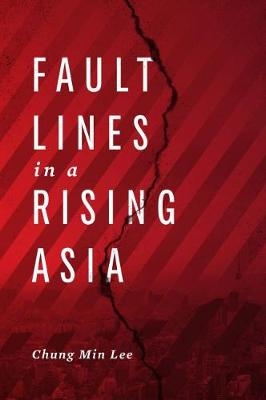
Fault Lines in a Rising Asia
Seiten
2022
Carnegie Endowment for International Peace (Verlag)
978-0-87003-311-7 (ISBN)
Carnegie Endowment for International Peace (Verlag)
978-0-87003-311-7 (ISBN)
- Keine Verlagsinformationen verfügbar
- Artikel merken
Asia’s rise over the past four decades is one of the most significant geopolitical and geoeconomic developments in world affairs. Yet the conventional narrative of Asia’s rise is incomplete, if not misleading, given the region is home to the world’s most dangerous, diverse, and divisive security, military, and political challenges. This volume addresses these challenges.
Asia’s rise over the past four decades is one of the most significant geopolitical and geoeconomic developments in world affairs as evinced by China’s, and more recently, India’s, accelerated economic growth. Yet the conventional narrative of Asia’s rise is incomplete, if not misleading, given the fundamental dichotomy that defines contemporary Asia: a region with unparalleled economic success but also home to the world’s most dangerous, diverse, and divisive security, military, and political challenges. How the strategically consequential Asian states manage to ameliorate or even overcome traditional geopolitical tinderboxes across the Taiwan Strait, the Korean Peninsula, and the Indian subcontinent and new zones of strategic competition such as the South China Sea is to going to have a profound impact on the shaping of regional order well into the 21st century.
Asia’s rise over the past four decades is one of the most significant geopolitical and geoeconomic developments in world affairs as evinced by China’s, and more recently, India’s, accelerated economic growth. Yet the conventional narrative of Asia’s rise is incomplete, if not misleading, given the fundamental dichotomy that defines contemporary Asia: a region with unparalleled economic success but also home to the world’s most dangerous, diverse, and divisive security, military, and political challenges. How the strategically consequential Asian states manage to ameliorate or even overcome traditional geopolitical tinderboxes across the Taiwan Strait, the Korean Peninsula, and the Indian subcontinent and new zones of strategic competition such as the South China Sea is to going to have a profound impact on the shaping of regional order well into the 21st century.
Chung Min Lee is a professor of international relations at the Graduate School of International Studies, Yonsei University in Seoul, a nonresident senior associate at the Carnegie Endowment for International Peace, and a council member of the International Institute for Strategic Studies.
| Erscheinungsdatum | 05.05.2016 |
|---|---|
| Verlagsort | Washington DC |
| Sprache | englisch |
| Maße | 152 x 229 mm |
| Gewicht | 725 g |
| Themenwelt | Sozialwissenschaften ► Politik / Verwaltung ► Politische Theorie |
| Technik | |
| ISBN-10 | 0-87003-311-5 / 0870033115 |
| ISBN-13 | 978-0-87003-311-7 / 9780870033117 |
| Zustand | Neuware |
| Informationen gemäß Produktsicherheitsverordnung (GPSR) | |
| Haben Sie eine Frage zum Produkt? |
Mehr entdecken
aus dem Bereich



aus dem Bereich
Weltherrschaft und Menschheitsethos
Buch | Hardcover (2025)
Suhrkamp (Verlag)
CHF 67,20
oder: das Ende der Politik
Buch | Softcover (2025)
Dietz Vlg Bln (Verlag)
CHF 22,40
ein Vortrag
Buch | Softcover (2024)
Suhrkamp (Verlag)
CHF 13,95


