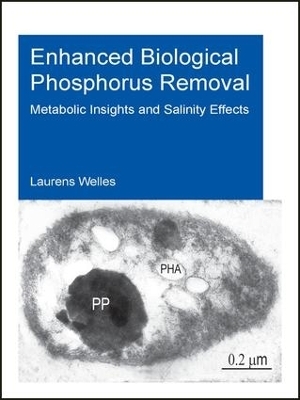
Enhanced Biological Phosphorus Removal
CRC Press (Verlag)
978-1-138-02947-7 (ISBN)
The first part of the thesis focuses on the functional diversity among PAO clades. It demonstrates significant functional differences in the main characteristics of the anaerobic metabolism of two different PAO clades and provides fundamental insight in the metabolic response of PAO to different influent P/C ratios. In addition, it shows how these functional differences provide competitive advantages to specific PAO clades in a selection study and discusses their potential implications on process performance, in particular for combined biological and chemical systems for nutrient removal and recovery.
The second part of the thesis describes the salinity effects on the metabolism of PAO and their competitors that do not contribute to phosphorus removal; the so-called Glycogen-Accumulating Organisms (GAO). It shows how salinity affects the different metabolic processes (kinetics and stochiometry) of PAO and GAO and provides a model that describes the salinity effects on their kinetic rates. Finally, it discusses the potential implications of sudden saline shocks in wastewater treatment systems that are not regularly exposed to salinity.
Laurens Welles was born in 1983 in The Hague, The Netherlands. In 2002 he started his BSc study Life Science and Technology at Delft University of Technology and Leiden University. He specialized in Cell Factory during his MSc study at Delft in 2006, and conducted his MSc research project on the Enhanced Biological Phosphorus Removal process at the University of Tokyo followed by an internship focused on bioremediation at Kurita Water Industries in Japan. In 2010, he was appointed as PhD fellow in the SALINE project at UNESCO-IHE and consortium partners KWR Watercycle Research Institute, Delft University of Technology, University of Cape Town, The Hong Kong University of Science and Technology, The Higher Polytechnic Institute "José Antonio Echeverría" and Birzeit University. The main objective of the project was to assess the feasibility of using saline water directly for non-potable purposes such as flushing toilets in urban areas to mitigate fresh water consumption. Within this project, the aim of his PhD research was to get a better understanding of the salinity effects on Enhanced Biological Phosphorus Removal in activated sludge systems to support the design and development of operational guidelines for WWTPs treating saline wastewater generated when saline water is used directly for non-potable purposes. Currently Laurens is working as a postdoctoral researcher for UNESCO-IHE and Delft University of Technology in The Netherlands. At UNESCO-IHE he assists in the management of a project, "Stimulating local innovation in sanitation for Sub-Saharan Africa and South East Asia." At the Delft University of Technology he conducts research on the anaerobic metabolism of Phosphate-Accumulating Organisms (PAO) and Glycogen-Accumulating Organisms (GAO), the diversity of this metabolism among different PAO and GAO clades and implications for nutrient removal and recovery systems.
1. General introduction
2. Accumulibacter clades I and II performing kinetically different GAO metabolisms for anaerobic substrate uptake
3. Metabolic response of 'Candidatus Accumulibacter phosphatis' clade II to changes in P/C ratio in their environment
4. Prevalence of 'Candidatus Accumulibacter phosphatis' clade II under phosphate limiting conditions
5. Denitrification pathways of PAO clade I with different carbon sources
6. Impact of salinity on the anaerobic metabolism of PAO and GAO
7. Impact of salinity on the aerobic metabolism of PAO
8. General conclusions and outlook
| Erscheinungsdatum | 09.06.2016 |
|---|---|
| Reihe/Serie | IHE Delft PhD Thesis Series |
| Verlagsort | London |
| Sprache | englisch |
| Maße | 170 x 240 mm |
| Gewicht | 385 g |
| Themenwelt | Naturwissenschaften ► Biologie |
| Naturwissenschaften ► Chemie | |
| Naturwissenschaften ► Geowissenschaften ► Hydrologie / Ozeanografie | |
| Technik ► Bauwesen | |
| Technik ► Umwelttechnik / Biotechnologie | |
| ISBN-10 | 1-138-02947-5 / 1138029475 |
| ISBN-13 | 978-1-138-02947-7 / 9781138029477 |
| Zustand | Neuware |
| Informationen gemäß Produktsicherheitsverordnung (GPSR) | |
| Haben Sie eine Frage zum Produkt? |
aus dem Bereich