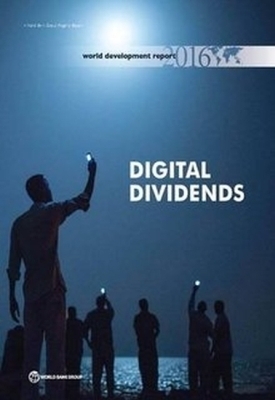
World Development Report 2016
World Bank Publications (Verlag)
978-1-4648-0728-2 (ISBN)
- Titel z.Zt. nicht lieferbar
- Versandkostenfrei
- Auch auf Rechnung
- Artikel merken
Two main reasons. First, nearly 60 percent of the world’s population are still offline and can’t participate in the digital economy in any meaningful way. Second, and more important, the benefits of digital technologies can be offset by growing risks. Startups can disrupt incumbents, but not when vested interests and regulatory uncertainty obstruct competition and the entry of new firms. Employment opportunities may be greater, but not when the labor market is polarized. The internet can be a platform for universal empowerment, but not when it becomes a tool for state control and elite capture.
The World Development Report 2016 shows that while the digital revolution has forged ahead, its 'analog complements'--the regulations that promote entry and competition, the skills that enable workers to access and then leverage the new economy, and the institutions that are accountable to citizens--have not kept pace. And when these analog complements to digital investments are absent, the development impact can be disappointing.
What, then, should countries do? They should formulate digital development strategies that are much broader than current information and communication technology (ICT) strategies. They should create a policy and institutional environment for technology that fosters the greatest benefits. In short, they need to build a strong analog foundation to deliver digital dividends to everyone, everywhere.
The World Bank came into formal existence in 1945 following the international ratification of the Bretton Woods agreements. It is a vital source of financial and technical assistance to developing countries around the world. The organization's activities are focused on education, health, agriculture and rural development, environmental protection, establishing and enforcing regulations, infrastructure development, governance and legal institutions development. The World Bank is made up of two unique development institutions owned by its 185 Member Countries. The International Bank for Reconstruction and Development (IBRD) focuses on middle income and creditworthy poor countries and the International Development Association (IDA), which focuses on the poorest countries in the world.
| Erscheinungsdatum | 03.03.2016 |
|---|---|
| Reihe/Serie | World Development Report |
| Verlagsort | Washington |
| Sprache | englisch |
| Maße | 210 x 274 mm |
| Gewicht | 1081 g |
| Themenwelt | Technik ► Nachrichtentechnik |
| Wirtschaft ► Volkswirtschaftslehre ► Makroökonomie | |
| ISBN-10 | 1-4648-0728-0 / 1464807280 |
| ISBN-13 | 978-1-4648-0728-2 / 9781464807282 |
| Zustand | Neuware |
| Informationen gemäß Produktsicherheitsverordnung (GPSR) | |
| Haben Sie eine Frage zum Produkt? |
aus dem Bereich