


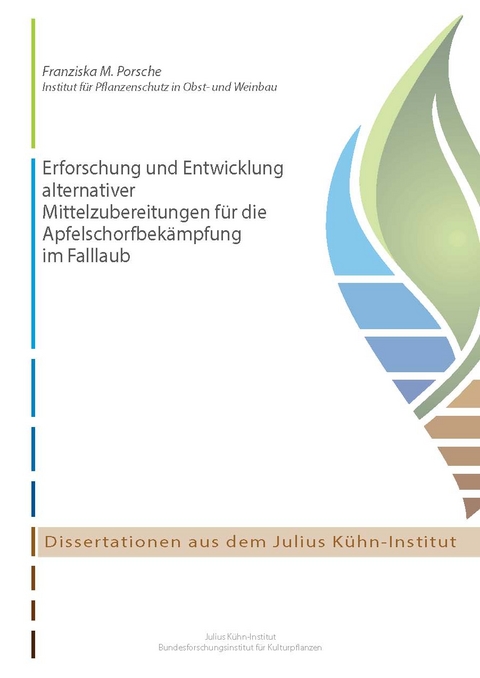
Erforschung und Entwicklung alternativer Mittelzubereitungen für die Apfelschorfbekämpfung im Falllaub
Seiten
2015
Bundesforschungsinstitut für Kulturpflanzen (JKI) (Verlag)
978-3-95547-024-1 (ISBN)
Bundesforschungsinstitut für Kulturpflanzen (JKI) (Verlag)
978-3-95547-024-1 (ISBN)
The objective of the study was to achieve a phytosanitary effect on fruiting bodies of
V. inaequalis in apple leaf litter by application of nutrient media, potential antagonists
and/or fungicidal plant extracts (saponins). The effects of leaf litter treatments on the
remaining ascospore potential were assessed in course of the primary season of the
pathogen. The principles and mode of action of the applied substances were
evaluated by microbiological and biochemical analyses. As an alternative method for
the isolation of saponins from plant materials an extraction with chloroform and
methanol was developed. The saponin extracts were cleaned with SPE cartridges
and for the first time with Hydrophobic Interaction Chromatography. Nearly all
ineffective substances could be removed from the extracts. The detection of
membranolytic/hemolytic fractions was performed with an agar diffusion assay
amended with sheep erythrocytes. Hemolytic fractions were further characterized by
HPLC analyses. In vitro all plant extracts showed a fungicidal effect on conidia
germination and mycelia growth of V. inaequalis. In seedling assays, a preventative
treatment with soap nut and chestnut extract (1%) reduced apple scab symptoms
nearly completely. A treatment 6 h after inoculation with conidia reduced scab
symptoms by more than 70%. Pathogen sporulation on infected leaves was reduced
by 98-100% in comparison to control groups. Ascospore potential could be reduced
by leaf litter treatments by up to 90%. The application of in vitro identified antagonists
on apple scab litter showed no effect on ascospore amount. Leaf litter treatments
with nutrient media in autumn/winter revealed a reduction in the ascospore potential
of more than 97% in four following apple scab seasons. The effect did not depend on
geographical location of the orchard site. The best results could be achieved with a
concentrated LEIBER yeast extract, which reduced the ascospore amount nearly
completely. The microbiological analyses of leaf litter showed an increase of the
number of organisms, including potential antagonists, from 10 up to 1.000 times. The
microbiological activity (biological oxygen demand) was up to three times higher and
leaf decay was enhanced compared to untreated litter. Bacterial and fungal leaf
colonizers were isolated and identified with MALDI-TOF or sequencing of ITS rDNA.
Pseudomonas proved to be the dominant bacterial species in apple leaf litter and
contributed 37 to 45% of bacterial isolates. In vitro an inhibition of mycelia growth of
V. inaequalis from 48 to 69% was observed. Cladosporium cladosporioides,
Aureobasidium pullulans and Epicoccum nigrum reduced mycelial growth by up to
57%. Each one of these species represented more than 10% of the fungal isolates.
In the majority of samples the microbial composition was changed mainly
quantitatively and a shift within the dominant species was not detectable. Peptides
≤ 3 kDa and amino acids could be identified as the effective constituents of the
media. Leaf litter treatments with nutrient media could be established as a new
phytosanitary strategy in organic fruit production and contribute to a replacement of
coppere1fungicides. Das Ziel der Untersuchungen war, durch die Applikation von Nährmedien,
potenziellen Antagonisten und/oder fungiziden Pflanzenextrakten (Saponine) nach
dem Blattfall einen phytosanitären Effekt mit einer Entwicklungsstörung auf die
Fruchtkörper von V. inaequalis zu erreichen. Die Auswirkungen der Behandlungen
wurden durch das verbleibende Ascosporenpotenzial über die Primärsaison
bewertet. Die Ursachen und Wirkungen der Präparate wurden mikrobiologisch und
biochemisch analysiert. Eine Chloroform-Methanol-Extraktion wurde als alternative
Methode zur Isolierung von Saponinen entwickelt. Die Pflanzenextrakte wurden
mittels SPE-Kartuschen und erstmals durch Verwendung der Hydrophoben
Interaktionschromatographie aufgereinigt. Es konnten nahezu alle unwirksamen
Begleitsubstanzen abgetrennt werden. Die fungiziden Wirkstoffe wurden mit einem
neu entwickelten Blutagar-Test, der die hämolytische Eigenschaft der Saponine
nutzt, nachgewiesen und durch HPLC-Analysen charakterisiert. In vitro konnte für
alle Saponinextrakte eine hemmende Wirkung auf die Keimung der Konidien und das
Mycelwachstum des Erregers nachgewiesen werden. Die präventive Behandlung von
Sämlingen in Gewächshausversuchen mit 1% Saponinextrakten von Waschnuss und
Kastanie führte zu einer nahezu vollständigen Befallsreduktion. Eine „STOPPSpritzung“
6 h nach der erfolgten Inokulation bewirkte eine Verminderung der
Schorfsymptome um mehr als 70% und eine Reduktion der Sporulation um 98-100%.
Das Ascosporenpotenzial konnte durch Falllaubbehandlungen im Herbst/Winter um
bis zu 90% reduziert werden. In vitro identifizierte Antagonisten, die in das Falllaub
eingebracht wurden, konnten die Ascosporenmenge nicht vergleichbar reduzieren. In
vier Versuchsjahren konnte standortunabhängig durch die Applikation von
Nährmedien ein Wirkungsgrad von ≥ 97% zur Verminderung der Ascosporen-
Freisetzung erreicht werden. Als besonders effektiv erwies sich ein konzentriertes
LEIBER Hefeextrakt, welches die Ascosporenmenge nahezu vollständig reduzierte.
Die mikrobiologischen Analysen des Falllaubes ergaben eine 10 bis 1.000-fache
Erhöhung der Organismenzahl, einschließlich potenzieller Antagonisten. Die
mikrobiologische Aktivität (biologischer Sauerstoffbedarf) war bis zu dreimal höher
als in unbehandelten Blattdepots und hatte einen verstärkten und schnelleren
Blattabbau zur Folge. Die bakteriellen und pilzlichen Falllaubbesiedler wurden von
den Blättern isoliert und mit MALDI-TOF oder über die Sequenzierung ihrer ITS rDNA
identifiziert. Pseudomonaden stellten mit 37-45% der Bakterienisolate die dominante
Organismengruppe im Falllaub dar. In vitro wurde eine Hemmung des
Mycelwachstums von V. inaequalis um 48-69% festgestellt. Cladosporium
cladosporioides, Aureobasidium pullulans und Epicoccum nigrum waren mit einem
Anteil von jeweils mehr als 10% die wichtigsten Vertreter der Pilze und hemmten das
Wachstum in vitro um bis zu 57%. In der Mehrzahl der Proben war die
Zusammensetzung der Mikroorganismen im Vergleich zu Kontrollblättern im
Wesentlichen quantitativ verändert. Eine Verschiebung innerhalb der dominanten
Spezies konnte nicht festgestellt werden. Als wirksame Stoffe konnten Peptide
≤ 3 kDa und Aminosäuren identifiziert werden. Die Behandlung des Falllaubs mit
Nährmedien könnte als eine neue phytosanitäre Strategie in die obstbauliche
Praxis integriert werden und zu einem Kupferersatz beitragen.
V. inaequalis in apple leaf litter by application of nutrient media, potential antagonists
and/or fungicidal plant extracts (saponins). The effects of leaf litter treatments on the
remaining ascospore potential were assessed in course of the primary season of the
pathogen. The principles and mode of action of the applied substances were
evaluated by microbiological and biochemical analyses. As an alternative method for
the isolation of saponins from plant materials an extraction with chloroform and
methanol was developed. The saponin extracts were cleaned with SPE cartridges
and for the first time with Hydrophobic Interaction Chromatography. Nearly all
ineffective substances could be removed from the extracts. The detection of
membranolytic/hemolytic fractions was performed with an agar diffusion assay
amended with sheep erythrocytes. Hemolytic fractions were further characterized by
HPLC analyses. In vitro all plant extracts showed a fungicidal effect on conidia
germination and mycelia growth of V. inaequalis. In seedling assays, a preventative
treatment with soap nut and chestnut extract (1%) reduced apple scab symptoms
nearly completely. A treatment 6 h after inoculation with conidia reduced scab
symptoms by more than 70%. Pathogen sporulation on infected leaves was reduced
by 98-100% in comparison to control groups. Ascospore potential could be reduced
by leaf litter treatments by up to 90%. The application of in vitro identified antagonists
on apple scab litter showed no effect on ascospore amount. Leaf litter treatments
with nutrient media in autumn/winter revealed a reduction in the ascospore potential
of more than 97% in four following apple scab seasons. The effect did not depend on
geographical location of the orchard site. The best results could be achieved with a
concentrated LEIBER yeast extract, which reduced the ascospore amount nearly
completely. The microbiological analyses of leaf litter showed an increase of the
number of organisms, including potential antagonists, from 10 up to 1.000 times. The
microbiological activity (biological oxygen demand) was up to three times higher and
leaf decay was enhanced compared to untreated litter. Bacterial and fungal leaf
colonizers were isolated and identified with MALDI-TOF or sequencing of ITS rDNA.
Pseudomonas proved to be the dominant bacterial species in apple leaf litter and
contributed 37 to 45% of bacterial isolates. In vitro an inhibition of mycelia growth of
V. inaequalis from 48 to 69% was observed. Cladosporium cladosporioides,
Aureobasidium pullulans and Epicoccum nigrum reduced mycelial growth by up to
57%. Each one of these species represented more than 10% of the fungal isolates.
In the majority of samples the microbial composition was changed mainly
quantitatively and a shift within the dominant species was not detectable. Peptides
≤ 3 kDa and amino acids could be identified as the effective constituents of the
media. Leaf litter treatments with nutrient media could be established as a new
phytosanitary strategy in organic fruit production and contribute to a replacement of
coppere1fungicides. Das Ziel der Untersuchungen war, durch die Applikation von Nährmedien,
potenziellen Antagonisten und/oder fungiziden Pflanzenextrakten (Saponine) nach
dem Blattfall einen phytosanitären Effekt mit einer Entwicklungsstörung auf die
Fruchtkörper von V. inaequalis zu erreichen. Die Auswirkungen der Behandlungen
wurden durch das verbleibende Ascosporenpotenzial über die Primärsaison
bewertet. Die Ursachen und Wirkungen der Präparate wurden mikrobiologisch und
biochemisch analysiert. Eine Chloroform-Methanol-Extraktion wurde als alternative
Methode zur Isolierung von Saponinen entwickelt. Die Pflanzenextrakte wurden
mittels SPE-Kartuschen und erstmals durch Verwendung der Hydrophoben
Interaktionschromatographie aufgereinigt. Es konnten nahezu alle unwirksamen
Begleitsubstanzen abgetrennt werden. Die fungiziden Wirkstoffe wurden mit einem
neu entwickelten Blutagar-Test, der die hämolytische Eigenschaft der Saponine
nutzt, nachgewiesen und durch HPLC-Analysen charakterisiert. In vitro konnte für
alle Saponinextrakte eine hemmende Wirkung auf die Keimung der Konidien und das
Mycelwachstum des Erregers nachgewiesen werden. Die präventive Behandlung von
Sämlingen in Gewächshausversuchen mit 1% Saponinextrakten von Waschnuss und
Kastanie führte zu einer nahezu vollständigen Befallsreduktion. Eine „STOPPSpritzung“
6 h nach der erfolgten Inokulation bewirkte eine Verminderung der
Schorfsymptome um mehr als 70% und eine Reduktion der Sporulation um 98-100%.
Das Ascosporenpotenzial konnte durch Falllaubbehandlungen im Herbst/Winter um
bis zu 90% reduziert werden. In vitro identifizierte Antagonisten, die in das Falllaub
eingebracht wurden, konnten die Ascosporenmenge nicht vergleichbar reduzieren. In
vier Versuchsjahren konnte standortunabhängig durch die Applikation von
Nährmedien ein Wirkungsgrad von ≥ 97% zur Verminderung der Ascosporen-
Freisetzung erreicht werden. Als besonders effektiv erwies sich ein konzentriertes
LEIBER Hefeextrakt, welches die Ascosporenmenge nahezu vollständig reduzierte.
Die mikrobiologischen Analysen des Falllaubes ergaben eine 10 bis 1.000-fache
Erhöhung der Organismenzahl, einschließlich potenzieller Antagonisten. Die
mikrobiologische Aktivität (biologischer Sauerstoffbedarf) war bis zu dreimal höher
als in unbehandelten Blattdepots und hatte einen verstärkten und schnelleren
Blattabbau zur Folge. Die bakteriellen und pilzlichen Falllaubbesiedler wurden von
den Blättern isoliert und mit MALDI-TOF oder über die Sequenzierung ihrer ITS rDNA
identifiziert. Pseudomonaden stellten mit 37-45% der Bakterienisolate die dominante
Organismengruppe im Falllaub dar. In vitro wurde eine Hemmung des
Mycelwachstums von V. inaequalis um 48-69% festgestellt. Cladosporium
cladosporioides, Aureobasidium pullulans und Epicoccum nigrum waren mit einem
Anteil von jeweils mehr als 10% die wichtigsten Vertreter der Pilze und hemmten das
Wachstum in vitro um bis zu 57%. In der Mehrzahl der Proben war die
Zusammensetzung der Mikroorganismen im Vergleich zu Kontrollblättern im
Wesentlichen quantitativ verändert. Eine Verschiebung innerhalb der dominanten
Spezies konnte nicht festgestellt werden. Als wirksame Stoffe konnten Peptide
≤ 3 kDa und Aminosäuren identifiziert werden. Die Behandlung des Falllaubs mit
Nährmedien könnte als eine neue phytosanitäre Strategie in die obstbauliche
Praxis integriert werden und zu einem Kupferersatz beitragen.
| Erscheint lt. Verlag | 8.10.2015 |
|---|---|
| Reihe/Serie | Dissertationen aus dem Julius Kühn-Institut |
| Sprache | deutsch |
| Maße | 140 x 210 mm |
| Gewicht | 200 g |
| Einbandart | geklebt |
| Themenwelt | Naturwissenschaften |
| Technik | |
| Weitere Fachgebiete ► Land- / Forstwirtschaft / Fischerei | |
| Schlagworte | Pflanzenextrakte • Phytopathologie • V. inaequalis |
| ISBN-10 | 3-95547-024-5 / 3955470245 |
| ISBN-13 | 978-3-95547-024-1 / 9783955470241 |
| Zustand | Neuware |
| Informationen gemäß Produktsicherheitsverordnung (GPSR) | |
| Haben Sie eine Frage zum Produkt? |
Mehr entdecken
aus dem Bereich

aus dem Bereich
Buch | Hardcover (2023)
Haymarket Media (Verlag)
CHF 44,50
erfolgreich produzieren & selbst vermarkten
Buch | Hardcover (2023)
Stocker Verlag
CHF 34,95


