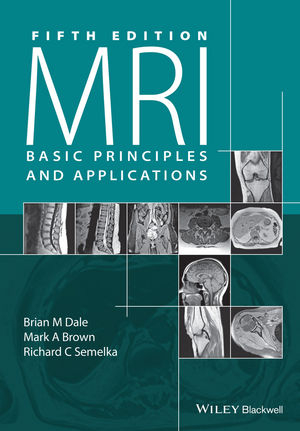
MRI (eBook)
John Wiley & Sons (Verlag)
978-1-119-01303-7 (ISBN)
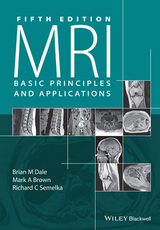
- Accessible introductory guide from renowned teachers in the field
- Provides a concise yet thorough introduction for MRI focusing on fundamental physics, pulse sequences, and clinical applications without presenting advanced math
- Takes a practical approach, including up-to-date protocols, and supports technical concepts with thorough explanations and illustrations
- Highlights sections that are directly relevant to radiology board exams
- Presents new information on the latest scan techniques and applications including 3 Tesla whole body scanners, safety issues, and the nephrotoxic effects of gadolinium-based contrast media
Brian M. Dale, Ph.D. MBA is Zone Research Manager, MR R&D Collaborations, Siemens Medical Solutions, Inc. Brian is a younger colleague at Siemens of the previous co-author, Dr Mark Brown. Brian has a PhD in biomedical engineering from Case Western Reserve University in Cleveland, OH. His interests are in sequence programming and optimal design.
Mark A. Brown, Ph.D. is Senior Technical Instructor at Siemens Medical Solutions Training and Development Center. He received his Ph.D. in Physical Chemistry from Duke University, in Durham, NC. His research interests include relaxation and exchange phenomena and in vivo nuclear magnetic resonance spectroscopy and imaging.
Richard Semelka, MD, is Director of Magnetic Resonance Services, Professor, and Vice Chairman of Radiology at the University of North Carolina-Chapel Hill Medical School. He received his medical degree and residency training in radiology in his native Canada at the University of Manitoba, and completed a clinical research fellowship in MRI of the body at the University of California at San Francisco. Dr. Semelka has authored over 300 peer-reviewed articles, 12 textbooks including the Wiley Abdominal-Pelvic MRI and Current Clinical Imaging series and is an internationally acclaimed authority in the field.
This fifth edition of the most accessible introduction to MRI principles and applications from renowned teachers in the field provides an understandable yet comprehensive update. Accessible introductory guide from renowned teachers in the field Provides a concise yet thorough introduction for MRI focusing on fundamental physics, pulse sequences, and clinical applications without presenting advanced math Takes a practical approach, including up-to-date protocols, and supports technical concepts with thorough explanations and illustrations Highlights sections that are directly relevant to radiology board exams Presents new information on the latest scan techniques and applications including 3 Tesla whole body scanners, safety issues, and the nephrotoxic effects of gadolinium-based contrast media
Brian M. Dale, Ph.D. MBA is Zone Research Manager, MR R&D Collaborations, Siemens Medical Solutions, Inc. Brian is a younger colleague at Siemens of the previous co-author, Dr Mark Brown. Brian has a PhD in biomedical engineering from Case Western Reserve University in Cleveland, OH. His interests are in sequence programming and optimal design. Mark A. Brown, Ph.D. is Senior Technical Instructor at Siemens Medical Solutions Training and Development Center. He received his Ph.D. in Physical Chemistry from Duke University, in Durham, NC. His research interests include relaxation and exchange phenomena and in vivo nuclear magnetic resonance spectroscopy and imaging. Richard Semelka, MD, is Director of Magnetic Resonance Services, Professor, and Vice Chairman of Radiology at the University of North Carolina-Chapel Hill Medical School. He received his medical degree and residency training in radiology in his native Canada at the University of Manitoba, and completed a clinical research fellowship in MRI of the body at the University of California at San Francisco. Dr. Semelka has authored over 300 peer-reviewed articles, 12 textbooks including the Wiley Abdominal-Pelvic MRI and Current Clinical Imaging series and is an internationally acclaimed authority in the field.
Preface, ix
ABR study guide topics, xi
1 Production of net magnetization 1
1.1 Magnetic fields 1
1.2 Nuclear spin 2
1.3 Nuclear magnetic moments 4
1.4 Larmor precession 4
1.5 Net magnetization 6
1.6 Susceptibility and magnetic materials 8
2 Concepts of magnetic resonance 10
2.1 Radiofrequency excitation 10
2.2 Radiofrequency signal detection 12
2.3 Chemical shift 14
3 Relaxation 17
3.1 T1 relaxation and saturation 17
3.2 T2 relaxation, T2* relaxation, and spin echoes 21
4 Principles of magnetic resonance imaging - 1 26
4.1 Gradient fields 26
4.2 Slice selection 28
4.3 Readout or frequency encoding 30
4.4 Phase encoding 33
4.5 Sequence looping 35
5 Principles of magnetic resonance imaging - 2 39
5.1 Frequency selective excitation 39
5.2 Composite pulses 44
5.3 Raw data and image data matrices 46
5.4 Signal-to-noise ratio and tradeoffs 47
5.5 Raw data and k-space 48
5.6 Reduced k-space techniques 51
5.7 Reordered k-space filling techniques 54
5.8 Other k-space filling techniques 56
5.9 Phased-array coils 58
5.10 Parallel acquisition methods 60
6 Pulse sequences 65
6.1 Spin echo sequences 67
6.2 Gradient echo sequences 70
6.3 Echo planar imaging sequences 75
6.4 Magnetization-prepared sequences 77
7 Measurement parameters and image contrast 86
7.1 Intrinsic parameters 87
7.2 Extrinsic parameters 89
7.3 Parameter tradeoffs 91
8 Signal suppression techniques 94
8.1 Spatial presaturation 94
8.2 Magnetization transfer suppression 96
8.3 Frequency-selective saturation 99
8.4 Nonsaturation methods 101
9 Artifacts 103
9.1 Motion artifacts 103
9.2 Sequence/Protocol-related artifacts 105
9.3 External artifacts 119
10 Motion artifact reduction techniques 126
10.1 Acquisition parameter modification 126
10.2 Triggering/Gating 127
10.3 Flow compensation 132
10.4 Radial-based motion compensation 134
11 Magnetic resonance angiography 135
11.1 Time-of-flight MRA 137
11.2 Phase contrast MRA 141
11.3 Maximum intensity projection 144
12 Advanced imaging applications 147
12.1 Diffusion 147
12.2 Perfusion 153
12.3 Functional brain imaging 156
12.4 Ultra-high field imaging 158
12.5 Noble gas imaging 159
13 Magnetic resonance spectroscopy 162
13.1 Additional concepts 162
13.2 Localization techniques 167
13.3 Spectral analysis and postprocessing 169
13.4 Ultra-high field spectroscopy 173
14 Instrumentation 177
14.1 Computer systems 177
14.2 Magnet system 180
14.3 Gradient system 182
14.4 Radiofrequency system 184
14.5 Data acquisition system 186
14.6 Summary of system components 187
15 Contrast agents 189
15.1 Intravenous agents 190
15.2 Oral agents 195
16 Safety 196
16.1 Base magnetic field 197
16.2 Cryogens 197
16.3 Gradients 198
16.4 RF power deposition 198
16.5 Contrast media 199
17 Clinical applications 200
17.1 General principles of clinical MR imaging 200
17.2 Examination design considerations 202
17.3 Protocol considerations for anatomical regions 203
17.4 Recommendations for specific sequences and clinical situations 218
References and suggested readings 222
Index 225
Chapter 1
Production of net magnetization
Magnetic resonance (MR) is a measurement technique used to examine atoms and molecules. It is based upon the interaction between an applied magnetic field and a particle that possesses spin and charge. While electrons and other subatomic particles possess spin (or more precisely, spin angular momentum) and can be examined using MR techniques, this book focuses on nuclei and the use of MR techniques for their study, formally known as Nuclear Magnetic Resonance, or NMR. Nuclear spin, or more precisely nuclear spin angular momentum, is one of several intrinsic properties of an atom and its value depends on the precise atomic composition. Every element in the Periodic Table except argon and cerium has at least one naturally occurring isotope that possesses nuclear spin. Thus, in principle, nearly every element can be examined using MR, and the basic ideas of resonance absorption and relaxation are common for all of these elements. The precise details will vary from nucleus to nucleus and from system to system.
1.1 Magnetic fields
Magnetic fields are produced by and surround electric currents, whether these currents are macroscopic currents such as those running through wires or microscopic currents such as those around an atom of iron. The magnetic field can be represented as a vector, meaning that it has both a magnitude and a direction, and is usually denoted by the variable B.1 For example, the B field at the center of a circular loop of current-carrying wire points in the direction of the axis of the loop (perpendicular to the plane of the loop and therefore perpendicular to the current flow) and it has a magnitude that is proportional to the current in the loop. The magnitude of the field is related to the strength of the magnetic force on wires or magnetic materials, and the direction of the field is perpendicular to the direction of the force.
Magnetic fields often vary over time and/or space, and will be coupled to the electric field, producing electromagnetic waves. Magnetic fields, particularly those in electromagnetic waves, are characterized by their frequency (the time between two consecutive “peaks” in the field). In MR, there are magnetic fields, which are constant in time, which vary at acoustic frequencies (a few kilohertz), and which vary at radio frequencies (RF) (several megahertz).
1.2 Nuclear spin
The structure of an atom is an essential component of the MR experiment. Atoms consist of three fundamental particles: protons, which possess a positive charge; neutrons, which have no charge; and electrons, which have a negative charge. The protons and neutrons are located in the nucleus or core of an atom; thus all nuclei are positively charged. The electrons are located in shells or orbitals surrounding the nucleus. The characteristic chemical reactions of elements depend upon the particular number of each of these particles. The properties most commonly used to categorize elements are the atomic number and the atomic weight. The atomic number is the number of protons in the nucleus and is the primary index used to differentiate atoms. All atoms of an element have the same atomic number and undergo the same chemical reactions. The atomic weight is the sum of the number of protons and the number of neutrons. Atoms with the same atomic number but different atomic weights are called isotopes. Isotopes of an element will undergo the same chemical reactions, but at different reaction rates.
A third property of the nucleus is spin or intrinsic spin angular momentum. Classically, nuclei with spin can be considered to be always rotating about an axis at a constant rate. This self-rotation axis is perpendicular to the direction of rotation (Figure 1.1). A limited number of values for the spin are found in nature; that is, the spin, I, is quantized to certain discrete values. These values depend on the atomic number and atomic weight of the particular nucleus. There are three groups of values for I: zero, integral, and half-integral values. A nucleus has no spin (I = 0) if it has an even atomic weight and an even atomic number; for example, 12C (6 protons and 6 neutrons) or 16O (8 protons and 8 neutrons). Such a nucleus does not interact with an external magnetic field and cannot be studied using MR. A nucleus has an integral value for I (e.g., 1, 2, 3) if it has an even atomic weight and an odd atomic number; for example, 2H (1 proton and 1 neutron) or 6Li (3 protons and 3 neutrons). A nucleus has a half-integral value for I (e.g., 1/2, 3/2, 5/2) if it has an odd atomic weight. Table 1.1 lists the spin and isotopic composition for several elements commonly found in biological systems. The 1H nucleus, consisting of a single proton, is a natural choice for probing the body using MR techniques for several reasons. It has a spin of 1/2 and is the most abundant isotope for hydrogen. Its response to an applied magnetic field is one of the largest found in nature. Since the body is composed of tissues that contain primarily water and fat, both of which contain hydrogen, a significant MR signal can be produced naturally by normal tissues.
Figure 1.1 A rotating nucleus (spin) with a positive charge produces a magnetic field known as the magnetic moment oriented parallel to the axis of rotation (a). This arrangement is analogous to a bar magnet in which the magnetic field is considered to be oriented from the south to the north pole (b).
Table 1.1 Constants for Selected Nuclei of Biological Interest
| Element | Nuclear composition | Nuclear spin I | Gyromagnetic ratio (MHz T−1) | % Natural abundance | at 1.5 T (MHz) |
| Protons | Neutrons |
| 1H, protium | 1 | 0 | 1/2 | 42.5774 | 99.985 | 63.8646 |
| 2H, deuterium | 1 | 1 | 1 | 6.53896 | 0.015 | 9.8036 |
| 3He | 2 | 1 | 1/2 | 32.436 | 0.000138 | 48.6540 |
| 6Li | 3 | 3 | 1 | 6.26613 | 7.5 | 9.39919 |
| 7Li | 3 | 4 | 3/2 | 16.5483 | 92.5 | 24.8224 |
| 12C | 6 | 6 | 0 | 0 | 98.90 | 0 |
| 13C | 6 | 7 | 1/2 | 10.7084 | 1.10 | 16.0621 |
| 14N | 7 | 7 | 1 | 3.07770 | 99.634 | 4.6164 |
| 15N | 7 | 8 | 1/2 | 4.3173 | 0.366 | 6.4759 |
| 16O | 8 | 8 | 0 | 0 | 99.762 | 0 |
| 17O | 8 | 9 | 5/2 | 5.7743 | 0.038 | 8.6614 |
| 19F | 9 | 10 | 1/2 | 40.0776 | 100 | 60.1164 |
| 23Na | 11 | 12 | 3/2 | 11.2686 | 100 | 16.9029 |
| 31P | 15 | 16 | 1/2 | 17.2514 | 100 | 25.8771 |
| 129Xe | 54 | 75 | 1/2 | 11.8604 | 26.4 | 17.7906 |
Source: Adapted from Ian Mills (ed.), Quantities, Units, and Symbols in Physical Chemistry, IUPAC, Physical Chemistry Division, Blackwell, Oxford, UK, 1989.
While a rigorous mathematical description of a nucleus with spin and its interactions requires the use of quantum mechanical principles, most of MR can be described using the concepts of classical mechanics, particularly in describing the actions of a nucleus with spin. The subsequent discussions of MR phenomena in this book use a classical approach. In addition, while the concepts of resonance absorption and relaxation apply to all nuclei with spin, the descriptions in this book focus on 1H (commonly referred to as a proton) since most imaging experiments visualize the 1H nucleus.
1.3 Nuclear magnetic moments
Recall that the nucleus is the location of the positively charged protons. When this charge rotates due to the nuclear spin, a local magnetic field or magnetic moment is induced about the nucleus. This magnetic moment will be oriented parallel to the axis of rotation. Since the nuclear spin is constant in magnitude, its associated magnetic moment will also be constant in magnitude. This magnetic moment is fundamental to MR. A bar magnet provides a useful analogy. A bar magnet has a north and a south pole, or, more precisely, a magnitude and orientation to the magnetic field can be defined. The axis of rotation for a nucleus with spin can similarly be viewed as a vector with a definite orientation and magnitude (Figure 1.1). This orientation of the nuclear spin and the changes induced in it due to the experimental manipulations that the nucleus undergoes provide the basis for the MR signal.
In general, MR measurements are made on collections of spins rather than on an individual spin....
| Erscheint lt. Verlag | 6.8.2015 |
|---|---|
| Sprache | englisch |
| Themenwelt | Medizin / Pharmazie ► Gesundheitsfachberufe |
| Medizinische Fachgebiete ► Radiologie / Bildgebende Verfahren ► Kernspintomographie (MRT) | |
| Medizinische Fachgebiete ► Radiologie / Bildgebende Verfahren ► Radiologie | |
| Technik | |
| Schlagworte | 3 Tesla whole body scanners • Artifacts • Brian M. Dale • Clinical applications • clinical scanners • contrast agents • Data Acquisition Techniques • fundamental physics • Image Contrast • Instrumentation • Interventional Radiology • Invasive Radiologie • Magnetic Resonance • Magnetic Resonance Imaging • Magnetresonanztomographie • Mark A. Brown • Measurement Parameters • Medical & Health Physics • Medical Imaging • Medical Science • Medizin • Motion Artifact Reduction Techniques • MR Angiography • MRI • MRI Basic Principles and Applications • MR physics principles • MR spectroscopy • MRT • Net Magnetization • Physics • Physik • Physik in Medizin u. Gesundheitswesen • pulse sequences • Radiofrequency • Radiologie • Radiologie u. Bildgebende Verfahren • radiologists prepare • Radiology & Imaging • radiology boards • Relaxation • Richard Semelka • Safety • Safety Issues • Signal Suppression Techniques • Spin Echoes • T1 Relaxation and Saturation • T2 Relaxation • T2* Relaxation |
| ISBN-10 | 1-119-01303-8 / 1119013038 |
| ISBN-13 | 978-1-119-01303-7 / 9781119013037 |
| Informationen gemäß Produktsicherheitsverordnung (GPSR) | |
| Haben Sie eine Frage zum Produkt? |
 EPUB (Adobe DRM)
Kopierschutz: Adobe-DRM
Adobe-DRM ist ein Kopierschutz, der das eBook vor Mißbrauch schützen soll. Dabei wird das eBook bereits beim Download auf Ihre persönliche Adobe-ID autorisiert. Lesen können Sie das eBook dann nur auf den Geräten, welche ebenfalls auf Ihre Adobe-ID registriert sind.
Details zum Adobe-DRM
Dateiformat: EPUB (Electronic Publication)
EPUB ist ein offener Standard für eBooks und eignet sich besonders zur Darstellung von Belletristik und Sachbüchern. Der Fließtext wird dynamisch an die Display- und Schriftgröße angepasst. Auch für mobile Lesegeräte ist EPUB daher gut geeignet.
Systemvoraussetzungen:
PC/Mac: Mit einem PC oder Mac können Sie dieses eBook lesen. Sie benötigen eine
eReader: Dieses eBook kann mit (fast) allen eBook-Readern gelesen werden. Mit dem amazon-Kindle ist es aber nicht kompatibel.
Smartphone/Tablet: Egal ob Apple oder Android, dieses eBook können Sie lesen. Sie benötigen eine
Geräteliste und zusätzliche Hinweise
Buying eBooks from abroad
For tax law reasons we can sell eBooks just within Germany and Switzerland. Regrettably we cannot fulfill eBook-orders from other countries.
aus dem Bereich