


Scunthorpe's Industries
Images of England
Seiten
1999
The History Press Ltd (Verlag)
978-0-7524-1634-2 (ISBN)
The History Press Ltd (Verlag)
978-0-7524-1634-2 (ISBN)
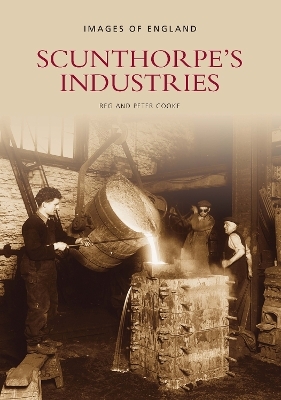
A detailed photographic and historical account of Scunthorpe’s steel and iron industry, tracing its rise from early mining in 1860 to mechanization, major events, and the eventual closure of the works.
In the nineteenth century and earlier, when Scunthorpe was still a village, burnt local stone was used to kill weeds. It was only in 1859 that Charles Winn, owner of some of the sandy commons to the east of Scunthorpe, realised that the clinkers from the burnt stone were heavy in iron. It was the beginning of the town’s link with heavy industries.
Only one year later, in July 1860, the first iron ore was mined and, over the next thirty years, mining spread to the east, north, and south, completely changing the skylines and landscape surrounding Scunthorpe.
This book is the story of the development of the steel and iron industry in Scunthorpe from its heyday at the end of the nineteenth century, through two world wars, the difficult years in the early 1920s, to the gradual closing down of the works in the 1970s and 1980s.
A remarkable collection of photographs (mostly from the British Steel Video Section and Photographic Department) shows us how industry developed from the very hard manual work of miners, ‘sanders’ and ‘chuckers’ to the mechanization that gradually started at the beginning of the twentieth century. Also included are shots of the last days of Normanby Park Works.
The pictures and text, carefully put together by Reg and Peter Cooke, also offer a record of some of the events connected to the local industry, such as royal visits, Galas, as well as strikes and snapshots of the township throughout its development.
In the nineteenth century and earlier, when Scunthorpe was still a village, burnt local stone was used to kill weeds. It was only in 1859 that Charles Winn, owner of some of the sandy commons to the east of Scunthorpe, realised that the clinkers from the burnt stone were heavy in iron. It was the beginning of the town’s link with heavy industries.
Only one year later, in July 1860, the first iron ore was mined and, over the next thirty years, mining spread to the east, north, and south, completely changing the skylines and landscape surrounding Scunthorpe.
This book is the story of the development of the steel and iron industry in Scunthorpe from its heyday at the end of the nineteenth century, through two world wars, the difficult years in the early 1920s, to the gradual closing down of the works in the 1970s and 1980s.
A remarkable collection of photographs (mostly from the British Steel Video Section and Photographic Department) shows us how industry developed from the very hard manual work of miners, ‘sanders’ and ‘chuckers’ to the mechanization that gradually started at the beginning of the twentieth century. Also included are shots of the last days of Normanby Park Works.
The pictures and text, carefully put together by Reg and Peter Cooke, also offer a record of some of the events connected to the local industry, such as royal visits, Galas, as well as strikes and snapshots of the township throughout its development.
| Erscheint lt. Verlag | 1.9.1999 |
|---|---|
| Verlagsort | Stroud |
| Sprache | englisch |
| Maße | 156 x 234 mm |
| Themenwelt | Technik |
| ISBN-10 | 0-7524-1634-0 / 0752416340 |
| ISBN-13 | 978-0-7524-1634-2 / 9780752416342 |
| Zustand | Neuware |
| Informationen gemäß Produktsicherheitsverordnung (GPSR) | |
| Haben Sie eine Frage zum Produkt? |
Mehr entdecken
aus dem Bereich


aus dem Bereich
mit Berechnungshinweisen und Beispielen
Buch | Hardcover (2024)
Reguvis Fachmedien (Verlag)
CHF 78,40
Praxiswissen zu Schimmelpilzschäden in Gebäuden: Mikrobiologie, …
Buch | Hardcover (2024)
Reguvis Fachmedien (Verlag)
CHF 138,60


