


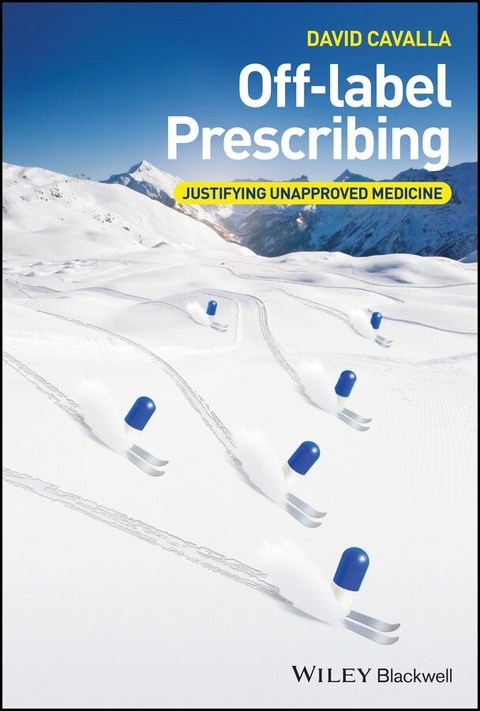
Today’s medicines are regulated for their efficacy and safety and, once approved, they can be marketed for certain uses as justified by the data. Regulatory bodies in developed countries are constituted by legal statute and operate as parts of government, ostensibly in the interests of the people as patients.
But once approved, medicines can be used for any purpose the prescriber thinks fit and appropriate for the patient. One in five prescriptions is therefore written outside regulatory purview.
Off-label Prescribing looks into the corners of our medicated lives, where drug regulation runs up against medical practice, and concerns the use of a drug that has been approved for one use (in medical parlance, ‘indication’) being used for a different indication; alternatively, being used on a different set of patients from the ones it is approved for, or at a different dose. Usually the patient is unaware of what is going on, having not been informed by their doctor of this aspect of his or her prescribing choice.
The book examines how and why this occurs, what the various medical professions have to say about it, and how pharmaceutical companies benefit by moving into this poorly regulated area. Off-label Prescribing pulls these complex issues together in one volume, to highlight current practice, its advantages and weaknesses and how the author suggests practice should evolve in the future. It will therefore be of interest to all those who prescribe (and receive) medicines, combined with a greater objective to provide more transparency and discussion for professionals.
Today s medicines are regulated for their efficacy and safety and, once approved, they can be marketed for certain uses as justified by the data. Regulatory bodies in developed countries are constituted by legal statute and operate as parts of government, ostensibly in the interests of the people as patients. But once approved, medicines can be used for any purpose the prescriber thinks fit and appropriate for the patient. One in five prescriptions is therefore written outside regulatory purview. Off-label Prescribing looks into the corners of our medicated lives, where drug regulation runs up against medical practice, and concerns the use of a drug that has been approved for one use (in medical parlance, indication ) being used for a different indication; alternatively, being used on a different set of patients from the ones it is approved for, or at a different dose. Usually the patient is unaware of what is going on, having not been informed by their doctor of this aspect of his or her prescribing choice. The book examines how and why this occurs, what the various medical professions have to say about it, and how pharmaceutical companies benefit by moving into this poorly regulated area. Off-label Prescribing pulls these complex issues together in one volume, to highlight current practice, its advantages and weaknesses and how the author suggests practice should evolve in the future. It will therefore be of interest to all those who prescribe (and receive) medicines, combined with a greater objective to provide more transparency and discussion for professionals.
David Cavalla, is an expert on secondary uses for existing drugs, or drug repurposing. He currrently operates through his consultancy, Numedicus Ltd, having worked in drug repurposing for 15 years. Previously he was CEO of Arachnova, and prior to that held various senior positions in pharmaceutical drug discovery at GSK and Napp Research Centre. He has written widely on drug discovery strategy, and is the author of 70 published papers and patents.
Foreword, ix
Acknowledgement, xi
Author's note on the cover design, xiii
Introduction, xv
1 What is off-label medication, and how prevalent is it?,
1
What is 'off-label' medicine?, 2
Scope of the issue, 8
2 Where it all went right: new uses for existing drugs
supported by good evidence, 19
Examples where products have been through regulatory approval
for a secondary use, 19
Finasteride: pseudohermaphroditism and hair growth, 19
Sildenafil: re-tasking the blue pill for a life-threatening
illness, 21
Doxycycline: from killing bugs to protecting gums, 22
Raloxifene: from cancer to bone disease and back again, 23
Galantamine: using snowdrops to improve memory, 24
Cyclosporine: preventing immune attack on organs and skin,
25
Dimethyl fumarate: a remarkable drug for multiple sclerosis,
26
Botox: a drug to kill or cure you, 27
Examples where evidence is uncertain and not to regulatory
standards, 28
Tricyclic antidepressants: for curing more than emotional pain,
28
Aspirin for cancer, 30
Retrospective data: looking back to create future therapies,
30
3 Shared decision making and consent, 33
Viewpoint of the patient, 34
Viewpoint of the prescriber, 37
Professional guidelines, 38
Patient awareness, 41
Practitioner attitudes, 41
Diagnosis, 44
4 Gaming the system: the role of the pharmaceutical industry,
47
Normal drug development and drug repurposing development, 48
Gaming the system, 53
Orphan use, 56
Pharmaceutical marketing, 61
Expanding uses for non-pharmaceuticals, 64
DTC advertising, 64
Patents and genericisation, 65
Conclusion, 68
5 Do no harm: Safety and efficacy, 71
Relative safety, 73
Different therapeutic uses, 73
Chronic versus acute dosing, 78
Different dose, 81
Differences between children and adults, 82
Other patient populations, 86
Fatal ADRs, 87
Quality of evidence, 88
Strong evidence, 89
Poor evidence, 91
Doctors do not know evidence, 94
Proximity of off-label to on-label, 96
Debunking medical myths, 101
6 Liability, injustice and reimbursement: who should pay?,
105
A prescriber's ethical and professional duties, 105
Medical professional participation in off-label promotion,
105
A prescriber's legal position, 106
Consent, 106
Liability, 111
Reimbursement, 113
Compendia, 115
NICE, 117
Compassionate access, 120
Cost, as a driver for off-label medicine, 121
7 The role of regulation in off-label medicine, 125
Regulators do not regulate medical practice, 126
Off-label marketing, 128
Off-label fines, 130
Whistle-blowers, 134
European situation, 134
Tip of the iceberg, 136
Free speech, 138
8 Justifying unapproved medicine, 143
Constraints on making changes, 144
Moves to enhance off-label medicine, 145
Diagnosis shifting, 146
A partial solution: clinical trial transparency, 147
A solution based on increased regulatory supervision, 152
My solutions, 153
Professional standards, 153
Reimbursement and pricing, 156
Outcomes, 159
Conclusion, 173
References, 175
Index, 191
"Despite a rather uninspiring title I found this book to be a fascinating read providing great insight into medicine development and regulation with many interesting examples provided to support the authors views . In my opinion it is actually a lot more balanced and intellectually satisfying than the much higher profile "Bad Pharma" (although that too is also worth reading). I would recommend this book as essential reading for anyone with a professional interest in helping ensure that medicines are used safely in an appropriately governed way and more generally to anyone that is interested in the world of medicine use." (Director of Medicines Information at Guy's and St Thomas' Hospital, 29 May 2015)
Chapter 1
What is off-label medication, and how prevalent is it?
The practice of medicine has been regulated since Hippocrates, who first told doctors (physicians, clinicians, general practitioners [GPs] and so on) how they should behave with regard to their patients. His Oath, written nearly 2500 years ago, is the most famous text in Western medicine. Though most people do not know exactly what it says, they believe it to say something along the lines of ‘Doctor, do no harm’. That is only partly true, as I shall now explain.
But before I do, there are actually many versions in the public mind of what Hippocrates said, including the view recounted by one UK doctor of an elderly patient who believed the Oath instructed doctors never to tell patients the truth. This book will describe circumstances in which this patient is often correct, namely, that GPs do not tell the truth to their patients, but of course incorrect in that Hippocratic Oath does not say that.
The Oath starts: ‘I swear by Apollo the physician and by Asclepius and Hygieia and Panacea… to bring the following oath to fulfilment’. According to Greek mythology, Apollo is the god of healing, Asclepius is his son and Hygieia and Panacea are his granddaughters. As with Zeus his father, Apollo had many love affairs with goddesses and mortals. One of his amours was Coronis, who was the daughter of the king of the Lapiths. Dwelling on a higher plane, Apollo was not able to be beside Coronis on earth, so he sent a white crow to look after her. Unfortunately, while she was pregnant by Apollo, Coronis fell in love with another man, and the crow informed Apollo of the affair. Appalled at her infidelity, in his anger, Apollo turned the crow black.
Artemis, Apollo’s twin sister, shot an arrow to kill Coronis. While Coronis’ body was burning on the funeral pyre, Apollo removed the unborn child, who was called Asclepius and became the god of medicine. When he grew up, Asclepius had two daughters, Hygieia, the goddess of health, and Panacea, the goddess of cures: medicine ran in the family. The words ‘hygiene’ and ‘panacea’ clearly have their etymological origins in these mythological figures.
According to legend, Hippocrates was a descendant of Asclepius; this gives more weight to Hippocrates’ proclamations, particularly when he pronounces on medical matters. Part of the Oath instructs the doctor to treat his teachers as his parents and to pass on the art of medicine to the next generation of healers. This is clearly relevant to Hippocrates’ ancestry, going all the way back to Apollo. But it is the next part of the Oath that is most relevant to this book and indeed to the practice of medicine.
It continues: ‘And I will use treatments for the benefit of the ill in accordance with my ability and my judgment, but from what is to their harm and injustice I will keep them’.
It is the two words, ‘harm’ and ‘injustice’ which I ask you to bear in mind as we go forwards.
What is ‘off-label’ medicine?
Today, medicines are regulated for their efficacy and safety, and once licensed for sale, they can be marketed for certain uses as justified by the data. Regulatory bodies in developed countries are constituted by legal statute and operate as parts of government, ostensibly in the interests of the people as patients. But once approved, medicines can be used for any purpose the prescriber sees fit and appropriate for the patient. In other words, regulatory authorities are the gatekeepers to prevent the medical use of unapproved products, but then leave the gate entirely wide open regarding unapproved indications or uses of approved products. To be succinct, medicinal products require regulatory approval, but the practice of medicine does not. There remain restrictions on the marketing of these products, but these are considerations for the producer, not the prescriber. Later on, I will explain the nuance that distinguishes between the marketing and the use of medicines and how, in my opinion, pharmaceutical companies game the system.
The ways in which medicines are prescribed, and administered, outside the terms of the marketing authorisation are called ‘off-label’ uses. They have not been justified by the regulatory authorities, which determine the label for the product, hence the title of this book. As was said, a ‘general off-label use of drugs is the death of the idea of regulation’ [3]. The importance of the regulatory justification is not merely because these public authorities spend a lot of time, money and manpower examining the evidence behind the safety and efficacy of the medicines we take: it is because these authorities are put in place to implement certain standards to which the patient expects his or her therapy to accord. The regulatory approval is also the patient’s approval, the basis for their consent to being treated with the prescribed medication. Drug regulation is a complex decision about the balance of safety and efficacy,1 benefit and risk – a world of shades of grey, not black and white. In the real world, the prescribing doctor has a lot of flexibility as to what s/he can prescribe; that flexibility can be put to good use, but patients are rarely aware that their off-label medicine has not been approved for their affliction, with consequences to the quality of their care.
So, off-label prescriptions are not illegal, and from the doctor’s perspective, they may not even be seen as unethical; in fact, according to the Hippocratic Oath, they may fulfil a doctor’s moral imperative, for instance, in situations of rare diseases where there is no approved product. However, the evidence behind off-label medicine rarely fulfils the patient’s expectations that a formal regulatory assessment of safety and efficacy has been performed, and this is the first sense in which I mean off-label medicine seems to be unjustified. Later, in Chapter 6, I shall deal with other consequences, such as who pays for the medicine, and what happens in cases where things go wrong. But before doing so, let us consider the scale of the issue.
There are lots of examples of secondary uses for existing drugs. The story of how a proposed treatment for angina and heart failure ended up as the world’s first treatment for erectile dysfunction is well known. The company behind the drug (Pfizer), now known as Viagra™, recorded that when the product, then known as UK-92480-10, or sildenafil, was first tried on male volunteers in a Welsh clinic, they reported physical excitation on seeing the nurses in the ward, requiring them to roll on their stomachs. In this case, the intended development for cardiovascular diseases was curtailed, and the product entered into medical practice for the treatment of erectile dysfunction instead (and in 2012, generated over $2 billion in revenue for Pfizer). Because the decision to develop for erectile dysfunction occurred before Viagra was approved for any use, this is not an example of off-label medication. However, even though this story is somewhat anecdotal, it does show that drugs often do more than one thing. In fact, there is a sequel to the first approval indication for sildenafil, in which it was subsequently developed for a second indication (or third, depending on how you look at it), as we shall see in Chapter 2.
I have strong interest in this area, having investigated this area of secondary uses for existing drugs, now called drug repurposing, for over 15 years. I have collated over 2300 proposed new uses for existing drugs, either marketed products or investigational compounds. This is freely accessible on the internet at http://www.drugrepur-posing.info. But the level of support for such new uses can vary enormously. In some cases, we have human data, such as clinical trials to support the effect. In many others, there is only information from experiments in vitro (literally ‘in glass’, this refers to test tube experiments) or in vivo (in animals). Some information even derives from a computer assessment of the shape similarity of drugs, but predictions like this based on in silico analysis are merely hypotheses, starting points for research programmes lasting years or even decades to deliver validation in regulatory studies that would be needed for market approval. As we shall discover in Chapter 4, most of the normal scientific hypotheses upon which drug discovery programmes are based turn out to be wrong.
We now realise that there are very few, if any, drugs with only one activity and/or only one conceivable therapeutic use. But even though there is vast promise from making better use of the drugs we currently have on hand, most of the early-stage predictions fail to be realised in practice. Sometimes this is for commercial reasons, but it is also for experimental reasons of safety or efficacy. As this area becomes more widely used as a means to discover new therapeutics, it is all the more likely that the current medicines that we all use will become increasingly investigated for new uses. New discoveries of this kind can be enormously helpful to the armoury of therapeutics available to the patient. However, it is unsafe to suppose that a theory deriving from an animal experiment, or anecdotal case report from one patient, really translates into a safe, efficacious treatment of general merit: it needs to be proven. Prescribers have enormous freedom to uncover whether...
| Erscheint lt. Verlag | 19.12.2014 |
|---|---|
| Sprache | englisch |
| Themenwelt | Medizin / Pharmazie ► Medizinische Fachgebiete ► Medizinethik |
| Medizin / Pharmazie ► Medizinische Fachgebiete ► Pharmakologie / Pharmakotherapie | |
| Studium ► Querschnittsbereiche ► Geschichte / Ethik der Medizin | |
| Naturwissenschaften ► Biologie | |
| Naturwissenschaften ► Chemie | |
| Technik | |
| Schlagworte | Biopharmaceutics • Chemie • Chemistry • Clinical • drug development • Drug Formulation & Delivery • drug regulation • Government • medical practice • Medical Science • Medicine • Medizin • pharmacology • Pharmacuetical • Pharmacy • Pharmakologie • Pharmazeutische Medizin • Pharmazie • Wirkstoffformulierung, Wirkstofftransport |
| ISBN-10 | 1-118-91204-7 / 1118912047 |
| ISBN-13 | 978-1-118-91204-1 / 9781118912041 |
| Informationen gemäß Produktsicherheitsverordnung (GPSR) | |
| Haben Sie eine Frage zum Produkt? |
 EPUB (Adobe DRM)
Kopierschutz: Adobe-DRM
Adobe-DRM ist ein Kopierschutz, der das eBook vor Mißbrauch schützen soll. Dabei wird das eBook bereits beim Download auf Ihre persönliche Adobe-ID autorisiert. Lesen können Sie das eBook dann nur auf den Geräten, welche ebenfalls auf Ihre Adobe-ID registriert sind.
Details zum Adobe-DRM
Dateiformat: EPUB (Electronic Publication)
EPUB ist ein offener Standard für eBooks und eignet sich besonders zur Darstellung von Belletristik und Sachbüchern. Der Fließtext wird dynamisch an die Display- und Schriftgröße angepasst. Auch für mobile Lesegeräte ist EPUB daher gut geeignet.
Systemvoraussetzungen:
PC/Mac: Mit einem PC oder Mac können Sie dieses eBook lesen. Sie benötigen eine
eReader: Dieses eBook kann mit (fast) allen eBook-Readern gelesen werden. Mit dem amazon-Kindle ist es aber nicht kompatibel.
Smartphone/Tablet: Egal ob Apple oder Android, dieses eBook können Sie lesen. Sie benötigen eine
Geräteliste und zusätzliche Hinweise
Buying eBooks from abroad
For tax law reasons we can sell eBooks just within Germany and Switzerland. Regrettably we cannot fulfill eBook-orders from other countries.
aus dem Bereich


