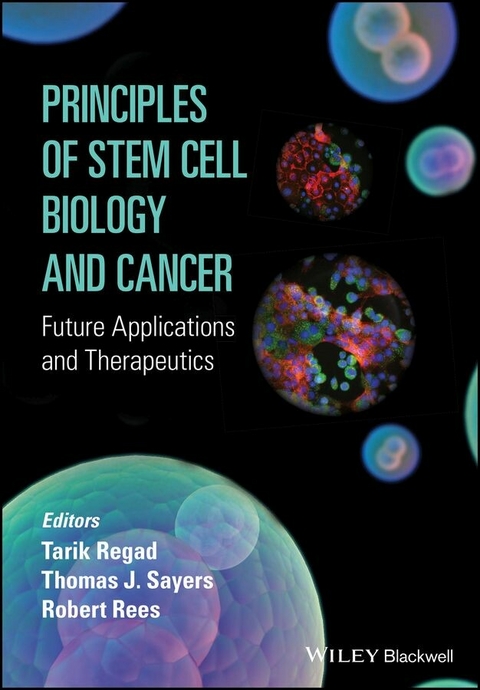
Principles of Stem Cell Biology and Cancer (eBook)
John Wiley & Sons (Verlag)
978-1-118-67058-3 (ISBN)
Tarik Regad, The John van Geest Cancer Research Centre, Nottingham Trent University, Nottingham, UK Thomas J. Sayers, Leidos Biomedical Research Inc., and the Cancer and Infl ammation Program, Frederick National Laboratory for Cancer Research, Frederick, MD, USA Robert C. Rees, The John van Geest Cancer Research Centre, Nottingham Trent University, Nottingham, UK
List of Contributors vii
Preface xiii
Part I Stem Cells 1
1 Isolation and Characterization of Human Embryonic Stem Cells
and Future Applications in Tissue Engineering Therapies 3
Christian Unger, James Hackland, David Preskey and Harry
Moore
2 Epigenetics, Stem Cell Pluripotency and Differentiation
27
Maria J. Barrero
3 Stem Cell Niche and Microenvironment 45
Marcio Alvarez-Silva
4 Haematopoietic Stem Cells in Therapy 65
Jos Domen and Jignesh Dalal
5 Isolation and Identification of Neural Stem/Progenitor Cells
85
Loic P. Deleyrolle and Brent A. Reynolds
Part II Cancer Stem Cells 101
6 The Role of Epithelial-Mesenchymal Transition in Cancer
Metastasis 103
Paul C. McDonald and Shoukat Dedhar
7 Regulation of Breast Cancer Stem Cells by Mesenchymal Stem
Cells in the Metastatic Niche 123
Fayaz Malik, Hasan Korkaya, Shawn G. Clouthier and Max S.
Wicha
8 Isolation and Identification of Neural Cancer Stem/Progenitor
Cells 145
David Bakhshinyan, Maleeha Qazi, Neha Garg, Chitra
Venugopal,
9 Colon Stem Cells in Colorectal Cancer 169
Varun V. Prabhu, Wafik S. El-Deiry and Niklas Finnberg
10 Prostate Cancer and Prostate Cancer Stem Cells 193
Magdalena E. Buczek, Jerome C. Edwards and Tarik Regad
11 Stem Cells and Pancreatic Cancer 213
Audrey M. Hendley and Jennifer M. Bailey
12 NANOG in Cancer Development 231
Bigang Liu and Dean G. Tang
13 Liver Cancer Stem Cells and Hepatocarcinogenesis 253
Hirohisa Okabe, Hiromitsu Hayashi, Takatsugu Ishimoto, Kosuke
Mima, Shigeki Nakagawa, Hideyuki Kuroki, Katsunori Imai, Hidetoshi
Nitta, Daisuke Hashimoto, Akira Chikamoto, Takatoshi Ishiko, Toru
Beppu and Hideo Baba
14 Basic Science of Liver Cancer Stem Cells and
Hepatocarcinogenesis 273
Katherine S. Koch and Hyam L. Leffert
15 Cancer Stem Cell Biomarkers 305
Stefano Zapperi and Caterina A.M. La Porta
16 Interatomic Analysis of the Stem Cell Marker NANOG in a
Prostate Cancer Setting 317
Kiran Mall and Graham Ball
Index 353
Chapter 1
Isolation and Characterization of Human Embryonic Stem Cells and Future Applications in Tissue Engineering Therapies
Christian Unger, James Hackland, David Preskey and Harry Moore
Centre for Stem Cell Biology, Department of Biomedical Sciences, University of Sheffield, Sheffield, UK
1.1 Derivation of human embryonic stem cells from the ICM
1.1.1 Early development of the ICM: the cells of origin for hESCs
The mammalian zygote (fertilized ovum) is defined as being totipotent, as it is capable of developing into a new offspring and the placenta required for full gestation. The zygote initially undergoes cleavage-stage cell division, forming cells (early blastomeres) that remain totipotent. With further development to the preimplantation blastocyst stage, a primary cell differentiation results in outside trophectoderm cells (TE) and an inside aggregate of inner cell mass (ICM) cells. The TE forms placental tissue and membranes, while the ICM forms the foetus and extra-embryonic membranes. Therefore, ICM cells are defined as being pluripotent, forming all cells of the developing offspring other than the complete placenta (unless genetically manipulated). Embryonic stem cells (ESCs) are derived in vitro from ICM cells, which adapt to specific conducive conditions that enable indefinite cell proliferation (self-renewal) without further differentiation and thereby confer a pluripotent capacity. This in vitro pluripotent state is due principally to the induction and maintenance of expression of key ‘gate-keeper’ genes, including Oct4, Nanog and Sox2, which then regulate one another (Silva & Smith, 2008). The capacity for self-renewal is sustained by high telomerase activity, which protects chromosome telomeres from degradation during mitosis (Blasco, 2007).
Mammalian ESCs were first derived in the mouse (mESC) (Evans and Kaufman, 1981; Martin, 1981). When mESCs are integrated into an embryo and returned to a recipient, they can contribute to all cell lineages, including germ cells. Their utility soon became invaluable for many transgenic procedures. Successful derivation of human (hESC) lines was reported by Thomson et al. (1998), who essentially followed the same procedure as used for the mouse. ICMs isolated from preimplantation human blastocysts were plated on to mitotically inactivated mouse embryonic feeders in culture medium with basic fibroblast growth factor (bFGF) and foetal calf serum (FCS). This culture medium was also supplemented with leukaemia inhibitory factor (LIF), a cytokine necessary to maintain mESCs (Smith et al., 1988), although (as is now known) not necessary for standard hESC derivation. Human ESCs display (or lose on differentiation) plasma membrane expression of stage-specific embryonic antigens (SSEAs) that correlate with the preimplantation morphological development of human embryos (Henderson et al., 2002) and form teratomas (benign tumours) in immune-deficient mice that can contain cell phenotypes from the three major cell lineages (endoderm, mesoderm and ectoderm), as well as trophoblast. The differentiation of trophoblast cells indicates that hESCs are not entirely equivalent to mESCs, as usually defined, but align with slightly later LIF-independent mouse epiblast pluripotent stem cells, which have the propensity to differentiate to trophoblast in vitro (Brons et al., 2007).
1.1.2 Derivation of hESCs
Success in the derivation of hESCs depends in part on the quality of the human embryos used (usually blastocysts from days 5 to 8), although cell lines have been generated from morphologically poor embryos. Numerous hESC lines have been derived (Figure 1.1) from normal, aneuploid and mutant embryos from patients undergoing treatment for assisted conception (IVF, ICSI) or preimplantation genetic diagnosis (PGD) who consent to donate them for stem cell research. Some of these cell lines have been extensively characterized and compared, enabling international standards to be established (Adewumi et al., 2007).
Figure 1.1 (A) Outgrowth of hESCs over 10 days of culture from ICM. In this instance, a clearly defined colony was observed by 10 days, which was mechanically passaged. (B) hESC line Shef1 plated on ECM.
1.1.2.1 Evolution to a more efficient and better-defined derivation method: drivers and technologies
Over the last 15 years, continuous improvements have been made in the process of deriving and maintaining hESC lines. The emphasis initially was on improving efficiency and consistency in the stem cell laboratory. But as hESC lines have become readily available for research in many countries, the focus has changed to devising methods for deriving clinical-grade cell lines that comply with health care regulatory authorities (e.g. Federal Drug Administration, FDA; European Medicines Agency, EMA), which can be used as starting materials for potential cell-therapy trials. Xeno-free methods (free of nonhuman animal components) are preferable as they minimize the risk of cross-species contamination with adventitious agents. An important early improvement was the replacement of FCS with a serum extract (knockout serum replacement, KOSR) to reduce hESC differentiation. This modification also minimized batch variation (inherent in FCS) between culture media, and allowed consistency in the proliferation of the cells after passaging (transfer of cells to a new culture vessel). Subsequently, more defined culture media (xeno-free) have been devised, which, in combination with a variety of extracellular matrix (ECM) compositions, facilitate the proliferation and passage of pluripotent hESCs in the absence of feeder cells (mouse or human), which otherwise remain an ill-defined and inconsistent component of the cell culture. Manipulation of the embryo has also changed over time. Initially, the ICM was isolated according to mouse protocols using enzymatic (protease) removal of the zona pellucida (ECM surrounding blastocyst) and immunosurgical lysis of TE with antitrophoblast antibody to prevent TE culture outgrowth from inhibiting early ESC proliferation. However, xeno-free methods using laser-assisted removal of the zona and plating of the intact blastocyst or the ICM on to a defined matrix (e.g. laminin 521) with a defined culture medium is the method of choice, leading to successful feeder/xeno-free cell line production in ∼20–40% of attempts with good-quality human embryos (Hasegawa et al., 2010). With further improvements to the cell adhesion matrix and cell medium, the efficiency of hESC line derivation is likely to increase further, although the quality of the embryo used to develop ICM cells remains a crucial factor.
Another important consideration is the genetic character and stability of the hESC line. Generally, most hESC outgrowths and initial cell lines derived from unselected embryos (i.e. not PGD selected) are determined to be karyotypically normal within the precision of the chromosomal analysis. However, hESCs acquire genetic mutations in culture, which may endow them with a selective cell culture advantage, so that mutated cells predominate (Baker et al., 2007). Since derivation and ESC passage represent key stress events for ESC cultures, minimization of selective pressure on cells at these stages may help to maintain their normal karyotype. For example, the proliferation of cells by mechanical division of hESC colonies into smaller aggregates may be preferable to enzymatic disaggregation to single cells, which will initiate apoptotic stress pathways unless inhibited from doing so by a chemical inhibitor (i.e. ROCK inhibitor).
1.1.3 Regulation of embryo research and hESC derivation
The destruction of the preimplantation human embryo in order to derive hESC lines has prompted fierce ethical debate in many countries, especially on religious grounds, which to some extent remains unresolved and irresolvable. The result is the implementation of policies of ethical oversight, regulation and permission for hESC research, which vary from country to country, and even within a country (the United States). In the United Kingdom, early introduction of laws related to human embryo research and the formation of a regulatory body (Human Fertilisation of Embryology Authority, HFEA) provided a framework (and important public confidence) for continuation of hESC research. Clinical-grade hESCs must meet compliance with conditions set by the EMA and overseen in the United Kingdom by the Human Tissue Authority. In the United States, the FDA and National Institutes of Health (NIH) undertake this responsibility. Since the development of cell therapies using pluripotent stem cells is novel, it remains to be determined exactly how regulatory authorities will implement conditions of compliance.
The induction of pluripotency in mouse and human somatic cells in 2006–07 using retroviral vectors to introduce four genes to reprogramme the genome (Oct4, Sox2, Klf4, and c-Myc) and enable the derivation of induced pluripotent stem cells (iPSCs) (Takahashi et al., 2007) radically changed the landscape of human pluripotent stem cell (hPSC) research (Yamanaka, 2012). This technology not only provides a potential route for the creation of patient-specific stem cell lines for use in cell therapies but also makes pluripotent cell lines available to many more laboratories, with seemingly fewer ethical bottlenecks. However, hESCs remain the current gold standard as their cellular reprogramming events are those that are normally evoked in the early embryo, rather than artificially...
| Erscheint lt. Verlag | 1.4.2015 |
|---|---|
| Sprache | englisch |
| Themenwelt | Medizin / Pharmazie ► Medizinische Fachgebiete ► Onkologie |
| Naturwissenschaften ► Biologie ► Mikrobiologie / Immunologie | |
| Naturwissenschaften ► Biologie ► Zellbiologie | |
| Technik | |
| Schlagworte | Applications • Biowissenschaften • Cancer • Cancer Research • Cell • Cell Biology • Cells • centre • expanding rapidly • Field • Geest • groups • Institute • Krebs • Life Sciences • many • Medical oncology • Medical Science • Medizin • medizinische Onkologie • Molecular Biology • Molekularbiologie • Populations • Principles • Research • Robert • stem • Stem Cell • Zellbiologie |
| ISBN-10 | 1-118-67058-2 / 1118670582 |
| ISBN-13 | 978-1-118-67058-3 / 9781118670583 |
| Informationen gemäß Produktsicherheitsverordnung (GPSR) | |
| Haben Sie eine Frage zum Produkt? |
 EPUB (Adobe DRM)
Kopierschutz: Adobe-DRM
Adobe-DRM ist ein Kopierschutz, der das eBook vor Mißbrauch schützen soll. Dabei wird das eBook bereits beim Download auf Ihre persönliche Adobe-ID autorisiert. Lesen können Sie das eBook dann nur auf den Geräten, welche ebenfalls auf Ihre Adobe-ID registriert sind.
Details zum Adobe-DRM
Dateiformat: EPUB (Electronic Publication)
EPUB ist ein offener Standard für eBooks und eignet sich besonders zur Darstellung von Belletristik und Sachbüchern. Der Fließtext wird dynamisch an die Display- und Schriftgröße angepasst. Auch für mobile Lesegeräte ist EPUB daher gut geeignet.
Systemvoraussetzungen:
PC/Mac: Mit einem PC oder Mac können Sie dieses eBook lesen. Sie benötigen eine
eReader: Dieses eBook kann mit (fast) allen eBook-Readern gelesen werden. Mit dem amazon-Kindle ist es aber nicht kompatibel.
Smartphone/Tablet: Egal ob Apple oder Android, dieses eBook können Sie lesen. Sie benötigen eine
Geräteliste und zusätzliche Hinweise
Buying eBooks from abroad
For tax law reasons we can sell eBooks just within Germany and Switzerland. Regrettably we cannot fulfill eBook-orders from other countries.
aus dem Bereich