


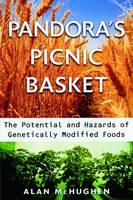
Pandora's Picnic Basket
The Potential and Hazards of Genetically Modified Foods
Seiten
2000
Oxford University Press (Verlag)
978-0-19-850674-4 (ISBN)
Oxford University Press (Verlag)
978-0-19-850674-4 (ISBN)
- Titel ist leider vergriffen;
keine Neuauflage - Artikel merken
The issue of genetically modified foods became one of the most debated of the late 20th century. In simple language, this book explains the technologies underlying genetically modified food, compares them with other natural methods of plant breeding and looks at the safeguards and regulations.
Are you concerned about fish genes in tomatoes? Worried that brazil nut genes in soybeans can result in potentially lethal allergic reactions? That rapeseed plants bred to be resistant to herbicides could become uncontrollable superweeds? You are not alone. The issue of genetically modified foods has fast become one of the most debated of recent years, with scientists and companies seeking to develop the technology on one side, and consumer groups and environmentalists on the other. However, in spite of the great heat generated by the debate, there is very little real information on the subject, either about the technologies in use or about the regulatory processes established to approve the processes and the products. This book sets out to explain, in clear and direct language, the technologies underlying so-called genetically modified food, and compares them with other "natural" methods of plant breeding and production. The author then looks at the safeguards in place from regulators around the world and asks whether these are sufficient.The question of labelling, held by some to be an obvious way out for concerned consumers, is examined, and the honesty and usefulness of some of these labels addressed.
The book then looks at issues of real concern, particularly environmental issues, and ways in which a consumer can seek to avoid GMOs if they so choose. In each chapter, key topics are addressed through question and answer boxes. Real case histories illustrate the development and regulation of GMOs, and by the end of the book the reader will be able to make an informed choice about whether to support or challenge this technology, the products of which are increasingly pervasive.
Are you concerned about fish genes in tomatoes? Worried that brazil nut genes in soybeans can result in potentially lethal allergic reactions? That rapeseed plants bred to be resistant to herbicides could become uncontrollable superweeds? You are not alone. The issue of genetically modified foods has fast become one of the most debated of recent years, with scientists and companies seeking to develop the technology on one side, and consumer groups and environmentalists on the other. However, in spite of the great heat generated by the debate, there is very little real information on the subject, either about the technologies in use or about the regulatory processes established to approve the processes and the products. This book sets out to explain, in clear and direct language, the technologies underlying so-called genetically modified food, and compares them with other "natural" methods of plant breeding and production. The author then looks at the safeguards in place from regulators around the world and asks whether these are sufficient.The question of labelling, held by some to be an obvious way out for concerned consumers, is examined, and the honesty and usefulness of some of these labels addressed.
The book then looks at issues of real concern, particularly environmental issues, and ways in which a consumer can seek to avoid GMOs if they so choose. In each chapter, key topics are addressed through question and answer boxes. Real case histories illustrate the development and regulation of GMOs, and by the end of the book the reader will be able to make an informed choice about whether to support or challenge this technology, the products of which are increasingly pervasive.
Alan McHughen is a Senior Research Scientist at the University of Saskatchewan, Canada, and Chair of the International Biosafety Advisory Committee of the Genetics Society of Canada. He himself has developed genetically modified plants and therefore has first-hand experience of the technologies involved and the regulatory processes in all countries.
PREFACE; PROTECTING YOUR TURF: INTELLECTUAL PROPERTY AND GM TECHNOLOGY; CONCLUSION; BIBLIOGRAPHY; GLOSSARY; INDEX
| Erscheint lt. Verlag | 22.6.2000 |
|---|---|
| Zusatzinfo | 4 halftones, 4 line figures |
| Verlagsort | Oxford |
| Sprache | englisch |
| Maße | 156 x 232 mm |
| Gewicht | 636 g |
| Themenwelt | Sachbuch/Ratgeber ► Beruf / Finanzen / Recht / Wirtschaft |
| Sachbuch/Ratgeber ► Essen / Trinken | |
| Sozialwissenschaften ► Soziologie | |
| Technik ► Lebensmitteltechnologie | |
| ISBN-10 | 0-19-850674-0 / 0198506740 |
| ISBN-13 | 978-0-19-850674-4 / 9780198506744 |
| Zustand | Neuware |
| Informationen gemäß Produktsicherheitsverordnung (GPSR) | |
| Haben Sie eine Frage zum Produkt? |
Mehr entdecken
aus dem Bereich



aus dem Bereich
Ratgeber für Angehörige und Betroffene
Buch | Softcover (2024)
C.H.Beck (Verlag)
CHF 16,65
Praxistipps für die Steigerung Ihrer Produktivität
Buch | Softcover (2024)
C.H.Beck (Verlag)
CHF 16,65
alle Funktionen verständlich erklärt
Buch | Softcover (2025)
Stiftung Warentest (Verlag)
CHF 27,85


