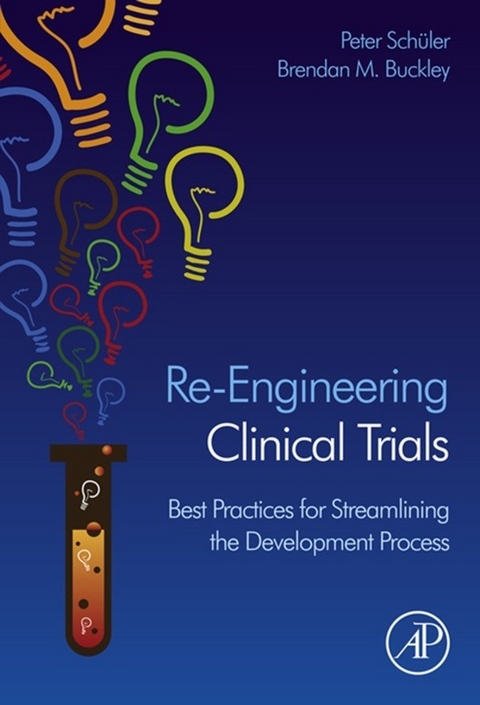
Re-Engineering Clinical Trials (eBook)
360 Seiten
Elsevier Science (Verlag)
978-0-12-800790-7 (ISBN)
The pharmaceutical industry is currently operating under a business model that is not sustainable for the future. Given the high costs associated with drug development, there is a vital need to reform this process in order to provide safe and effective drugs while still securing a profit. Re-Engineering Clinical Trials evaluates the trends and challenges associated with the current drug development process and presents solutions that integrate the use of modern communication technologies, innovations and novel enrichment designs. This book focuses on the need to simplify drug development and offers you well-established methodologies and best practices based on real-world experiences from expert authors across industry and academia. Written for all those involved in clinical research, development and clinical trial design, this book provides a unique and valuable resource for streamlining the process, containing costs and increasing drug safety and effectiveness. - Highlights the latest paradigm-shifts and innovation advances in clinical research- Offers easy-to-find best practice sections, lists of current literature and resources for further reading and useful solutions to day-to-day problems in current drug development- Discusses important topics such as safety profiling, data mining, site monitoring, change management, increasing development costs, key performance indicators and much more
Front Cover 1
RE–ENGINEERING CLINICAL TRIALS: Best Practices for Streamlining Drug Development 4
Copyright 5
CONTENTS 6
LIST OF CONTRIBUTORS 16
INTRODUCTION 20
REFERENCES 22
SECTION 1 - Why Does the Industry Need a Change? 24
Chapter 1 - Why Is the Pharmaceutical and Biotechnology Industry Struggling? 26
1. INTRODUCTION 26
REFERENCES 37
Chapter 2 - What Are Current Main Obstacles to Reach Drug Approval? 40
1. THE NEED 40
2. THE SOLUTION 41
3. SWOT 43
4. APPLICABLE REGULATIONS 43
5. TAKE HOME MESSAGE 44
REFERENCES 44
Chapter 3 - Japan: An Opportunity to Learn? 46
1. THE NEED 46
2. THE SOLUTION 49
3. SWOT 51
4. APPLICABLE REGULATIONS 51
5. TAKE HOME MESSAGE 52
6. CONCLUDING REMARKS 52
REFERENCES 53
Chapter 4 - The “Clinical Trial App” 54
1. THE NEED 54
2. THE SOLUTION 54
3. SWOT 56
4. APPLICABLE REGULATIONS 58
5. DATA PROTECTION 59
6. TAKE HOME MESSAGE 60
REFERENCES 60
SECTION 2 - What Does Our Industry and What Do Others Do 62
Chapter 5 - Re-Engineering Clinical Trials: Best Practices for Streamlining the Development Process 64
1. THE NEED 65
2. THE SOLUTION 65
3. RE-ENGINEER TRIALS WITH NEW TECHNOLOGIES AND INNOVATIONS 66
4. NEW TECHNOLOGIES 66
5. EXISTING AND UNSEEN CHALLENGES 72
6. SWOT 73
7. APPLICABLE REGULATIONS 74
8. TAKE HOME MESSAGE 74
REFERENCES 75
Chapter 6 - How Can the Innovative Medicines Initiative Help to Make Medicines Development More Efficient? 78
1. THE NEED 78
2. SOLUTION 79
3. SWOT 85
4. APPLICABLE REGULATIONS 85
5. TAKE HOME MESSAGE 86
REFERENCES 86
Chapter 7 - 2E: Experiences with Lean and Shop Floor Management in R& D in Other Non-Pharmaceutical Branches
1. The Need 88
2. THE SOLUTION 89
3. SWOT 98
4. APPLICABLE REGULATIONS 98
5. TAKE HOME MESSAGE 98
REFERENCES 99
Chapter 8 - Failure Mode and Effects Analysis (FMEA): Well-Known Methodologies, But Not in Our World 100
1. THE NEED 100
2. THE SOLUTION 101
3. SWOT 110
4. TAKE HOME MESSAGE 111
5. APPLICABLE REGULATIONS 111
SECTION 3 - Where to Start: The Protocol 112
Chapter 9 - No Patients—No Data: Patient Recruitment in the Twenty-first Century 114
1. THE NEED 114
2. THE SOLUTION 115
3. SWOT: STRENGTHS—PLANNING 115
4. SWOT: WEAKNESSES—SITE PERFORMANCE 115
5. SWOT: OPPORTUNITIES—THE ENROLLMENT PLAN 116
6. SWOT: THREATS—SITES AND REGULATIONS 125
7. APPLICABLE REGULATIONS 126
8. TAKE HOME MESSAGE 126
REFERENCES 127
Chapter 10 - The Impact of Bad Protocols 128
1. A CRITICAL NEED TO ADDRESS RISING PROTOCOL DESIGN COMPLEXITY 128
2. IMPACT OF BAD DESIGN ON DIRECT PROCEDURE COSTS 129
3. IMPACT OF BAD DESIGN ON STUDY PERFORMANCE 132
4. THE SOLUTION: OPTIMIZING STUDY DESIGNS 135
5. THE NECESSITY TO OPTIMIZE PROTOCOL DESIGN 137
6. TAKE HOME MESSAGE 138
REFERENCES 138
Chapter 11 - Data Mining for Better Protocols 140
1. THE NEED 140
2. THE SOLUTION 141
3. SWOT 147
4. APPLICABLE REGULATIONS 147
5. TAKE HOME MESSAGE 147
REFERENCE 147
Chapter 12 - It’s All in the Literature 148
1. THE NEED 148
2. THE SOLUTION 154
3. APPLICABLE REGULATIONS 157
4. TAKE HOME MESSAGE 157
REFERENCES 157
Chapter 13 - What Makes a Good Protocol Better? 160
1. THE NEED 160
2. THE SOLUTION 161
3. TABLE/CHECKLIST 164
4. SWOT 166
5. APPLICABLE REGULATIONS 167
6. TAKE HOME MESSAGE 167
REFERENCES 167
Chapter 14 - The Clinical Trial Site 168
1. THE NEED 168
2. ENABLING STAFF AT CLINICAL TRIAL SITES TO PERFORM WELL 169
3. THE SOLUTION 174
4. TAKE HOME MESSAGE 178
5. SWOT 178
6. APPLICABLE REGULATIONS 179
REFERENCES 179
SECTION 4 - Alternative Study Designs 180
Chapter 15 - Do We Need New Endpoints in Clinical Trials: Surrogate and Biomarkers 182
1. THE NEED 182
2. THE SOLUTION 183
3. APPLICABLE REGULATIONS 189
4. TAKE HOME MESSAGE 190
5. SWOT 191
6. CONCLUSION 191
REFERENCES 192
Chapter 16 - On the Measurement of the Disease Status in Clinical Trials: Lessons from Multiple Sclerosis 194
1. THE NEED 194
2. THE SOLUTION 195
3. SWOT 196
4. TAKE HOME MESSAGE 197
5. APPLICABLE REGULATIONS 198
REFERENCES 198
Chapter 17 - Generating Evidence from Historical Data Using Robust Prognostic Matching: Experience from Multiple Sclerosis 200
1. THE NEED 200
2. THE SOLUTION 201
3. SWOT 206
4. TAKE-AWAY MESSAGE 207
REFERENCES 208
Chapter 18 - Studies with Fewer Patients Involved—The Adaptive Trial 210
1. THE NEED 210
2. THE SOLUTION 211
3. SWOT ANALYSIS 219
4. APPLICABLE REGULATIONS 220
5. TAKE HOME MESSAGE 220
REFERENCES 220
Chapter 19 - Connected Health in Clinical Trials: The Patient as Sub-Investigator 222
1. Connected Health 222
2. APPLICATION OF CONNECTED HEALTH IN CLINICAL RESEARCH 225
3. CONSUMER DEVICES IN CLINICAL TRIALS 226
4. THE TRIAL SUBJECT AS SUB-INVESTIGATOR 228
5. TAKE HOME MESSAGE 231
6. SWOT 231
7. APPLICABLE REGULATORY GUIDANCE 232
REFERENCES 232
Chapter 20 - Studies Without Sites: The Virtual Trial 234
1. The Need 234
2. THE SOLUTION 236
3. SWOT 246
4. TAKE HOME MESSAGE 246
REFERENCES 247
SECTION 5 - From Data to Decisions 248
Chapter 21 - Re-Engineering Clinical Research with Data Standards 250
1. THE NEED 250
2. THE SOLUTION 253
3. APPLICABLE REGULATIONS 259
4. SWOT 263
5. TAKE HOME MESSAGE 264
REFERENCES 264
Chapter 22 - Data Management 2.0 268
1. The Need 268
2. THE SOLUTION 269
3. SWOT 276
4. APPLICABLE REGULATIONS 277
5. TAKE HOME MESSAGE 277
REFERENCES 278
Chapter 23 - What Do the Sites Want? The Trial Master File 280
1. THE NEED 280
2. THE SOLUTION 281
3. SWOT 286
4. TAKE HOME MESSAGE 287
5. APPLICABLE REGULATIONS 287
Chapter 24 - From Data to Information and Decision: ICONIK 288
1. THE NEED 288
2. THE SOLUTION: ICONIK INTEGRATED CLINICAL DATA PLATFORM 289
3. THE SOLUTION: DATA, INFORMATION, AND KNOWLEDGE: QUALITY AS IT RELATES TO RISK 291
4. THE SOLUTION: USING THE INFORMATION/KNOWLEDGE TO MANAGE THE RISK IN REAL TIME 297
5. THE SOLUTION: RISK ASSESSMENT 299
6. THE SOLUTION: INTEGRATED RISK MANAGEMENT PLAN 299
7. THE SOLUTION: CENTRALIZED MONITORING ACTIVITIES 302
8. THE SOLUTION: ADAPTIVE SITE MONITORING ACTIVITIES 306
9. SWOT 308
10. APPLICABLE REGULATIONS 308
11. TAKE HOME MESSAGE 308
REFERENCES 309
Chapter 25 - Knowledge Management: Looking after the Know-How 310
1. THE NEED 310
2. THE SOLUTION 311
3. SWOT 316
4. APPLICABLE REGULATIONS 317
5. TAKE HOME MESSAGE 317
REFERENCES 317
Chapter 26 - Taking Control of Ever-Increasing Volumes of Unstructured Data 318
1. THE NEED 318
2. THE SOLUTION 320
3. SWOT 326
4. COP 327
5. A LITTLE WARNING 328
6. APPLICABLE REGULATIONS 329
7. TAKE HOME MESSAGE 329
Chapter 27 - Share the Knowledge Based on Quality Data 330
1. The Need 330
2. THE SOLUTION 331
3. IDENTIFYING CRITICAL DATA 332
4. THE KNOWLEDGE STRUCTURE IN PRACTICE 332
5. THE DATA TEAM 334
6. THE KNOWLEDGE TEAM 334
7. THE BOILER ROOM 334
8. THE ACTION TEAM 335
9. AN EXAMPLE FROM REAL LIFE 335
10. ORGANIZATIONAL PSYCHOLOGY 336
11. SWOT 338
12. TAKE HOME MESSAGE 338
REFERENCES 339
SECTION 6 - You Need Processes, Systems, and People 340
Chapter 28 - You Need Processes, Systems, and People—It’s All about the People (and Their Competences) 342
1. THE NEED 342
2. THE SOLUTION 344
3. SWOT ANALYSIS 346
4. TAKE HOME MESSAGE 351
REFERENCES 351
Chapter 29 - Managing the Change—You Need Processes, Systems, and People 354
1. THE NEED 354
2. SWOT 355
3. THE SOLUTION 355
4. APPLICABLE REGULATIONS 358
5. TAKE HOME MESSAGE 358
REFERENCES 358
Chapter 30 - How Quality Performance Metrics Enable Successful Change 360
1. THE NEED 360
2. THE SOLUTION 361
3. SWOT 369
4. APPLICABLE REGULATIONS 370
5. TAKE HOME MESSAGE 370
REFERENCES 370
Chapter 31 - Conclusion 372
1. TAKE HOME MESSAGE 372
INDEX 374
What Are Current Main Obstacles to Reach Drug Approval?
Abstract
Drugs have to demonstrate efficacy and safety and both need to be integrated into a risk–benefit analysis. As there is no precise way to calculate a risk–benefit profile, drug development and approval remain an art rather than a science. Beyond the strength of data, many other factors have to be taken into account. These include current medical needs, variable regulatory contexts, changing legislative and societal environments, tougher operational challenges and higher costs of investment before any potential return. As was the case in the 1990s with AIDS, targeted treatment for oncology and for orphan diseases are now leading the path to innovations and approvals. Breaking old dogmas, new study designs are attempted. Regulations, such as orphan drug designations, breakthrough therapy, or approval under exceptional circumstances stimulate investment and bring flexibility to the approval process. Because of these, the recent trend indicating a decrease in drug approvals is being corrected.
Keywords
Cancer; Clinical trials; Efficacy; Mechanism of action; Orphan diseases; Risk–benefit; Safety; Study design
Contents
1. The Need
2. The Solution
Table 2.1
Recommendations to present risk–benefit analyses, based on an analysis of FDA advisory committee outcomes
Source: Adapted from [1].
Table 2.2
Clinical study designs used in orphan diseases to support risk–benefit analysis
Source: Adapted from [20].
3. SWOT
| Erscheint lt. Verlag | 16.12.2014 |
|---|---|
| Sprache | englisch |
| Themenwelt | Medizin / Pharmazie ► Medizinische Fachgebiete ► Pharmakologie / Pharmakotherapie |
| Medizin / Pharmazie ► Pflege | |
| Medizin / Pharmazie ► Pharmazie | |
| Technik | |
| Wirtschaft | |
| ISBN-10 | 0-12-800790-7 / 0128007907 |
| ISBN-13 | 978-0-12-800790-7 / 9780128007907 |
| Informationen gemäß Produktsicherheitsverordnung (GPSR) | |
| Haben Sie eine Frage zum Produkt? |
 EPUB (Adobe DRM)
Kopierschutz: Adobe-DRM
Adobe-DRM ist ein Kopierschutz, der das eBook vor Mißbrauch schützen soll. Dabei wird das eBook bereits beim Download auf Ihre persönliche Adobe-ID autorisiert. Lesen können Sie das eBook dann nur auf den Geräten, welche ebenfalls auf Ihre Adobe-ID registriert sind.
Details zum Adobe-DRM
Dateiformat: EPUB (Electronic Publication)
EPUB ist ein offener Standard für eBooks und eignet sich besonders zur Darstellung von Belletristik und Sachbüchern. Der Fließtext wird dynamisch an die Display- und Schriftgröße angepasst. Auch für mobile Lesegeräte ist EPUB daher gut geeignet.
Systemvoraussetzungen:
PC/Mac: Mit einem PC oder Mac können Sie dieses eBook lesen. Sie benötigen eine
eReader: Dieses eBook kann mit (fast) allen eBook-Readern gelesen werden. Mit dem amazon-Kindle ist es aber nicht kompatibel.
Smartphone/Tablet: Egal ob Apple oder Android, dieses eBook können Sie lesen. Sie benötigen eine
Geräteliste und zusätzliche Hinweise
Buying eBooks from abroad
For tax law reasons we can sell eBooks just within Germany and Switzerland. Regrettably we cannot fulfill eBook-orders from other countries.
aus dem Bereich