


Building A Garage (eBook)
277 Seiten
Crowood (Verlag)
978-1-84797-785-4 (ISBN)
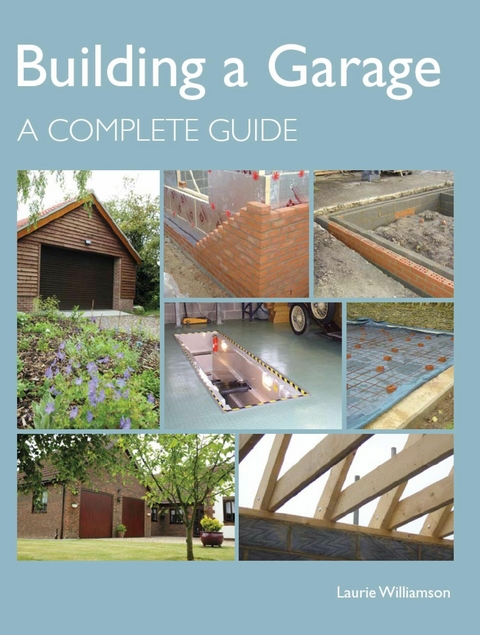
Building a Garage is a practical, step-by-step guide which covers all aspects of building a garage from the planning and design stage through to construction and completion. Whether you would like to build a garage yourself or employ a builder, whether you want to construct a double or a single garage, whether you wish to build with bricks or wood, and whether you require a garage just to house your car or also to provide storage and workshop facilities, this is the book for you.
CHAPTER 1
Selecting a Garage
Building a new garage is potentially a project with a huge array of possibilities within its remit: it can be wide ranging in complexity, or indeed extremely simple, and relatively easy for a competent do-it-yourself enthusiast to complete successfully on his own.
A VARIETY OF DESIGNS
The designs for such a project are many and varied, ranging from a single, basic storage compartment for one vehicle of indeterminate size, to a majestic multi-use construction that serves the needs of a variety of domestic and fitness ambitions; it may be of single or double wall thickness, and there is a huge choice of materials it can be made of. Those regularly used include pre-cast concrete slabs slotted together according to prepared plans, softwood and hardwood timber creating a barn-like structure in a whole variety of designs, and the standard brick and block construction used so widely in general domestic situations.
Two-bay, oak-framed garage.
Two-bay, oak-framed garage with room over.
Oak-framed garages are proving extremely popular nowadays, and there is an extensive range of design possibilities, from bespoke hand-made components through to ready-to-assemble kits for the experienced DIY builder. Oak has been used as a traditional building material for centuries, and has truly passed the test of time. Magnificent purpose-built oak-framed garages built from sustainable woodland are now available in a range of styles that will meet almost every need. Centuries-old carpentry skills used on home-grown ‘green’ building materials, and benefiting from modern techniques, produce an end result of elegance and beauty with the potential for a very long life.
For the dedicated self-build enthusiast working within fixed parameters, an ideal and practical solution may be found in the portable or demountable garage market. For several decades portable garage manufacturers have provided an ever-improving and increasing range of designs and styles to meet the need for a state-of-the-art, weatherproof solution to vehicle storage and protection without having to pay too much. The ranges currently available from a large number of experienced suppliers offer an extensive choice with something to suit every pocket – a comprehensive variety of styles, sizes and shapes including traditional and modern designs all produced using only the highest quality materials.
The benefits or differences between erecting a portable garage and a permanent one are many and varied. The one shared point will be the base upon which the garage is built. A secure level concrete base is recommended, and any guarantees provided by the garage manufacturers will depend upon how well the base is laid and how level it is. The quality of the base material may well also determine how the new garage works and what maintenance is required during its lifetime.
With such a variety of roof styles and wall finishes available, the appearance of the new garage can be selected from the wide range available. Single and double doors can be fitted, along with windows and entrance doors. The majority of manufacturers will provide a supply and build service on the base you have built.
Inspection pit.
When you have selected the garage to suit your particular needs, then other factors need to be looked at before pen is put to paper. The appearance of this new structure is singularly important, so it is essential to choose the garage door you prefer before the plans have been prepared. The style, function and operating room required must all be decided at an early stage. With so many garage doors available ‘off the peg’, these dimensions should be included on the building plans. Custom-made doors can be produced where aperture sizes do not meet the standard sizes available, but these doors will be more expensive, and ordering time must be allowed to prevent delays on the build.
And finally, issues relating to what the garage is to be used for, and the effect it will have on the surrounding area, will need to be addressed. If it is to be used for repairs besides just storage of a motor vehicle, then an inspection pit built in during the construction process may be a welcome addition. Working on your car is much easier with an inspection pit in your garage: think of all the jobs where you have to crawl about underneath it – oil changes, exhaust swaps, greasing, welding – all fairly unpleasant. An inspection pit makes access to the underside of your car easy, allowing you to work in well lit comfort with all your tools to hand.
The Driveway
Concerning the area surrounding the new garage, we need to look at the driveway and consider how, by using eco-friendly ‘green’ products, we can relieve any pressures on the local ‘climate’ and water table; all are guaranteed to meet the general design requirements. With so much news based on climate change and global warming, there is also a drive to prevent, or at least defer, the effects of this phenomenon, particularly where savings can be made. Practically speaking, an eco-friendly driveway should be easy to install and attractive to look at, and can be very cost effective, although it is likely to need regular maintenance.
An eco-friendly driveway.
Such a driveway can be constructed using driveway honeycomb grids made from recycled plastic with the cells filled with a mixture of sand and soil. The area is then seeded and treated, as with a standard lawn.
Why a Garage?
Before making even the most basic of decisions with regard to design, the first question to address is ‘Why do we need a garage?’ It may be required to provide adequate protection from inclement or adverse weather conditions, where anything from a lean-to structure or even a car port may meet with immediate requirements. Alternatively, where the vehicle in question needs to be stored, even for very short periods, in a building that is absolutely secure, then the design and build will need to be far more complex and demanding.
Shingle driveway.
Once this question is fully answered, then you will know more exactly the type of structure that needs to be designed and built. It is fairly safe to say that every possible design will have been considered at some time during the life of the current motor vehicle, and every type of construction. However, although the object of this attention has changed over the decades, it will be only in the minor matter of size: otherwise not much has changed at all. Uses other than those of storage will be dealt with at a later stage; in the meantime, storage, assembly and repair are all avenues to be considered before plans are drawn up.
Attached flat-roof garage.
Attached lean-to garage.
When the full use of this new building has been determined, then design and location need to be addressed. As mentioned earlier, design will certainly have been extensively researched, with many books and magazines promoting different designs available on the internet or in the local library. If you can’t find anything to satisfy your requirements, then design professionals are available promoting almost every shape and size. Taking any design to extremes, however, may well fall foul of planning rules, so anything considered out of the ordinary is best brought before the local authority planning officers before pen is put to paper in anger.
THE SINGLE GARAGE
Most common of all is the ‘single’ garage, designed and built to accommodate just one average-sized family car, with little room for anything else. However, as vehicles have grown in size in recent years, existing garages – those built, say, twenty years ago – have become difficult to use, with the car occupant often having to squeeze in and out of the car door, so restricted has the space become between the vehicle and the garage wall, the direct result of the increase in vehicle width during the last two decades. It was also not unusual to see a car occupant getting out of the car in front of the garage and actually pushing it in – and of course a similar procedure was required to get it out. Nevertheless, although future changes in vehicle shape and size may only be surmised, it is likely that vehicles will reduce in size over the next few decades, rather than increase.
Single-section garage.
Attached single garage.
The internal measurements for a standard single garage are 2.4 by 4.8m (8 by 15.7ft), or 11.5sq m (125sq ft), but these dimensions are not likely to accommodate an oversized vehicle, nor will they allow you to move comfortably around even the average-sized car. Where there is a requirement to work on, or carry out repairs to the vehicle, or to move around it comfortably, or where additional space is needed for whatever reason, then any plans will need to make allowance for this. Of course the dimensions above are based on standard measurements, and may not be suitable where the garage needs to allow for these or any other extraordinary circumstances.
THE DOUBLE GARAGE
Double garage.
Double garage with room in roof.
Double-section garage.
Next up the scale from a single garage is the double garage, designed to store two...
| Erscheint lt. Verlag | 30.4.2014 |
|---|---|
| Verlagsort | London |
| Sprache | englisch |
| Themenwelt | Sachbuch/Ratgeber ► Freizeit / Hobby ► Hausbau / Einrichten / Renovieren |
| Sachbuch/Ratgeber ► Freizeit / Hobby ► Heimwerken / Do it yourself | |
| Recht / Steuern ► Öffentliches Recht | |
| Technik ► Bauwesen | |
| ISBN-10 | 1-84797-785-5 / 1847977855 |
| ISBN-13 | 978-1-84797-785-4 / 9781847977854 |
| Informationen gemäß Produktsicherheitsverordnung (GPSR) | |
| Haben Sie eine Frage zum Produkt? |
 EPUB (Adobe DRM)
Kopierschutz: Adobe-DRM
Adobe-DRM ist ein Kopierschutz, der das eBook vor Mißbrauch schützen soll. Dabei wird das eBook bereits beim Download auf Ihre persönliche Adobe-ID autorisiert. Lesen können Sie das eBook dann nur auf den Geräten, welche ebenfalls auf Ihre Adobe-ID registriert sind.
Details zum Adobe-DRM
Dateiformat: EPUB (Electronic Publication)
EPUB ist ein offener Standard für eBooks und eignet sich besonders zur Darstellung von Belletristik und Sachbüchern. Der Fließtext wird dynamisch an die Display- und Schriftgröße angepasst. Auch für mobile Lesegeräte ist EPUB daher gut geeignet.
Systemvoraussetzungen:
PC/Mac: Mit einem PC oder Mac können Sie dieses eBook lesen. Sie benötigen eine
eReader: Dieses eBook kann mit (fast) allen eBook-Readern gelesen werden. Mit dem amazon-Kindle ist es aber nicht kompatibel.
Smartphone/Tablet: Egal ob Apple oder Android, dieses eBook können Sie lesen. Sie benötigen eine
Geräteliste und zusätzliche Hinweise
Buying eBooks from abroad
For tax law reasons we can sell eBooks just within Germany and Switzerland. Regrettably we cannot fulfill eBook-orders from other countries.
aus dem Bereich


