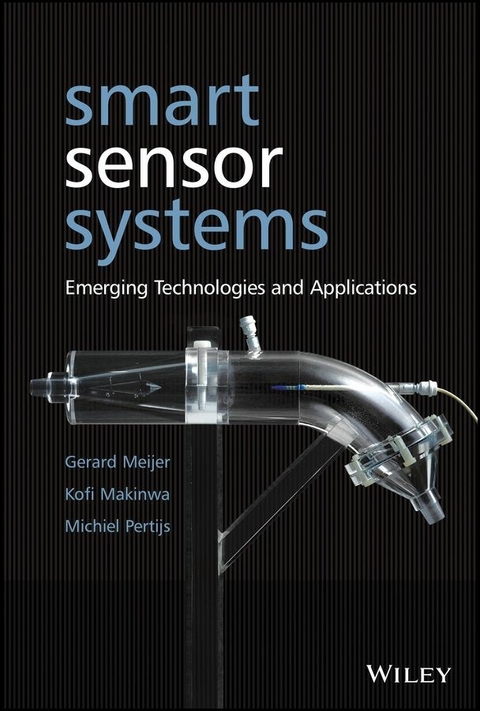
Smart Sensor Systems (eBook)
John Wiley & Sons (Verlag)
978-1-118-70317-5 (ISBN)
Uses a multidisciplinary approach to review recent developments in the field of smart sensor systems, providing complete coverage of all important system and design aspects, their building blocks and methods of signal processing.
The book systematically deals with topics over the whole range of sensor technology: from the theory and constraints of basic elements, the applied techniques and electronic, up to the level of application-orientated issues.
It firstly looks at designing smart sensors and smart sensor systems, with measurement techniques at system level, such as collaboration and trimming, and impedance-measurement techniques. Sensing elements and sensor systems for the measurement of mechanical quantities, and microarrays for DNA detection are discussed in the opening chapters. Circuit design for sensor systems, such as the design of low-noise amplifiers, is covered in Chapter 6, and measurement techniques at device level, such as dynamic offset cancellation, are covered in Chapter 7. Optical imagers are examined in the next chapter. Lastly, the book takes a look at implantable smart sensors for bio-medical applications, then automotive sensors.
- Complements Smart Sensor Systems (2008) in both contents and scope. Where the first book offers an introduction and theory, this book goes further into the practical applications
- Offers a detailed coverage of sensor principles and characterization, measurement techniques and signal- and data processing techniques as applied in smart sensor systems
- A wide range of application areas are included, such as automotive and biomedical, written by an internationally-recognized group of experts, many from industry
- A supplementary website hosts case studies and provides solutions to the problems in the book
Essential reading for Engineers and scientists involved in the design and application of sensor systems; research and development departments and laboratories of industrial companies, and other research institutes; product developers, industrial engineers, industrial set makers looking for innovative products.
Professor Gerard C. M. Meijer, Electronic Instrumentation Laboratory, Delft University of Technology, the Netherlands Professor Meijer is currently a full professor of the Laboratory of Electronic Instrumentation at Delft University of Technology and since 1972 he has been a member of the Research and Teaching staff of the Faculty of Electrical Engineering. His main areas of research concern smart sensor systems and analog interface electronics. He has performed application-oriented research on sensor-interface circuits and fundamental research on the accuracy of voltage references, integrated temperature sensors, effects of mechanical stress in integrated circuits and the effects at high temperatures in integrated circuits. Professor Meijer chairs the national organization 'Sensorplatform' of the Dutch Technology Foundation STW, and the program 'Autonomous Sensor Systems' a national research program. His work has been published in over 280 papers and he has won numerous awards including 'Simon-Stevin Meester' honouree degree in 1999, and the 'Anthony van Leeuwenhoek' chair at TUdelft in 2001. Contributors: Bernhard Boser, University of California, Berkeley Jan Bosiers, Dalsa, the Netherlands Tim Denison, Medtronic, USA Johan Huijsing, TUDelft, the Netherlands Kofi Makinwa, TUDelft, the Netherlands Michiel Pertijs, Holst Centre, the Netherlands Roland Thewes, Infineon, Germany Tim Tiek, Sensata, the Netherlands Albert Theuwissen, TUDelft, the Netherlands
About the Editors xi
List of Contributors xiii
Preface xv
1 Smart Sensor Design 1
Kofi Makinwa
1.1 Introduction 1
1.2 Smart Sensors 2
1.3 A Smart Temperature Sensor 5
1.4 A Smart Wind Sensor 8
1.5 A Smart Hall Sensor 11
1.6 Conclusions 14
2 Calibration and Self-Calibration of Smart Sensors 17
Michiel Pertijs
2.1 Introduction 17
2.2 Calibration of Smart Sensors 18
2.3 Self-Calibration 27
2.4 Summary and Future Trends 38
3 Precision Instrumentation Amplifiers 42
Johan Huijsing
3.1 Introduction 42
3.2 Applications of Instrumentation Amplifiers 43
3.3 Three-OpAmp Instrumentation Amplifiers 44
3.4 Current-Feedback Instrumentation Amplifiers 46
3.5 Auto-Zero OpAmps and InstAmps 48
3.6 Chopper OpAmps and InstAmps 52
3.7 Chopper-Stabilized OpAmps and InstAmps 56
3.8 Chopper-Stabilized and AZ Chopper OpAmps and InstAmps 62
3.9 Summary and Future Directions 65
4 Dedicated Impedance-Sensor Systems 68
Gerard Meijer, Xiujun Li, Blagoy Iliev, Gheorghe Pop, Zu-Yao Chang, Stoyan Nihtianov, Zhichao Tan, Ali Heidari and Michiel Pertijs
4.1 Introduction 68
4.2 Capacitive-Sensor Interfaces Employing Square-Wave Excitation Signals 71
4.3 Dedicated Measurement Systems: Detection of Micro-Organisms 78
4.4 Dedicated Measurement Systems: Water-Content Measurements 83
4.5 Dedicated Measurement Systems: A Characterization System for Blood Impedance 89
4.6 Conclusions 97
5 Low-Power Vibratory Gyroscope Readout 101
Chinwuba Ezekwe and Bernhard Boser
5.1 Introduction 101
5.2 Power-Efficient Coriolis Sensing 101
5.3 Mode Matching 108
5.4 Force Feedback 119
5.5 Experimental Prototype 133
5.6 Summary 142
6 Introduction to CMOS-Based DNA Microarrays 145
Roland Thewes
6.1 Introduction 145
6.2 Basic Operation Principle and Application of DNA Microarrays 146
6.3 Functionalization 149
6.4 CMOS Integration 150
6.5 Electrochemical Readout Techniques 153
6.6 Further Readout Techniques 165
6.7 Remarks on Packaging and Assembly 169
6.8 Concluding Remarks and Outlook 169
7 CMOS Image Sensors 173
Albert Theuwissen
7.1 Impact of CMOS Scaling on Image Sensors 173
7.2 CMOS Pixel Architectures 175
7.3 Photon Shot Noise 180
7.4 Analog-to-Digital Converters for CMOS Image Sensors 181
7.5 Light Sensitivity 184
7.6 Dynamic Range 186
7.7 Global Shutter 187
7.8 Conclusion 188
8 Exploring Smart Sensors for Neural Interfacing 190
Tim Denison, Peng Cong and Pedram Afshar
8.1 Introduction 190
8.2 Technical Considerations for Designing a Dynamic Neural Control System 192
8.3 Predicate Therapy Devices Using Smart-Sensors in a Dynamic Control Framework: Lessons Derived from Closed-Loop Cardiac Pacemakers 195
8.4 The Application of "Indirect" Smart Sensing Methods: A Case Study of Posture Responsive Spinal Cord Stimulation for Chronic Pain 198
8.5 Direct Sensing of Neural States: A Case Study in Smart Sensors for Measurement of Neural States and Enablement of Closed-Loop Neural Systems 207
8.6 Future Trends and Opportunities for Smart Sensing in the Nervous System 231
9 Micropower Generation: Principles and Applications 237
Ruud Vullers, Ziyang Wang, Michael Renaud, Hubregt Visser, Jos Oudenhoven and Valer Pop
9.1 Introduction 237
9.2 Energy Storage Systems 240
9.3 Thermoelectric Energy Harvesting 246
9.4 Vibration and Motion Energy Harvesting 253
9.5 Far-Field RF Energy Harvesting 262
9.6 Photovoltaic 268
9.7 Summary and Future Trends 268
References 270
Index 275
Chapter 1
Smart Sensor Design
Kofi Makinwa
Electronic Instrumentation Laboratory, Delft University of Technology, Delft, The Netherlands
This chapter is an expanded and updated version of [7].
1.1 Introduction
Sensors have become a ubiquitous part of today's world. Modern cars employ tens of sensors, ranging from simple position sensors to multi-axis MEMS accelerometers and gyroscopes. These sensors enhance engine performance and reliability, ensure compliance with environmental standards, and increase occupant comfort and safety. In another example, modern homes contain several sensors, ranging from simple thermostats to infrared motion sensors and thermal gas flow sensors. However, the best example of the ubiquity of sensors is probably the mobile phone, which has evolved from a simple communications device into a veritable sensor platform. A modern mobile phone will typically contain several sensors: a touch sensor, a microphone, one or two image sensors, inertial sensors, magnetic sensors, and environmental sensors for temperature, pressure and even humidity. Together with a GPS receiver for position location, these sensors greatly enhance ease of use and have extended the utility of mobile phones far beyond their original role as portable telephones.
Today, most of the sensors in a mobile phone, as well as most sensors intended for consumer applications, are made from silicon. This is mainly because silicon sensors can be mass-produced at low cost by exploiting the large manufacturing base established by the semiconductor industry. Another important motivation is the fact that the electronic circuitry required to bias a sensor and condition its output can be readily realized on the same substrate or, at least, in the same package. It also helps that semiconductor-grade silicon is a highly pure material with well-defined physical properties, some of which can be tuned by doping, and which can be precisely machined at the nanometer scale.
Silicon is a versatile material, one that exhibits a wide range of physical phenomena and so can be used to realize many different kinds of sensors [1]. For example, magnetic fields can be sensed via the Hall effect, temperature differences can be sensed via the Seebeck effect, mechanical strain can be sensed via the piezo-resistive effect and light can be sensed via the photo-electric effect. In addition, measurands that do not directly interact with silicon can often be indirectly sensed with the help of silicon-compatible materials. For example, humidity can be sensed by measuring the dielectric constant of a hygroscopic polymer [2], while gas concentration can be sensed by measuring the resistance of a suitably adsorbing metal oxide [3]. It should be noted that although silicon sensors may not achieve best-in-class performance, their utility and increasing popularity stems from their small size, low cost and the ease-of-use conferred by their co-integrated electronic circuitry.
Sensors are most useful when they are part of a larger system that is capable of processing and acting upon the information that they provide. This information must therefore be transmitted to the rest of the system in a robust and standardized manner. However, since sensors typically output weak analog signals, this task must be performed by additional electronic circuitry. Such interface electronics is best located close to the sensor, to minimize interference and avoid transmission losses. When they are both located in the same package, the combination of sensor and interface electronics is what we shall refer to as a smart sensor [4].
In addition to providing a robust signal to the outside world, the interface electronics of a smart sensor can be used to perform traditional signal processing functions such as filtering, linearization and compression. But it can also be used to increase the sensor's reliability by implementing self-test and even self-calibration functionality (as will be discussed in Chapter 2). A recent trend is towards sensor fusion, in which the outputs of multiple sensors in a package are combined to generate a more reliable output. For example, the outputs of gyroscopes, accelerometers and magnetic sensors can be combined to obtain robust position estimates, thus enabling mobile devices with indoor navigational capability.
This chapter discusses the design of smart sensor systems, in general, and the design of smart sensors in standard integrated circuit (CMOS) technology, in particular. Examples will be given of the design of state-of-the-art CMOS smart sensors for the measurement of temperature, wind velocity and magnetic field. Although the use of standard CMOS technology constrains the performance of the actual sensors, it minimizes cost, and as will be shown, the performance of the overall sensor system can often be significantly improved with the help of the co-integrated interface electronics.
1.2 Smart Sensors
A smart sensor is a system-in-package in which a sensor and dedicated interface electronics are realized. It may consist of a single chip, as is the case with smart temperature sensors, image sensors and magnetic field sensors. However, in cases when the sensor cannot be implemented in the same technology as the interface electronics, a two-chip solution is required. Since this also decouples the production yield of the circuit from that of the sensor, a two-chip solution is often more cost effective, even in cases where the sensor could be co-integrated with the electronics. Examples of two-chip sensors are mechanical sensors, such as MEMS accelerometers, gyroscopes and microphones, whose manufacture requires the use of micro-machining technology.
Since silicon chips, and especially their connections to the outside world, are rather fragile, smart sensors must be protected by some kind of packaging. The design of an appropriate package can be quite challenging since it must satisfy two conflicting requirements: allowing the sensor to interact with the measurand, while protecting it (and its interface electronics) from environmental damage. In the case of temperature and magnetic sensors, more or less standard integrated circuit packages can be employed. Standard packaging can also be used for inertial sensors, provided that a capping die or layer is used to protect their moving parts. In general, however, most sensors require custom packaging, which significantly increases their cost and usually involves a compromise between performance and robustness.
As has been noted earlier, silicon sensors are not necessarily best-in-class. However, the co-integrated interface electronics can be used to improve the performance of the overall system, either by operating the sensor in an optimal mode or by compensating for some of its non-idealities. This requires a good knowledge of the sensor's characteristics. For example, electronic circuitry can be used to incorporate MEMS inertial sensors in an electro-mechanical feedback loop, which, in general, results in improved linearity and wider bandwidth [5]. An example of such a system will be presented in Chapter 5, which describes the use of feedback and compensation circuits to enhance the performance of a MEMS gyroscope. Knowledge of the sensor's characteristics is also necessary to compensate for its cross-sensitivities, for example, to ambient temperature and packaging stress. The design of a smart sensor thus involves the optimization of an entire system and is, therefore, an exercise in system design.
1.2.1 Interface Electronics
To communicate with the outside world, the output of a smart sensor should preferably be a digital signal, although duty-cycle or frequency modulated signals are also microprocessor-compatible and so are sometimes used. The current trend in smart sensor design is to digitize the sensor's output as early as possible, and then to perform any additional signal conditioning, such as filtering, linearization, cross-sensitivity compensation and so on, in the digital domain. This approach facilitates the interconnection of several sensors via a digital bus, and takes advantage of the flexibility and ever-increasing digital signal processing capability of integrated circuitry. A similar trend can be observed in radio receivers, whose ADCs are moving closer and closer to the antenna, and which are thus employing more and more digital signal processing [6].
However, most sensors output low-level analog signals. This is especially true of silicon sensors such as thermopiles, Hall plates and piezo-resistive strain gauges, whose outputs contain information at the microvolt level. One reason for this is the nature of the transduction mechanisms available in silicon. Another is that their small size limits the amount of energy that they can extract from their environment. While this is a desirable feature in a sensor, which should not disturb, that is, extract energy from, the physical process that it observes, it makes the design of transparent interface electronics quite challenging. Great care must be taken to ensure that circuit non-idealities, such as thermal noise and offset, do not limit the performance of a smart sensor.
A further design challenge arises from the fact that the signal bandwidth of most sensors includes DC. As a result, the design of transparent interface electronics, especially in today's mainstream CMOS technology, involves a constant battle against random error sources such as drift and noise, as well as against systematic errors caused by component mismatch, charge injection and leakage currents.
Fortunately, most sensors are quite slow...
| Erscheint lt. Verlag | 2.4.2014 |
|---|---|
| Sprache | englisch |
| Themenwelt | Technik ► Elektrotechnik / Energietechnik |
| Schlagworte | Circuit Theory & Design • Electrical & Electronics Engineering • Elektrotechnik u. Elektronik • MEMS • Schaltkreise - Theorie u. Entwurf • Sensor • Sensoren, Instrumente u. Messung • Sensors, Instrumentation & Measurement • Smart Sensor • smart sensor design, signal processing methods, smart sensor applications, smart sensor measurement, smart sensor data processing, smart sensor technologies, smart sensors, sensor technology, sensors automotive, biomedical sensors |
| ISBN-10 | 1-118-70317-0 / 1118703170 |
| ISBN-13 | 978-1-118-70317-5 / 9781118703175 |
| Informationen gemäß Produktsicherheitsverordnung (GPSR) | |
| Haben Sie eine Frage zum Produkt? |
 EPUB (Adobe DRM)
Kopierschutz: Adobe-DRM
Adobe-DRM ist ein Kopierschutz, der das eBook vor Mißbrauch schützen soll. Dabei wird das eBook bereits beim Download auf Ihre persönliche Adobe-ID autorisiert. Lesen können Sie das eBook dann nur auf den Geräten, welche ebenfalls auf Ihre Adobe-ID registriert sind.
Details zum Adobe-DRM
Dateiformat: EPUB (Electronic Publication)
EPUB ist ein offener Standard für eBooks und eignet sich besonders zur Darstellung von Belletristik und Sachbüchern. Der Fließtext wird dynamisch an die Display- und Schriftgröße angepasst. Auch für mobile Lesegeräte ist EPUB daher gut geeignet.
Systemvoraussetzungen:
PC/Mac: Mit einem PC oder Mac können Sie dieses eBook lesen. Sie benötigen eine
eReader: Dieses eBook kann mit (fast) allen eBook-Readern gelesen werden. Mit dem amazon-Kindle ist es aber nicht kompatibel.
Smartphone/Tablet: Egal ob Apple oder Android, dieses eBook können Sie lesen. Sie benötigen eine
Geräteliste und zusätzliche Hinweise
Buying eBooks from abroad
For tax law reasons we can sell eBooks just within Germany and Switzerland. Regrettably we cannot fulfill eBook-orders from other countries.
aus dem Bereich