Identification of Physical Systems (eBook)
John Wiley & Sons (Verlag)
978-1-118-53650-6 (ISBN)
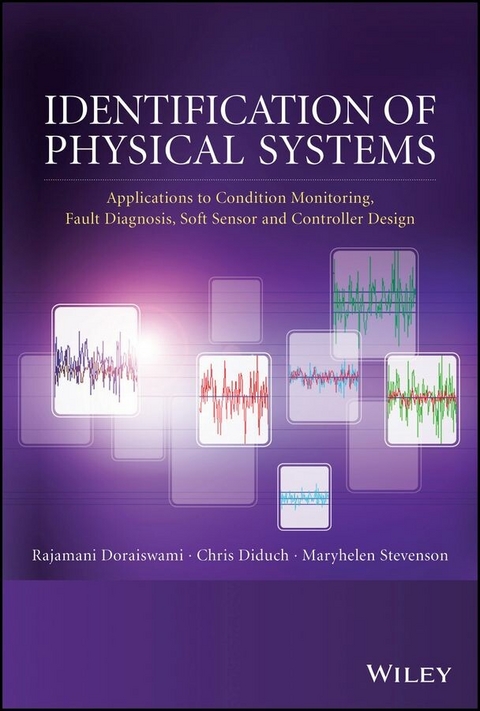
Identification of a physical system deals with the problem of identifying its mathematical model using the measured input and output data. As the physical system is generally complex, nonlinear, and its input-output data is corrupted noise, there are fundamental theoretical and practical issues that need to be considered.
Identification of Physical Systems addresses this need, presenting a systematic, unified approach to the problem of physical system identification and its practical applications. Starting with a least-squares method, the authors develop various schemes to address the issues of accuracy, variation in the operating regimes, closed loop, and interconnected subsystems. Also presented is a non-parametric signal or data-based scheme to identify a means to provide a quick macroscopic picture of the system to complement the precise microscopic picture given by the parametric model-based scheme. Finally, a sequential integration of totally different schemes, such as non-parametric, Kalman filter, and parametric model, is developed to meet the speed and accuracy requirement of mission-critical systems.
Key features:
- Provides a clear understanding of theoretical and practical issues in identification and its applications, enabling the reader to grasp a clear understanding of the theory and apply it to practical problems
- Offers a self-contained guide by including the background necessary to understand this interdisciplinary subject
- Includes case studies for the application of identification on physical laboratory scale systems, as well as number of illustrative examples throughout the book
Identification of Physical Systems is a comprehensive reference for researchers and practitioners working in this field and is also a useful source of information for graduate students in electrical, computer, biomedical, chemical, and mechanical engineering.
Rajamani Doraiswami, Professor Emeritus, Electrical and Computer Engineering Department, University of New Brunswick, USA
Rajamani Doraiswami is Professor Emeritus in the Department of Electrical and Computer Engineering at the University of New Brunswick.
Dr. Doraiswami is known internationally as an excellent researcher, has held an NSERC operating grant continually since 1981 and has published more than 60 papers in refereed journals and 90 conference papers.
Dr. Doraiswami's research interests focus on control, signal processing, pattern classification and algorithms. One of his most successful collaborations has been in the development of laboratories for the teaching of analysis and design of control and signal processing systems in real-time.
Chris Diduch is a Professor in the Department of Electrical and Computer Engineering at the University of New Brunswick. His research is in the fields of control systems and digital systems.
Maryhelen Stevenson is a Professor in the Department of Electrical and Computer Engineering at the University of New Brunswick. Her research is in the fields of pattern classification, speech and signal processing, adaptive systems and time-frequency representations.
Identification of a physical system deals with the problem of identifying its mathematical model using the measured input and output data. As the physical system is generally complex, nonlinear, and its input output data is corrupted noise, there are fundamental theoretical and practical issues that need to be considered. Identification of Physical Systems addresses this need, presenting a systematic, unified approach to the problem of physical system identification and its practical applications. Starting with a least-squares method, the authors develop various schemes to address the issues of accuracy, variation in the operating regimes, closed loop, and interconnected subsystems. Also presented is a non-parametric signal or data-based scheme to identify a means to provide a quick macroscopic picture of the system to complement the precise microscopic picture given by the parametric model-based scheme. Finally, a sequential integration of totally different schemes, such as non-parametric, Kalman filter, and parametric model, is developed to meet the speed and accuracy requirement of mission-critical systems. Key features: Provides a clear understanding of theoretical and practical issues in identification and its applications, enabling the reader to grasp a clear understanding of the theory and apply it to practical problems Offers a self-contained guide by including the background necessary to understand this interdisciplinary subject Includes case studies for the application of identification on physical laboratory scale systems, as well as number of illustrative examples throughout the book Identification of Physical Systems is a comprehensive reference for researchers and practitioners working in this field and is also a useful source of information for graduate students in electrical, computer, biomedical, chemical, and mechanical engineering.
Rajamani Doraiswami, Professor Emeritus, Electrical and Computer Engineering Department, University of New Brunswick, USA Rajamani Doraiswami is Professor Emeritus in the Department of Electrical and Computer Engineering at the University of New Brunswick. Dr. Doraiswami is known internationally as an excellent researcher, has held an NSERC operating grant continually since 1981 and has published more than 60 papers in refereed journals and 90 conference papers. Dr. Doraiswami's research interests focus on control, signal processing, pattern classification and algorithms. One of his most successful collaborations has been in the development of laboratories for the teaching of analysis and design of control and signal processing systems in real-time. Chris Diduch is a Professor in the Department of Electrical and Computer Engineering at the University of New Brunswick. His research is in the fields of control systems and digital systems. Maryhelen Stevenson is a Professor in the Department of Electrical and Computer Engineering at the University of New Brunswick. Her research is in the fields of pattern classification, speech and signal processing, adaptive systems and time-frequency representations.
| Erscheint lt. Verlag | 12.3.2014 |
|---|---|
| Sprache | englisch |
| Themenwelt | Technik ► Elektrotechnik / Energietechnik |
| Schlagworte | Approach • Complex • Control Process & Measurements • Data • Deals • Electrical & Electronics Engineering • Elektrotechnik u. Elektronik • fundamental • generally • Identification • Input • inputoutput • Maschinenbau • mathematical model • mechanical engineering • Messtechnik • Mess- u. Regeltechnik • Noise • Physical • Physical Systems • Practical • Problem • Regelungstechnik • Sensoren, Instrumente u. Messung • Sensors, Instrumentation & Measurement • Sensortechnik • System • Systematic • Systems Engineering & Management • Systemtechnik • Systemtechnik u. -management • Theoretical |
| ISBN-10 | 1-118-53650-9 / 1118536509 |
| ISBN-13 | 978-1-118-53650-6 / 9781118536506 |
| Informationen gemäß Produktsicherheitsverordnung (GPSR) | |
| Haben Sie eine Frage zum Produkt? |
 PDF (Adobe DRM)
Kopierschutz: Adobe-DRM
Adobe-DRM ist ein Kopierschutz, der das eBook vor Mißbrauch schützen soll. Dabei wird das eBook bereits beim Download auf Ihre persönliche Adobe-ID autorisiert. Lesen können Sie das eBook dann nur auf den Geräten, welche ebenfalls auf Ihre Adobe-ID registriert sind.
Details zum Adobe-DRM
Dateiformat: PDF (Portable Document Format)
Mit einem festen Seitenlayout eignet sich die PDF besonders für Fachbücher mit Spalten, Tabellen und Abbildungen. Eine PDF kann auf fast allen Geräten angezeigt werden, ist aber für kleine Displays (Smartphone, eReader) nur eingeschränkt geeignet.
Systemvoraussetzungen:
PC/Mac: Mit einem PC oder Mac können Sie dieses eBook lesen. Sie benötigen eine
eReader: Dieses eBook kann mit (fast) allen eBook-Readern gelesen werden. Mit dem amazon-Kindle ist es aber nicht kompatibel.
Smartphone/Tablet: Egal ob Apple oder Android, dieses eBook können Sie lesen. Sie benötigen eine
Geräteliste und zusätzliche Hinweise
Buying eBooks from abroad
For tax law reasons we can sell eBooks just within Germany and Switzerland. Regrettably we cannot fulfill eBook-orders from other countries.
aus dem Bereich