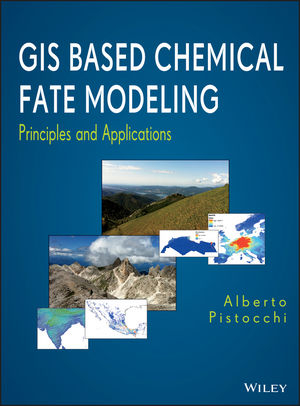
GIS Based Chemical Fate Modeling (eBook)
504 Seiten
John Wiley & Sons (Verlag)
978-1-118-52370-4 (ISBN)
and transport models
Over the past decade, researchers have discovered that
geographic information systems (GIS) are not only excellent tools
for managing and displaying maps, but also useful in the analysis
of chemical fate and transport in the environment. Among its many
benefits, GIS facilitates the identification of critical factors
that drive chemical fate and transport. Moreover, GIS makes it
easier to communicate and explain key model assumptions.
Based on the author's firsthand experience in environmental
assessment, GIS Based Chemical Fate Modeling explores both
GIS and chemical fate and transport modeling fundamentals, creating
an interface between the two domains. It then explains how GIS
analytical functions enable scientists to develop simple, yet
comprehensive spatially explicit chemical fate and transport models
that support real-world applications. In addition, the book
features:
* Practical examples of GIS based model calculations that serve
as templates for the development of new applications
* Exercises enabling readers to create their own GIS based
models
* Accompanying website featuring downloadable datasets used in
the book's examples and exercises
* References to the literature, websites, data repositories, and
online reports to facilitate further research
* Coverage of important topics such as spatial decision support
systems and multi-criteria analysis as well as ecological and human
health risk assessment in a spatial context
GIS Based Chemical Fate Modeling makes a unique
contribution to the environmental sciences by explaining how GIS
analytical functions enhance the development and interpretation of
chemical fate and transport models. Environmental scientists should
turn to this book to gain a deeper understanding of the role of GIS
in describing what happens to chemicals when they are released into
the environment.
ALBERTO PISTOCCHI, MSc Eng, MSc Phil, PhD, is Adjunct Professor of Spatial Decision Support Systems at the University of Trento, Italy, and the author of several scientific contributions to the fields of hydrology, environmental assessment, chemical fate and transport modeling, and spatial decision support systems. As a researcher, environmental analyst, and project manager, he has been working for the European Commission's Joint Research Centre, the Emilia Romagna regional government, and other private and public organizations. He is a founding partner (2001) and the scientific director of GECOsistema, a research spin-off from the University of Bologna, Italy.
Foreword
Chapter 1. Chemicals, models and GIS: a sort of introduction
Chapter 2. Basics of chemical compartment models and their implementation with GIS functions
Chapter 3. Basics of GIS operations
Chapter 4. Map algebra
Chapter 5. Distance calculations (with contributions by P. Mazzoli)
Chapter 6. Spatial statistics and neighbourhood modeling in GIS
Chapter 7. Digital elevation models, topographic controls and hydrologic modeling in GIS
Chapter 8. Elements of dynamic modeling in GIS
Chapter 9. Metamodeling and source-receptor relationship modeling in GIS
Chapter 10. Spatial data management in GIS and the coupling of GIS and environmental models (by Ezio Crestaz)
Chapter 11. Soft computing methods for the overlaying of chemical data with other spatially varying parameters (by Alberto Pistocchi, Davide Geneletti; with contributions by Paolo Mazzoli and Ezio Crestaz)
Chapter 12. Types of data required for chemical fate modeling (by Alberto Pistocchi, Pilar Vizcaino, Christof J. Weissteiner)
Chapter 13. Retrieval and analysis of emission data
Chapter 14. Characterization of environmental properties and processes (by Alberto Pistocchi, Dimitar T. Marinov)
Chapter 15. Complex models, GIS and data assimilation
Chapter 16. The issue of monitoring data and the evaluation of spatial models of chemical fate
Chapter 17. From Fate to exposure and risk modeling with GIS (by Stefano Bagli, Alberto Pistocchi)
Chapter 18. GIS based models in practice: the Multimedia Assessment of Pollutant Pathways in the Environment (MAPPE) model (by Alberto Pistocchi, Dimitar T. Marinov)
Chapter 19. Inverse modeling and its application to water contaminants (by Alberto Pistocchi, Dimitar T. Marinov)
Chapter 20. Chemical fate and transport indicators and the modeling of contamination patterns
Conclusions
| Erscheint lt. Verlag | 28.1.2014 |
|---|---|
| Sprache | englisch |
| Themenwelt | Naturwissenschaften ► Biologie ► Ökologie / Naturschutz |
| Naturwissenschaften ► Chemie ► Organische Chemie | |
| Naturwissenschaften ► Geowissenschaften ► Geografie / Kartografie | |
| Technik ► Umwelttechnik / Biotechnologie | |
| Schlagworte | Chemie • Chemistry • earth sciences • Environmental Chemistry • Geographie • Geography • Geowissenschaften • GIS & Remote Sensing • GIS, Fernerkundung u. Kartographie • GIS, Remote Sensing & Cartography • GIS u. Fernerkundung • Umweltchemie |
| ISBN-10 | 1-118-52370-9 / 1118523709 |
| ISBN-13 | 978-1-118-52370-4 / 9781118523704 |
| Informationen gemäß Produktsicherheitsverordnung (GPSR) | |
| Haben Sie eine Frage zum Produkt? |
 EPUB (Adobe DRM)
Kopierschutz: Adobe-DRM
Adobe-DRM ist ein Kopierschutz, der das eBook vor Mißbrauch schützen soll. Dabei wird das eBook bereits beim Download auf Ihre persönliche Adobe-ID autorisiert. Lesen können Sie das eBook dann nur auf den Geräten, welche ebenfalls auf Ihre Adobe-ID registriert sind.
Details zum Adobe-DRM
Dateiformat: EPUB (Electronic Publication)
EPUB ist ein offener Standard für eBooks und eignet sich besonders zur Darstellung von Belletristik und Sachbüchern. Der Fließtext wird dynamisch an die Display- und Schriftgröße angepasst. Auch für mobile Lesegeräte ist EPUB daher gut geeignet.
Systemvoraussetzungen:
PC/Mac: Mit einem PC oder Mac können Sie dieses eBook lesen. Sie benötigen eine
eReader: Dieses eBook kann mit (fast) allen eBook-Readern gelesen werden. Mit dem amazon-Kindle ist es aber nicht kompatibel.
Smartphone/Tablet: Egal ob Apple oder Android, dieses eBook können Sie lesen. Sie benötigen eine
Geräteliste und zusätzliche Hinweise
Buying eBooks from abroad
For tax law reasons we can sell eBooks just within Germany and Switzerland. Regrettably we cannot fulfill eBook-orders from other countries.
aus dem Bereich