


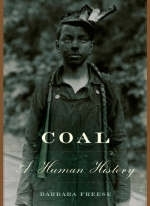
Coal
A Human History
Seiten
2003
Perseus Books (Verlag)
9780738204000 (ISBN)
Perseus Books (Verlag)
9780738204000 (ISBN)
- Titel ist leider vergriffen;
keine Neuauflage - Artikel merken
Prized as "the best stone in Britain" by Roman invaders who carved jewellery out of it, coal has transformed societies, powered navies, fueled economies and expanded frontiers. This text presents a narrative about an ordinary substance that has done extraordinary things.
The fascinating, often surprising story of how a simple black rock has altered the course of history. . Prized as "the best stone in Britain" by Roman invaders who carved jewelry out of it, coal has transformed societies, powered navies, fueled economies, and expanded frontiers. It made China a twelfth-century superpower, inspired the writing of the Communist Manifesto, and helped the northern states win the American Civil War. Yet the mundane mineral that built our global economy -and even today powers our electrical plants-has also caused death, disease, and environmental destruction. As early as 1306, King Edward I tried to ban coal (unsuccessfully) because its smoke became so obnoxious. Its recent identification as a primary cause of global warming has made it a cause clbre of a new kind. In this remarkable book, Barbara Freese takes us on a rich historical journey that begins three hundred million years ago and spans the globe.
From the "Great Stinking Fogs" of London to the rat-infested coal mines of Pennsylvania, from the impoverished slums of Manchester to the toxic city streets of Beijing, Coal is a captivating narrative about an ordinary substance that has done extraordinary things-a simple black rock that could well determine our fate as a species.
The fascinating, often surprising story of how a simple black rock has altered the course of history. . Prized as "the best stone in Britain" by Roman invaders who carved jewelry out of it, coal has transformed societies, powered navies, fueled economies, and expanded frontiers. It made China a twelfth-century superpower, inspired the writing of the Communist Manifesto, and helped the northern states win the American Civil War. Yet the mundane mineral that built our global economy -and even today powers our electrical plants-has also caused death, disease, and environmental destruction. As early as 1306, King Edward I tried to ban coal (unsuccessfully) because its smoke became so obnoxious. Its recent identification as a primary cause of global warming has made it a cause clbre of a new kind. In this remarkable book, Barbara Freese takes us on a rich historical journey that begins three hundred million years ago and spans the globe.
From the "Great Stinking Fogs" of London to the rat-infested coal mines of Pennsylvania, from the impoverished slums of Manchester to the toxic city streets of Beijing, Coal is a captivating narrative about an ordinary substance that has done extraordinary things-a simple black rock that could well determine our fate as a species.
An Assistant Attorney General of Minnesota fo r more than twelve years, Barbara Freese not only helped enforce her state's environmental laws but also became fascinated by the very substa nce causing the worst pollution. She lives in St. Paul.
| Erscheint lt. Verlag | 7.1.2003 |
|---|---|
| Zusatzinfo | Illustrations |
| Verlagsort | Boulder |
| Sprache | englisch |
| Maße | 134 x 191 mm |
| Gewicht | 378 g |
| Themenwelt | Geschichte ► Teilgebiete der Geschichte ► Kulturgeschichte |
| Naturwissenschaften ► Geowissenschaften ► Geologie | |
| Technik ► Bergbau | |
| Technik ► Elektrotechnik / Energietechnik | |
| ISBN-13 | 9780738204000 / 9780738204000 |
| Zustand | Neuware |
| Informationen gemäß Produktsicherheitsverordnung (GPSR) | |
| Haben Sie eine Frage zum Produkt? |
Mehr entdecken
aus dem Bereich

aus dem Bereich
Die Revolution des Gemeinen Mannes
Buch | Softcover (2024)
C.H.Beck (Verlag)
CHF 16,80
Eine Geschichte des Geschmacks
Buch | Hardcover (2025)
C.H.Beck (Verlag)
CHF 49,95


