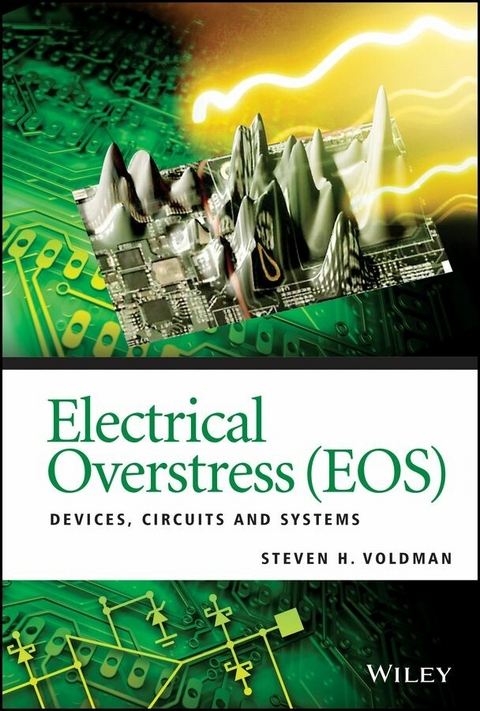
Electrical Overstress (EOS) (eBook)
John Wiley & Sons (Verlag)
978-1-118-70333-5 (ISBN)
Electrical Overstress (EOS) continues to impact semiconductor manufacturing, semiconductor components and systems as technologies scale from micro- to nano-electronics. This bookteaches the fundamentals of electrical overstress and how to minimize and mitigate EOS failures. The text provides a clear picture of EOS phenomena, EOS origins, EOS sources, EOS physics, EOS failure mechanisms, and EOS on-chip and system design. It provides an illuminating insight into the sources of EOS in manufacturing, integration of on-chip, and system level EOS protection networks, followed by examples in specific technologies, circuits, and chips. The book is unique in covering the EOS manufacturing issues from on-chip design and electronic design automation to factory-level EOS program management in today’s modern world.
Look inside for extensive coverage on:
- Fundamentals of electrical overstress, from EOS physics, EOS time scales, safe operating area (SOA), to physical models for EOS phenomena
- EOS sources in today’s semiconductor manufacturing environment, and EOS program management, handling and EOS auditing processing to avoid EOS failures
- EOS failures in both semiconductor devices, circuits and system
- Discussion of how to distinguish between EOS events, and electrostatic discharge (ESD) events (e.g. such as human body model (HBM), charged device model (CDM), cable discharge events (CDM), charged board events (CBE), to system level IEC 61000-4-2 test events)
- EOS protection on-chip design practices and how they differ from ESD protection networks and solutions
- Discussion of EOS system level concerns in printed circuit boards (PCB), and manufacturing equipment
- Examples of EOS issues in state-of-the-art digital, analog and power technologies including CMOS, LDMOS, and BCD
- EOS design rule checking (DRC), LVS, and ERC electronic design automation (EDA) and how it is distinct from ESD EDA systems
- EOS testing and qualification techniques, and
- Practical off-chip ESD protection and system level solutions to provide more robust systems
Electrical Overstress (EOS): Devices, Circuits and Systems is a continuation of the author’s series of books on ESD protection. It is an essential reference and a useful insight into the issues that confront modern technology as we enter the nano-electronic era.
Electrical Overstress (EOS) continues to impact semiconductor manufacturing, semiconductor components and systems as technologies scale from micro- to nano-electronics. This bookteaches the fundamentals of electrical overstress and how to minimize and mitigate EOS failures. The text provides a clear picture of EOS phenomena, EOS origins, EOS sources, EOS physics, EOS failure mechanisms, and EOS on-chip and system design. It provides an illuminating insight into the sources of EOS in manufacturing, integration of on-chip, and system level EOS protection networks, followed by examples in specific technologies, circuits, and chips. The book is unique in covering the EOS manufacturing issues from on-chip design and electronic design automation to factory-level EOS program management in today s modern world. Look inside for extensive coverage on: Fundamentals of electrical overstress, from EOS physics, EOS time scales, safe operating area (SOA), to physical models for EOS phenomena EOS sources in today s semiconductor manufacturing environment, and EOS program management, handling and EOS auditing processing to avoid EOS failures EOS failures in both semiconductor devices, circuits and system Discussion of how to distinguish between EOS events, and electrostatic discharge (ESD) events (e.g. such as human body model (HBM), charged device model (CDM), cable discharge events (CDM), charged board events (CBE), to system level IEC 61000-4-2 test events) EOS protection on-chip design practices and how they differ from ESD protection networks and solutions Discussion of EOS system level concerns in printed circuit boards (PCB), and manufacturing equipment Examples of EOS issues in state-of-the-art digital, analog and power technologies including CMOS, LDMOS, and BCD EOS design rule checking (DRC), LVS, and ERC electronic design automation (EDA) and how it is distinct from ESD EDA systems EOS testing and qualification techniques, and Practical off-chip ESD protection and system level solutions to provide more robust systems Electrical Overstress (EOS): Devices, Circuits and Systems is a continuation of the author s series of books on ESD protection. It is an essential reference and a useful insight into the issues that confront modern technology as we enter the nano-electronic era.
Steven H . Voldman , IEEE Fellow, Vermont, USA
| Erscheint lt. Verlag | 27.8.2013 |
|---|---|
| Sprache | englisch |
| Themenwelt | Technik ► Elektrotechnik / Energietechnik |
| Schlagworte | Circuit Theory & Design • Electrical & Electronics Engineering • Electrical Overstress (EOS): Devices, Circuits and Systems • Electromagnetic Compatibility • Electromagnetic theory • Elektromagnetische Verträglichkeit • Elektromagnetische Verträglichkeit • Elektromagnetismus • Elektrotechnik • Elektrotechnik u. Elektronik • EMC • EMI • EOS • EOS computer aided design • EOS robust circuits • ESD • latchup • Schaltkreise - Theorie u. Entwurf • Steven H. Voldman |
| ISBN-10 | 1-118-70333-2 / 1118703332 |
| ISBN-13 | 978-1-118-70333-5 / 9781118703335 |
| Informationen gemäß Produktsicherheitsverordnung (GPSR) | |
| Haben Sie eine Frage zum Produkt? |
 PDF (Adobe DRM)
Größe: 11,3 MB
Kopierschutz: Adobe-DRM
Adobe-DRM ist ein Kopierschutz, der das eBook vor Mißbrauch schützen soll. Dabei wird das eBook bereits beim Download auf Ihre persönliche Adobe-ID autorisiert. Lesen können Sie das eBook dann nur auf den Geräten, welche ebenfalls auf Ihre Adobe-ID registriert sind.
Details zum Adobe-DRM
Dateiformat: PDF (Portable Document Format)
Mit einem festen Seitenlayout eignet sich die PDF besonders für Fachbücher mit Spalten, Tabellen und Abbildungen. Eine PDF kann auf fast allen Geräten angezeigt werden, ist aber für kleine Displays (Smartphone, eReader) nur eingeschränkt geeignet.
Systemvoraussetzungen:
PC/Mac: Mit einem PC oder Mac können Sie dieses eBook lesen. Sie benötigen eine
eReader: Dieses eBook kann mit (fast) allen eBook-Readern gelesen werden. Mit dem amazon-Kindle ist es aber nicht kompatibel.
Smartphone/Tablet: Egal ob Apple oder Android, dieses eBook können Sie lesen. Sie benötigen eine
Geräteliste und zusätzliche Hinweise
Zusätzliches Feature: Online Lesen
Dieses eBook können Sie zusätzlich zum Download auch online im Webbrowser lesen.
Buying eBooks from abroad
For tax law reasons we can sell eBooks just within Germany and Switzerland. Regrettably we cannot fulfill eBook-orders from other countries.
 EPUB (Adobe DRM)
Kopierschutz: Adobe-DRM
Adobe-DRM ist ein Kopierschutz, der das eBook vor Mißbrauch schützen soll. Dabei wird das eBook bereits beim Download auf Ihre persönliche Adobe-ID autorisiert. Lesen können Sie das eBook dann nur auf den Geräten, welche ebenfalls auf Ihre Adobe-ID registriert sind.
Details zum Adobe-DRM
Dateiformat: EPUB (Electronic Publication)
EPUB ist ein offener Standard für eBooks und eignet sich besonders zur Darstellung von Belletristik und Sachbüchern. Der Fließtext wird dynamisch an die Display- und Schriftgröße angepasst. Auch für mobile Lesegeräte ist EPUB daher gut geeignet.
Systemvoraussetzungen:
PC/Mac: Mit einem PC oder Mac können Sie dieses eBook lesen. Sie benötigen eine
eReader: Dieses eBook kann mit (fast) allen eBook-Readern gelesen werden. Mit dem amazon-Kindle ist es aber nicht kompatibel.
Smartphone/Tablet: Egal ob Apple oder Android, dieses eBook können Sie lesen. Sie benötigen eine
Geräteliste und zusätzliche Hinweise
Buying eBooks from abroad
For tax law reasons we can sell eBooks just within Germany and Switzerland. Regrettably we cannot fulfill eBook-orders from other countries.
aus dem Bereich