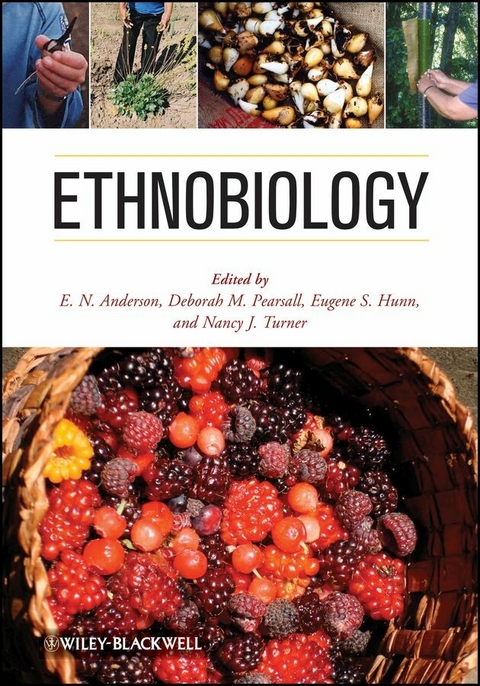
The field of ethnobiology-the study of relationships between particular ethnic groups and their native plants and animals-has grown very rapidly in recent years, spawning numerous subfields. Ethnobiological research has produced a wide range of medicines, natural products, and new crops, as well as striking insights into human cognition, language, and environmental management behavior from prehistory to the present.
This is the single authoritative source on ethnobiology, covering all aspects of the field as it is currently defined. Featuring contributions from experienced scholars and sanctioned by the Society of Ethnobiology, this concise, readable volume provides extensive coverage of ethical issues and practices as well as archaeological, ethnological, and linguistic approaches.
Emphasizing basic principles and methodology, this unique textbook offers a balanced treatment of all the major subfields within ethnobiology, allowing students to begin guided research in any related area-from archaeoethnozoology to ethnomycology to agroecology. Each chapter includes a basic introduction to each topic, is written by a leading specialist in the specific area addressed, and comes with a full bibliography citing major works in the area. All chapters cover recent research, and many are new in approach; most chapters present unpublished or very recently published new research. Featured are clear, distinctive treatments of areas such as ethnozoology, linguistic ethnobiology, traditional education, ethnoecology, and indigenous perspectives. Methodology and ethical action are also covered up to current practice.
Ethnobiology is a specialized textbook for advanced undergraduates and graduate students; it is suitable for advanced-level ethnobotany, ethnobiology, cultural and political ecology, and archaeologically related courses. Research institutes will also find this work valuable, as will any reader with an interest in ethnobiological fields.
Eugene Anderson is Professor Emeritus at the Department of Anthropology?University of California, Riverside and Affiliated Professor at Department of Anthropology, University of Washington.?He is President of the Society for Ethnobiology and sits on the editorial board of the Journal of Ethnobiology.?Dr. Anderson has 45 years of teaching experience in most areas of Anthropology.
The single comprehensive treatment of the field, from the leading members of the Society of Ethnobiology The field of ethnobiology the study of relationships between particular ethnic groups and their native plants and animals has grown very rapidly in recent years, spawning numerous subfields. Ethnobiological research has produced a wide range of medicines, natural products, and new crops, as well as striking insights into human cognition, language, and environmental management behavior from prehistory to the present. This is the single authoritative source on ethnobiology, covering all aspects of the field as it is currently defined. Featuring contributions from experienced scholars and sanctioned by the Society of Ethnobiology, this concise, readable volume provides extensive coverage of ethical issues and practices as well as archaeological, ethnological, and linguistic approaches. Emphasizing basic principles and methodology, this unique textbook offers a balanced treatment of all the major subfields within ethnobiology, allowing students to begin guided research in any related area from archaeoethnozoology to ethnomycology to agroecology. Each chapter includes a basic introduction to each topic, is written by a leading specialist in the specific area addressed, and comes with a full bibliography citing major works in the area. All chapters cover recent research, and many are new in approach; most chapters present unpublished or very recently published new research. Featured are clear, distinctive treatments of areas such as ethnozoology, linguistic ethnobiology, traditional education, ethnoecology, and indigenous perspectives. Methodology and ethical action are also covered up to current practice. Ethnobiology is a specialized textbook for advanced undergraduates and graduate students; it is suitable for advanced-level ethnobotany, ethnobiology, cultural and political ecology, and archaeologically related courses. Research institutes will also find this work valuable, as will any reader with an interest in ethnobiological fields.
Eugene Anderson is Professor Emeritus at the Department of Anthropology?University of California, Riverside and Affiliated Professor at Department of Anthropology, University of Washington.?He is President of the Society for Ethnobiology and sits on the editorial board of the Journal of Ethnobiology.?Dr. Anderson has 45 years of teaching experience in most areas of Anthropology.
List of Contributors vii
Acknowledgments ix
1. Ethnobiology: Overview of a Growing Field 1
2. History of Ethnobiology 15
3. Ethics in Ethnobiology: History, International Law and Policy, and Contemporary Issues 27
4. From Researcher to Partner: Ethical Challenges and Issues Facing the Ethnobiological Researcher 51
5. The World According to Is'a: Combining Empiricism and Spiritual Understanding in Indigenous Ways of Knowing 65
6. Ethnozoology 83
7. Ethnobiology, Historical Ecology, the Archaeofaunal Record, and Interpreting Human Landscapes 97
8. Ethnobiology as a Bridge between Science and Ethics: An Applied Paleozoological Perspective 115
9. Ethnobotany: The Study of People-Plant Relationships 133
10. Reconstructing Past Life-Ways with Plants I: Subsistence and Other Daily Needs 149
11. Reconstructing Past Life-Ways with Plants II: Human- Environment and Human- Human Interactions 173
12. History and Current Trends of Ethnobiological Research in Europe 189
13. Ethnomycology: Fungi and Mushrooms in Cultural Entanglements 213
14. Ethnoecological Approaches to Integrating Theory and Method in Ethnomedical Research 231
15. Assessments of Indigenous Peoples' Traditional Food and Nutrition Systems 249
16. Ethnoecology and Landscapes 267
17. Traditional Resource and Environmental Management 285
18. Ethnobiology and Agroecology 305
19. Linguistic Ethnobiology 319
20. Cognitive Studies in Ethnobiology: What Can We Learn About the Mind as Well as Human Environmental Interaction? 335
21. The Symbolic Uses of Plants 351
22. Learning Ethnobiology: Creating Knowledge and Skills about the Living World 371
Index 389
"In general, in spite of some overlapping information among the
chapters, this volume is well presented and provides the essential
background and the research base that reveals the advancement of
ethnobiology and its future as a multidisciplinary science and is a
highly recommended guide for coursework." (ASBS Newsletter, 1 March
2012)
"The text is clearly and concisely written and supported by
numerous photographs and illustrations." (Book News, 1 October
2011)
"Featured are clear, distinctive treatments of areas such as
ethnozoology, linguistic ethnobiology, traditional education,
ethnoecology, and indigenous perspectives." (Environment Guru, 29
September 2011)
"It is a book well worth reading, and it may be one of
several options in undergraduate courses in the relevant
fields." (Journal of Ethnopharmacology, 6 August
2012)
| Erscheint lt. Verlag | 26.7.2011 |
|---|---|
| Sprache | englisch |
| Themenwelt | Naturwissenschaften ► Biologie |
| Naturwissenschaften ► Chemie | |
| Sozialwissenschaften ► Soziologie ► Mikrosoziologie | |
| Technik | |
| Schlagworte | Anthropologie • Anthropology • Biological Anthropology • Biologische Anthropologie • Biowissenschaften • Chemie • Chemistry • ethnobiology, society for ethnobiology, laboratory biology, medical anthropology, archaeoethnozoology, ethnomycology, archaeology, ethnic groups, ethnic cultures, ethnobotany, medical ethnobiology • Life Sciences • Life Sciences Special Topics • Natural Products • Naturstoffchemie • Spezialthemen Biowissenschaften |
| ISBN-10 | 1-118-01585-1 / 1118015851 |
| ISBN-13 | 978-1-118-01585-8 / 9781118015858 |
| Informationen gemäß Produktsicherheitsverordnung (GPSR) | |
| Haben Sie eine Frage zum Produkt? |
 PDF (Adobe DRM)
Kopierschutz: Adobe-DRM
Adobe-DRM ist ein Kopierschutz, der das eBook vor Mißbrauch schützen soll. Dabei wird das eBook bereits beim Download auf Ihre persönliche Adobe-ID autorisiert. Lesen können Sie das eBook dann nur auf den Geräten, welche ebenfalls auf Ihre Adobe-ID registriert sind.
Details zum Adobe-DRM
Dateiformat: PDF (Portable Document Format)
Mit einem festen Seitenlayout eignet sich die PDF besonders für Fachbücher mit Spalten, Tabellen und Abbildungen. Eine PDF kann auf fast allen Geräten angezeigt werden, ist aber für kleine Displays (Smartphone, eReader) nur eingeschränkt geeignet.
Systemvoraussetzungen:
PC/Mac: Mit einem PC oder Mac können Sie dieses eBook lesen. Sie benötigen eine
eReader: Dieses eBook kann mit (fast) allen eBook-Readern gelesen werden. Mit dem amazon-Kindle ist es aber nicht kompatibel.
Smartphone/Tablet: Egal ob Apple oder Android, dieses eBook können Sie lesen. Sie benötigen eine
Geräteliste und zusätzliche Hinweise
Buying eBooks from abroad
For tax law reasons we can sell eBooks just within Germany and Switzerland. Regrettably we cannot fulfill eBook-orders from other countries.
aus dem Bereich