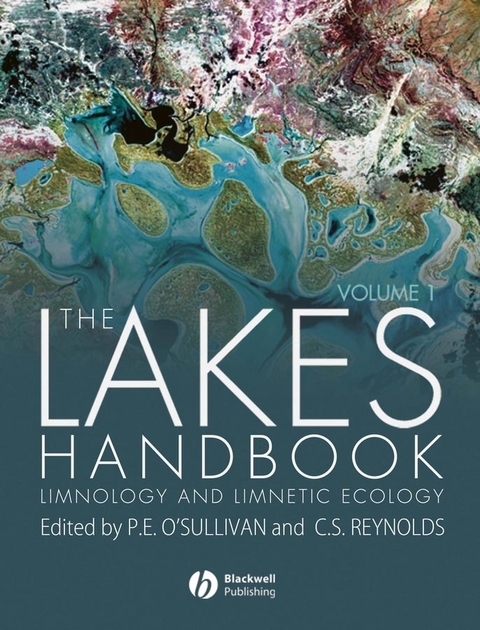
The Lakes Handbook, Volume 1 (eBook)
John Wiley & Sons (Verlag)
978-0-470-99926-4 (ISBN)
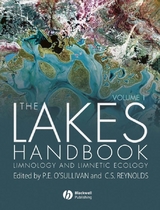
The Lakes Handbook provides an up-to-date overview of the application of ecologically sound approaches, methods and tools using experience gained around the world for an understanding of lakes and their management. Volume one of the Handbook addresses the physical and biological aspects of lakes pertinent to lake management, emphasising those aspects particularly relevant to large, still bodies of water. Volume two then considers lake management, with particular emphasis on sustainability, restoration and rehabilitation.
This handbook will be invaluable to ecologists, environmental scientists, physical geographers and hydrologists involved in limnological research, as well as advanced undergraduate and graduate students looking for authoritative reviews of the key areas of limnological study.
- Brings together basic science and management issues.
- International coverage and international authors.
- Reviews management issues at a level suitable for the non-expert.
Patrick O'Sullivan was formerly Principal Lecturer in Environmental Science at the University of Plymouth, UK. His research was mainly been conducted into the development through time of lake-watershed ecosystems, and the reconstruction of lake ontogenies using palaeolimnological and documentary proxy records. Throughout his teaching career, he concentrated on development of interdisciplinary programmes in Environmental Science, and the interface between the scientific understanding of human impact upon natural processes in lakes, and the economic and philosophical ideas which lie behind the solutions to 'environmental' problems.
Colin Reynolds is a Research Fellow at the Windermere Laboratory of the Freshwater Biological Association. Most of his work there has been directed towards the ecology and dynamics of phytoplankton, in lakes, rivers and reservoirs. He has published over 200 research papers, two books and edited or co-edited several others. He won the International Prize in Limnetic Ecology in 1994 and was awarded the Naumann-Thienemann medal of SIL, the International Association for Limnology.
Continuing concern about water supply and quality, ecosystem sustainability and restoration demands that the modern approach to the management of lakes and reservoirs should be based on a sound understanding of the application of the scientific and ecological principles that underlie freshwater processes. The Lakes Handbook provides an up-to-date overview of the application of ecologically sound approaches, methods and tools using experience gained around the world for an understanding of lakes and their management. Volume one of the Handbook addresses the physical and biological aspects of lakes pertinent to lake management, emphasising those aspects particularly relevant to large, still bodies of water. Volume two then considers lake management, with particular emphasis on sustainability, restoration and rehabilitation. This handbook will be invaluable to ecologists, environmental scientists, physical geographers and hydrologists involved in limnological research, as well as advanced undergraduate and graduate students looking for authoritative reviews of the key areas of limnological study. Brings together basic science and management issues. International coverage and international authors. Reviews management issues at a level suitable for the non-expert.
Patrick O'Sullivan was formerly Principal Lecturer in Environmental Science at the University of Plymouth, UK. His research was mainly been conducted into the development through time of lake-watershed ecosystems, and the reconstruction of lake ontogenies using palaeolimnological and documentary proxy records. Throughout his teaching career, he concentrated on development of interdisciplinary programmes in Environmental Science, and the interface between the scientific understanding of human impact upon natural processes in lakes, and the economic and philosophical ideas which lie behind the solutions to 'environmental' problems. Colin Reynolds is a Research Fellow at the Windermere Laboratory of the Freshwater Biological Association. Most of his work there has been directed towards the ecology and dynamics of phytoplankton, in lakes, rivers and reservoirs. He has published over 200 research papers, two books and edited or co-edited several others. He won the International Prize in Limnetic Ecology in 1994 and was awarded the Naumann-Thienemann medal of SIL, the International Association for Limnology.
List of Contributors.
1. Lakes, Limnology And Limnetic Ecology: Towards A New
Synthesis: C.S. Reynolds and P.E. O'Sullivan.
2. The Origin Of Lake Basins: H. Loffler.
3. The Hydrology Of Lakes: Thomas C. Winter.
4. Chemical Processes Regulating The Composition Of Lake Waters:
Werner Stumm.
5. Physical Properties Of Water Relevant To Limnology And
Limnetic Ecology: C.S. Reynolds.
6. The Motion Of Lake Waters: Dieter M. Imboden.
7. Regulatory Impacts Of Humic Substances In Lakes: C.E.W.
Steinberg.
8. Sedimentation And Lake Sediment Formation: J. Bloesch.
9. Organisation And Energetic Partitioning Of Limnetic
Communities: C.S. Reynolds.
10. Phytoplankton: Judit Padisak.
11. Aquatic Plants And Lake Ecosystems: Jan Pokorny and Jan
Kvet.
12. Benthic Invertebrates: Petur M. Jonasson.
13. Pelagic Microbes - Protozoa And The Microbial Food Web: T.
Weisse.
14. Zooplankton: Z. Maicej Gliwicz.
15. Fish Population Ecology: Ian J. Winfield.
16. Fish Community Ecology: Jouko Sarvala, Martti Rask and Juha
Karialainen.
17. Self-Regulation Of Limnetic Ecosystems: Claudia
Pahl-Wostl.
18. Palaeolimnology: P. O'Sullivan.
Index.
"However, I suggest that no serious contemporary lake limnologist
should be without this volume on the desk or bookshelves. I
anticipate regular returns to my inspection copy." (African
Journal of Aquatic Science, 2004)
"...the Editors and their contributors have provided a treasure
chest of information....researchers...would be well advised to
recommend it to their librarians."
SILnews
"...a powerful text of such scope and calibre as to set a
benchmark for limnetic ecology in the 21st century. Achieving a
range of disparate accomplishments, it could potentially
re-catalyse lake limnology."
African Journal of Aquatic Science
"...the Editors and their contributors have provided a treasure
chest of information....researchers...would be well advised to
recommend it to their librarians."
SILnews
"...a powerful text of such scope and calibre as to set a
benchmark for limnetic ecology in the 21st century. Achieving a
range of disparate accomplishments, it could potentially
re-catalyse lake limnology."
African Journal of Aquatic Science
| Erscheint lt. Verlag | 15.4.2008 |
|---|---|
| Sprache | englisch |
| Themenwelt | Naturwissenschaften ► Biologie ► Limnologie / Meeresbiologie |
| Naturwissenschaften ► Biologie ► Ökologie / Naturschutz | |
| Naturwissenschaften ► Geowissenschaften ► Hydrologie / Ozeanografie | |
| Technik ► Umwelttechnik / Biotechnologie | |
| Schlagworte | Ãkologie u. Biologie der Organismen • application • Aspects • Biowissenschaften • concern • demands • ecologically • Ecology & Organismal Biology • ecosystem • Environmental Management, Policy & Planning • Environmental Studies • Experience • Handbook • Lakes • Life Sciences • modern approach • Ökologie u. Biologie der Organismen • Overview • pertinent • Physical • relevant • reservoirs • restoration • Tools • Umweltforschung • Umweltmanagement, Politik u. -Planung • Understanding • uptodate • Volume • World |
| ISBN-10 | 0-470-99926-8 / 0470999268 |
| ISBN-13 | 978-0-470-99926-4 / 9780470999264 |
| Informationen gemäß Produktsicherheitsverordnung (GPSR) | |
| Haben Sie eine Frage zum Produkt? |
 PDF (Adobe DRM)
Kopierschutz: Adobe-DRM
Adobe-DRM ist ein Kopierschutz, der das eBook vor Mißbrauch schützen soll. Dabei wird das eBook bereits beim Download auf Ihre persönliche Adobe-ID autorisiert. Lesen können Sie das eBook dann nur auf den Geräten, welche ebenfalls auf Ihre Adobe-ID registriert sind.
Details zum Adobe-DRM
Dateiformat: PDF (Portable Document Format)
Mit einem festen Seitenlayout eignet sich die PDF besonders für Fachbücher mit Spalten, Tabellen und Abbildungen. Eine PDF kann auf fast allen Geräten angezeigt werden, ist aber für kleine Displays (Smartphone, eReader) nur eingeschränkt geeignet.
Systemvoraussetzungen:
PC/Mac: Mit einem PC oder Mac können Sie dieses eBook lesen. Sie benötigen eine
eReader: Dieses eBook kann mit (fast) allen eBook-Readern gelesen werden. Mit dem amazon-Kindle ist es aber nicht kompatibel.
Smartphone/Tablet: Egal ob Apple oder Android, dieses eBook können Sie lesen. Sie benötigen eine
Geräteliste und zusätzliche Hinweise
Buying eBooks from abroad
For tax law reasons we can sell eBooks just within Germany and Switzerland. Regrettably we cannot fulfill eBook-orders from other countries.
aus dem Bereich