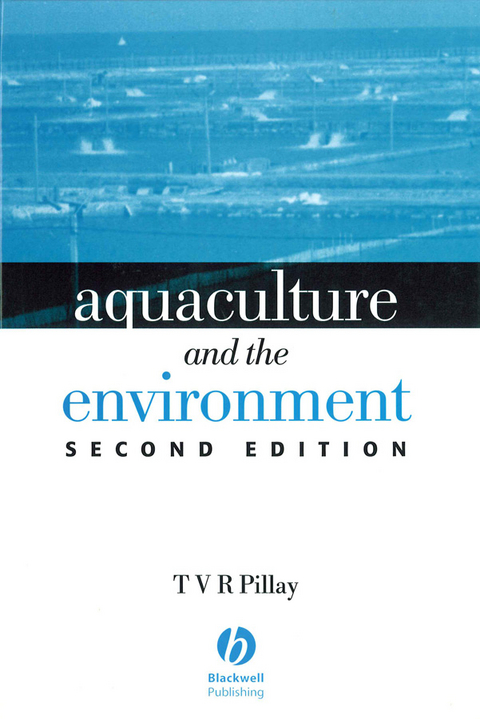
Aquaculture and the Environment (eBook)
John Wiley & Sons (Verlag)
978-0-470-99572-3 (ISBN)
Second Edition
T. V. R. Pillay
The continuing rapid increases in aquaculture production world-wide raise fears of further environmental degradation of the aquatic environment. The second edition of this well-received book brings together and discusses the available information on all major environmental aspects of various aquaculture systems, providing a valuable aid to the preparation of environmental impact assessments of aquaculture projects and showing how potential environmental problems can be reduced or mitigated by sound management.
Much new information is presented in this new edition, including details of the impact of genetically modified food products and a new chapter on the sustainability of aquaculture, which covers the definitions of sustainability and responsible aquaculture, environmental, economic, social and ethical aspects of sustainability and the concept of ecotechnology in fish farming.
Aquaculture and the Environment, Second Edition is essential reading for all personnel working on fish farms and for those moving into the aquatic farm business. Environmental scientists, ecologists, conservationists, fish and shellfish biologist and all those involved in the preservation of aquatic environments will find much of great use and interest within the covers of this book. Libraries in all universities and research establishments where these subjects are studied and taught should have copies of this excellent and useful book on their shelves.
Dr T. V. R. Pillay was formerly Programme Director, Aquaculture Development and Coordination Programme, Food and Agriculture Organization of the United Nations.
Dr T. V. R. Pillay was formerly Programme Director, Aquaculture Development and Coordination Programme, Food and Agriculture Organization of the United Nations.
Aquaculture and the Environment Second Edition T. V. R. Pillay The continuing rapid increases in aquaculture production world-wide raise fears of further environmental degradation of the aquatic environment. The second edition of this well-received book brings together and discusses the available information on all major environmental aspects of various aquaculture systems, providing a valuable aid to the preparation of environmental impact assessments of aquaculture projects and showing how potential environmental problems can be reduced or mitigated by sound management. Much new information is presented in this new edition, including details of the impact of genetically modified food products and a new chapter on the sustainability of aquaculture, which covers the definitions of sustainability and responsible aquaculture, environmental, economic, social and ethical aspects of sustainability and the concept of ecotechnology in fish farming. Aquaculture and the Environment, Second Edition is essential reading for all personnel working on fish farms and for those moving into the aquatic farm business. Environmental scientists, ecologists, conservationists, fish and shellfish biologist and all those involved in the preservation of aquatic environments will find much of great use and interest within the covers of this book. Libraries in all universities and research establishments where these subjects are studied and taught should have copies of this excellent and useful book on their shelves. Dr T. V. R. Pillay was formerly Programme Director, Aquaculture Development and Coordination Programme, Food and Agriculture Organization of the United Nations.
Dr T. V. R. Pillay was formerly Programme Director, Aquaculture Development and Coordination Programme, Food and Agriculture Organization of the United Nations.
Preface.
Acknowledgements.
1. Introduction.
2. Water Quality.
2.1 Aquaculture Farms.
2.2 Open Waters for Stock Building and Stock Enhancement.
3. Nature of Environmental Impacts.
3.1 Conflicts with Other Uses.
3.2 Sedimentation and Obstruction of Water Flows.
3.3 Effluent Discharges.
3.4 Hypernutrification and Eutrophication.
3.5 Chemical Residues.
3.6 Other Effects.
4. Extent of Environmental Impacts.
4.1 Quantification of Effluent Discharges.
4.2 Assessment of Pollutive Effects.
5. Siting and Design of farms.
5.1 Restrictions on the Use of Potential Sites.
5.2 Basic Data for Site Selection.
5.3 Siting Farms on Marshes and Mangroves.
5.4 Selection of Water Bodies and Stocks to be Enhanced.
5.5 Farm Design.
6. Use of Natural Resources.
6.1 Sources and Utilization of Land Water Resources.
6.2 Use of Animal Wastes.
6.3 Use of Sewage.
6.4 Use of Heated-water Effluents.
6.5 Recycling of Water.
6.6 Use of Trophic Levels in Aquaculture.
7. Waste Production in Aquaculture.
7.1 Feed-derived and Metabolic Waste Products.
7.2 Wastes from Food and Feedstuffs.
7.3 Feed Loss.
7.4 Methods of Measuring Waste Production.
7.5 Fertilizer-derived wastes.
7.6 Residues of Biocides and Biostats.
7.7 Algal Blooms.
7.8 Bacterial Communities.
8. Pattern and Effect of Waste Discharges.
8.1 The Nature of Waste Discharges.
8.2 Polyculture.
9. Introduction of Exotics and Escape of Farmed Species.
9.1 Species Diversity.
9.2 Ecological Effects of Introductions.
9.3 Transmission of Diseases.
9.4 Control of Introductions.
9.5 Genetic Dilution due to Escape of Farmed Animals.
9.6 Guidelines for Management of Movement of Live Aquatic
Animals.
10. Pathogens in the Aquatic Environment.
10.1 Occurrence of Pathogens.
10.2 Environmental Causes of Disease.
10.3 Controlling the Spread of Communicable Diseases.
11. Birds and Mammals in Aquaculture.
11.1 Breeding Programmes and Genetically Modified Food
Products.
11.2 Effect of Aquaculture on Birds.
11.3 Effect of Aquaculture on Predatory Mammals.
12. Safety of Aquaculture Products.
12.1 Breeding Programmes and Genetically Modified Food
Products.
12.2 Environmental Contaminants.
12.3 Contamination by Trace Metals.
12.4 Contamination by Organochlorines.
12.5 Microbial Contamination of Shellfish.
12.6 Contamination of Fish in Waste-water Ponds.
12.7 Contamination by Algal Toxins.
13. Sustainability of Aquaculture.
13.1 Definition of Sustainability.
13.2 Economic Sustainability.
13.3 Environmental Sustainability.
13.4 Social Aspects of Sustainability.
13.5 Guidelines for Sustainable Aquaculture.
14. Economics and Environmental Impact Assessments.
14.1 Development Planning and Public Information.
14.2 Aquaculture Development Zones.
14.3 Environmental Impact Assessment.
15. Mitigation of Adverse Effects.
15.1 Land and Water Use.
15.2 Culture Practices.
15.3 Waste Treatment.
16. Research and Regulation.
16.1 Modelling the Environment.
16.2 Regulatory Measures.
References and Further Reading.
Index
this second edition of this benchmark book reflects the enormous
developments that have occured in aquaculture in the intervening
decade or so.... this timely book addresses those problems and
offers a number of practical solutions to them. It is practical,
well researched and well presented
Work Boat World, December 2007
The new edition of Aquaculture: Principles and Practices
is a useful addition to the literature, and is suitable as a
textbook for college and university courses
Aquaculture Int (2007) 15:505-506
| Erscheint lt. Verlag | 15.4.2008 |
|---|---|
| Sprache | englisch |
| Themenwelt | Naturwissenschaften ► Biologie ► Ökologie / Naturschutz |
| Technik | |
| Wirtschaft | |
| Weitere Fachgebiete ► Land- / Forstwirtschaft / Fischerei | |
| Schlagworte | Ãkologie u. Biologie der Organismen • Aquaculture • Aquaculture, Fisheries & Fish Science • Aquakultur • Aquakultur, Fischereiwesen u. Fischforschung • aquatic • Aspects • available • Biowissenschaften • Book • Brings • Continuing • Degradation • Ecology & Organismal Biology • Edition • Environment • environmental • Fears • increases • Information • Life Sciences • Major • Ökologie u. Biologie der Organismen • Production • Projects • RAISE • Rapid • wellreceived • Worldwide |
| ISBN-10 | 0-470-99572-6 / 0470995726 |
| ISBN-13 | 978-0-470-99572-3 / 9780470995723 |
| Informationen gemäß Produktsicherheitsverordnung (GPSR) | |
| Haben Sie eine Frage zum Produkt? |
 PDF (Adobe DRM)
Kopierschutz: Adobe-DRM
Adobe-DRM ist ein Kopierschutz, der das eBook vor Mißbrauch schützen soll. Dabei wird das eBook bereits beim Download auf Ihre persönliche Adobe-ID autorisiert. Lesen können Sie das eBook dann nur auf den Geräten, welche ebenfalls auf Ihre Adobe-ID registriert sind.
Details zum Adobe-DRM
Dateiformat: PDF (Portable Document Format)
Mit einem festen Seitenlayout eignet sich die PDF besonders für Fachbücher mit Spalten, Tabellen und Abbildungen. Eine PDF kann auf fast allen Geräten angezeigt werden, ist aber für kleine Displays (Smartphone, eReader) nur eingeschränkt geeignet.
Systemvoraussetzungen:
PC/Mac: Mit einem PC oder Mac können Sie dieses eBook lesen. Sie benötigen eine
eReader: Dieses eBook kann mit (fast) allen eBook-Readern gelesen werden. Mit dem amazon-Kindle ist es aber nicht kompatibel.
Smartphone/Tablet: Egal ob Apple oder Android, dieses eBook können Sie lesen. Sie benötigen eine
Geräteliste und zusätzliche Hinweise
Buying eBooks from abroad
For tax law reasons we can sell eBooks just within Germany and Switzerland. Regrettably we cannot fulfill eBook-orders from other countries.
aus dem Bereich