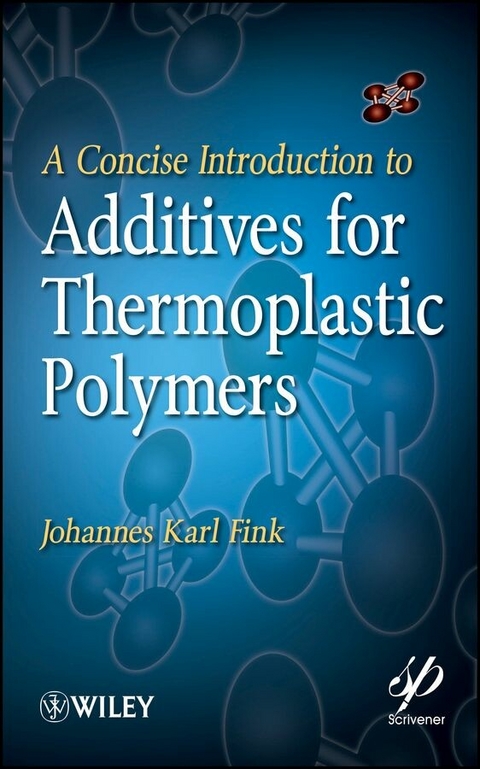
A Concise Introduction to Additives for Thermoplastic Polymers (eBook)
John Wiley & Sons (Verlag)
978-0-470-62423-4 (ISBN)
A Concise Introduction to Additives for Thermoplastic Polymers focuses on additives for thermoplastic polymers and describes 21 of the most important and commonly used additives from Plasticizers and Fillers to Optical Brighteners and Anti-Microbial additives. It also includes chapters on safety and hazards, and prediction of service time models.
While there are many exhaustive and complex books dealing with additives for polymers, the size of them deter students and many industry engineers from using them. The purpose of this book, therefore, is to fill this void and present a concise introduction to this important subject.
Written in an accessible and practical style, the author introduces the reader to the complex subject of plastics additives in an engaging manner. His ability to be concise is the result of his teaching courses on the subject and using his own lecture notes for material. This book comprises the author's course notes so that a larger public can benefit from his knowledge.
A Concise Introduction to Additives for Thermoplastic Polymers is the ideal primer for students who will later work in polymer science or the development of plastics formulation, as well as industry engineers and specialists who want to have a deeper knowledge of the plastics industry.
Describes twenty-one of the most important and commonly used additives A Concise Introduction to Additives for Thermoplastic Polymers focuses on additives for thermoplastic polymers and describes 21 of the most important and commonly used additives from Plasticizers and Fillers to Optical Brighteners and Anti-Microbial additives. It also includes chapters on safety and hazards, and prediction of service time models. While there are many exhaustive and complex books dealing with additives for polymers, the size of them deter students and many industry engineers from using them. The purpose of this book, therefore, is to fill this void and present a concise introduction to this important subject. Written in an accessible and practical style, the author introduces the reader to the complex subject of plastics additives in an engaging manner. His ability to be concise is the result of his teaching courses on the subject and using his own lecture notes for material. This book comprises the author's course notes so that a larger public can benefit from his knowledge. A Concise Introduction to Additives for Thermoplastic Polymers is the ideal primer for students who will later work in polymer science or the development of plastics formulation, as well as industry engineers and specialists who want to have a deeper knowledge of the plastics industry.
JOHANNES KARL FINK is Professor of Macromolecular Chemistry at Montanuniversität, Loebem Austria. His career spans more than 30 years in the fields of polymers, including characterization, flame retardancy, and pyrolysis of polymers.
1 Introduction.
1.1 Classification.
References.
2 Plasticizers.
2.1 Principle of Action.
2.2 Principle of Selection.
2.3 Characterization.
2.4 Risks and Drawbacks.
2.5 Classes of Plasticizers.
2.6 Specific Examples of Application.
References.
3 Fillers.
3.1 Surface Modification.
3.2 Special Applications.
References.
4 Colorants.
4.1 Physics Behind a Color.
4.2 Color Index.
4.3 Test Standards.
4.4 Pigments.
4.5 Organic Colorants.
References.
5 Optical Brighteners.
5.1 Basic Principles.
5.2 Measurement.
5.3 Inorganic Brighteners.
5.4 Organic Optical Brighteners.
References.
6 Antimicrobial Additives.
6.1 Modes of Action.
6.2 Plasticizers.
6.3 Special Formulations.
References.
7 Flame Retardants.
7.1 Mechanisms of Flame Retardants.
7.2 Smoke Suppressants.
7.3 Admixed Additives.
7.4 Bonded Additives.
References.
8 Lubricants.
8.1 Principle of Action.
8.2 Methods of Incorporation.
8.3 Types of Lubricants.
8.4 Special Applications.
References.
9 Antistatic Additives.
9.1 Types of Additives.
9.2 Areas of Application.
9.3 Additives in Detail.
References.
10 Slip Agents.
10.1 Basic Principles of Action.
10.2 Compounds.
10.3 Special Formulations.
References.
11 Surface Improvers.
11.1 Additives.
References.
12 Nucleating Agents.
12.1 Crystalline Polymers.
12.2 Experimental Methods.
12.3 Classes of Nucleating Agents.
12.4 Crystallization Accelerators.
12.5 Clarifying Agents.
References.
13 Antifogging Additives.
13.1 Field of Use.
13.2 Principles of Action.
13.3 Conventional Compounds.
13.4 Compounds for Grafting.
References.
14 Antiblocking Additives.
14.1 Examples of Uses.
References.
15 Hydrolysis.
15.1 Hydrolytic Degradation.
15.2 Polymers.
References.
16 Dehydrochlorination Stabilizers.
16.1 Dehydrochlorination of PVC.
16.2 Stabilizers.
16.2.1Alkyl Tin Compounds.
References.
17 Acid Scavengers.
17.1 Acid Scavenging.
17.2 Examples of Formulation.
References.
18 Metal Deactivators.
18.1 Action of Metals in Polymers.
18.2 Usage.
18.3 Examples of Metal Deactivators.
References.
19 Oxidative Degradation.
19.1 Autoxidation.
19.2 Inhibition of Autoxidation.
References.
20 Degradation by Light.
20.1 Photolysis.
20.2 Photooxdation.
20.3 UV Stabilizers.
References.
21 Blowing Agents.
21.1 Blowing Agents.
21.2 Ozone Depletion Potential.
21.3 Test Methods.
21.4 Special Applications.
References.
22 Compatibilizers.
22.1 Estimation of Compatibility.
22.2 Compatibilizers.
22.3 Special Examples.
References.
23 Prediction of Service Time.
23.1 Accelerated Aging.
23.2 Theory of Critical Distances.
23.3 Monte Carlo Methods.
23.4 Issues in Matrix Composites.
References.
24 Safety and Hazards.
24.1 Plasticizers.
24.2 Flame Retardants.
24.3 Antifogging Agents.
24.4 Other.
References.
Index.
Acronyms.
Chemicals.
General Index.
| Erscheint lt. Verlag | 5.1.2010 |
|---|---|
| Reihe/Serie | Wiley-Scrivener |
| Wiley-Scrivener | Wiley-Scrivener |
| Sprache | englisch |
| Themenwelt | Naturwissenschaften ► Chemie ► Organische Chemie |
| Naturwissenschaften ► Chemie ► Technische Chemie | |
| Technik | |
| Schlagworte | action • Additives • Agents • application • Applications • brighteners • chemical engineering • Chemische Verfahrenstechnik • incorporation • lubricants • mechanisms • Methods • Physics • plasticizers • Polymere • Polymer Science & Technology • Polymerwissenschaft u. -technologie • Retardants • specific • Thermoplast • Types • use |
| ISBN-10 | 0-470-62423-X / 047062423X |
| ISBN-13 | 978-0-470-62423-4 / 9780470624234 |
| Informationen gemäß Produktsicherheitsverordnung (GPSR) | |
| Haben Sie eine Frage zum Produkt? |
 PDF (Adobe DRM)
Kopierschutz: Adobe-DRM
Adobe-DRM ist ein Kopierschutz, der das eBook vor Mißbrauch schützen soll. Dabei wird das eBook bereits beim Download auf Ihre persönliche Adobe-ID autorisiert. Lesen können Sie das eBook dann nur auf den Geräten, welche ebenfalls auf Ihre Adobe-ID registriert sind.
Details zum Adobe-DRM
Dateiformat: PDF (Portable Document Format)
Mit einem festen Seitenlayout eignet sich die PDF besonders für Fachbücher mit Spalten, Tabellen und Abbildungen. Eine PDF kann auf fast allen Geräten angezeigt werden, ist aber für kleine Displays (Smartphone, eReader) nur eingeschränkt geeignet.
Systemvoraussetzungen:
PC/Mac: Mit einem PC oder Mac können Sie dieses eBook lesen. Sie benötigen eine
eReader: Dieses eBook kann mit (fast) allen eBook-Readern gelesen werden. Mit dem amazon-Kindle ist es aber nicht kompatibel.
Smartphone/Tablet: Egal ob Apple oder Android, dieses eBook können Sie lesen. Sie benötigen eine
Geräteliste und zusätzliche Hinweise
Buying eBooks from abroad
For tax law reasons we can sell eBooks just within Germany and Switzerland. Regrettably we cannot fulfill eBook-orders from other countries.
aus dem Bereich