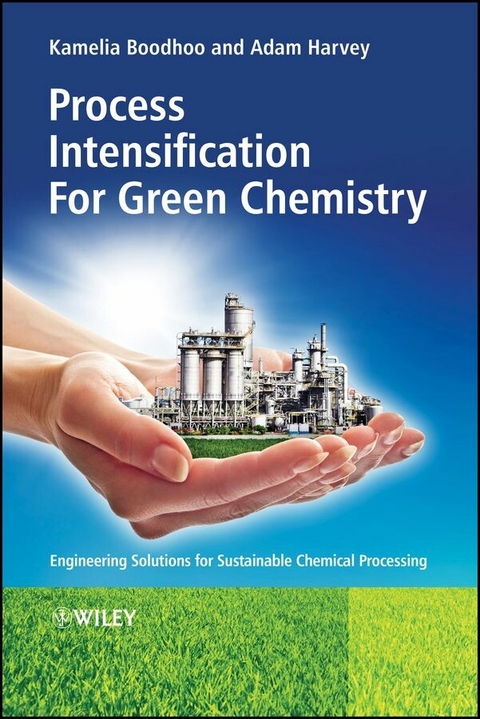
Process Intensification Technologies for Green Chemistry (eBook)
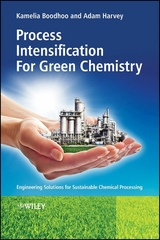
The successful implementation of greener chemical processes relies not only on the development of more efficient catalysts for synthetic chemistry but also, and as importantly, on the development of reactor and separation technologies which can deliver enhanced processing performance in a safe, cost-effective and energy efficient manner. Process intensification has emerged as a promising field which can effectively tackle the challenges of significant process enhancement, whilst also offering the potential to diminish the environmental impact presented by the chemical industry.
Following an introduction to process intensification and the principles of green chemistry, this book presents a number of intensified technologies which have been researched and developed, including case studies to illustrate their application to green chemical processes.
Topics covered include:
• Intensified reactor technologies: spinning disc reactors, microreactors, monolith reactors, oscillatory flow reactors, cavitational reactors
• Combined reactor/separator systems: membrane reactors, reactive distillation, reactive extraction, reactive absorption
• Membrane separations for green chemistry
• Industry relevance of process intensification, including economics and environmental impact, opportunities for energy saving, and practical considerations for industrial implementation.
Process Intensification for Green Chemistry is a valuable resource for practising engineers and chemists alike who are interested in applying intensified reactor and/or separator systems in a range of industries to achieve green chemistry principles.
Dr Kamelia Boodhoo, Newcastle University, UK.
Dr Boodhoo's research in the area of Process Intensification focuses on the development of centrifugal field reactors with particular emphasis on Spinning Disc Reactors. She also has a keen interest in intensification applications involving green chemistry and engineering and renewable resources such as the use of biomass for biopolymers. Dr Boodhoo has been involved in designing and delivering a specialist module on Process Intensification targeted at final year MEng students and MSc students at Newcastle University. For the last two years, she has also been a guest lecturer on the MSc in Green Chemistry and Sustainable Industrial Technology programme at the University of York, teaching 'Improved Reactor Designs through Process intensification'.
Dr Adam Harvey, Newcastle University, UK.
Dr Harvey is an active member of the Process Intensification Group at Newcastle. He is a member of the steering committee of the international research network 'Process Intensification Network' and co-author of 'Process Intensification', published in 2008. He currently lectures on Oscillatory Flow Reactors as part of the Process Intensification module delivered to final year MEng and MSc students.
The successful implementation of greener chemical processes relies not only on the development of more efficient catalysts for synthetic chemistry but also, and as importantly, on the development of reactor and separation technologies which can deliver enhanced processing performance in a safe, cost-effective and energy efficient manner. Process intensification has emerged as a promising field which can effectively tackle the challenges of significant process enhancement, whilst also offering the potential to diminish the environmental impact presented by the chemical industry. Following an introduction to process intensification and the principles of green chemistry, this book presents a number of intensified technologies which have been researched and developed, including case studies to illustrate their application to green chemical processes. Topics covered include: Intensified reactor technologies: spinning disc reactors, microreactors, monolith reactors, oscillatory flow reactors, cavitational reactors Combined reactor/separator systems: membrane reactors, reactive distillation, reactive extraction, reactive absorption Membrane separations for green chemistry Industry relevance of process intensification, including economics and environmental impact, opportunities for energy saving, and practical considerations for industrial implementation. Process Intensification for Green Chemistry is a valuable resource for practising engineers and chemists alike who are interested in applying intensified reactor and/or separator systems in a range of industries to achieve green chemistry principles.
Dr Kamelia Boodhoo, Newcastle University, UK. Dr Boodhoo's research in the area of Process Intensification focuses on the development of centrifugal field reactors with particular emphasis on Spinning Disc Reactors. She also has a keen interest in intensification applications involving green chemistry and engineering and renewable resources such as the use of biomass for biopolymers. Dr Boodhoo has been involved in designing and delivering a specialist module on Process Intensification targeted at final year MEng students and MSc students at Newcastle University. For the last two years, she has also been a guest lecturer on the MSc in Green Chemistry and Sustainable Industrial Technology programme at the University of York, teaching "Improved Reactor Designs through Process intensification". Dr Adam Harvey, Newcastle University, UK. Dr Harvey is an active member of the Process Intensification Group at Newcastle. He is a member of the steering committee of the international research network "Process Intensification Network" and co-author of "Process Intensification", published in 2008. He currently lectures on Oscillatory Flow Reactors as part of the Process Intensification module delivered to final year MEng and MSc students.
| Erscheint lt. Verlag | 19.12.2012 |
|---|---|
| Sprache | englisch |
| Themenwelt | Naturwissenschaften ► Chemie |
| Technik | |
| Schlagworte | chemical engineering • Chemie • Chemische Verfahrenstechnik • Chemistry • Grüne Chemie • Grüne Chemie • Industrial Chemistry • Industrielle Chemie • Nachhaltige u. Grüne Chemie • Nachhaltige u. Grüne Chemie • Process Intensification Technologies for Green Chemistry, Intensified Reactor Technologies, Hybrid Reaction/Separation Technologies, Intensified Separation Technologies, Process Intensification and Business, Environmental Impact of Process Intensification, Energy Saving from Intensified Process Technologies • Separations • Stofftrennverfahren • Sustainable Chemistry & Green Chemistry • Technische Chemie • Technische u. Industrielle Chemie |
| ISBN-13 | 9781118498545 / 9781118498545 |
| Informationen gemäß Produktsicherheitsverordnung (GPSR) | |
| Haben Sie eine Frage zum Produkt? |
 PDF (Adobe DRM)
Kopierschutz: Adobe-DRM
Adobe-DRM ist ein Kopierschutz, der das eBook vor Mißbrauch schützen soll. Dabei wird das eBook bereits beim Download auf Ihre persönliche Adobe-ID autorisiert. Lesen können Sie das eBook dann nur auf den Geräten, welche ebenfalls auf Ihre Adobe-ID registriert sind.
Details zum Adobe-DRM
Dateiformat: PDF (Portable Document Format)
Mit einem festen Seitenlayout eignet sich die PDF besonders für Fachbücher mit Spalten, Tabellen und Abbildungen. Eine PDF kann auf fast allen Geräten angezeigt werden, ist aber für kleine Displays (Smartphone, eReader) nur eingeschränkt geeignet.
Systemvoraussetzungen:
PC/Mac: Mit einem PC oder Mac können Sie dieses eBook lesen. Sie benötigen eine
eReader: Dieses eBook kann mit (fast) allen eBook-Readern gelesen werden. Mit dem amazon-Kindle ist es aber nicht kompatibel.
Smartphone/Tablet: Egal ob Apple oder Android, dieses eBook können Sie lesen. Sie benötigen eine
Geräteliste und zusätzliche Hinweise
Buying eBooks from abroad
For tax law reasons we can sell eBooks just within Germany and Switzerland. Regrettably we cannot fulfill eBook-orders from other countries.
aus dem Bereich