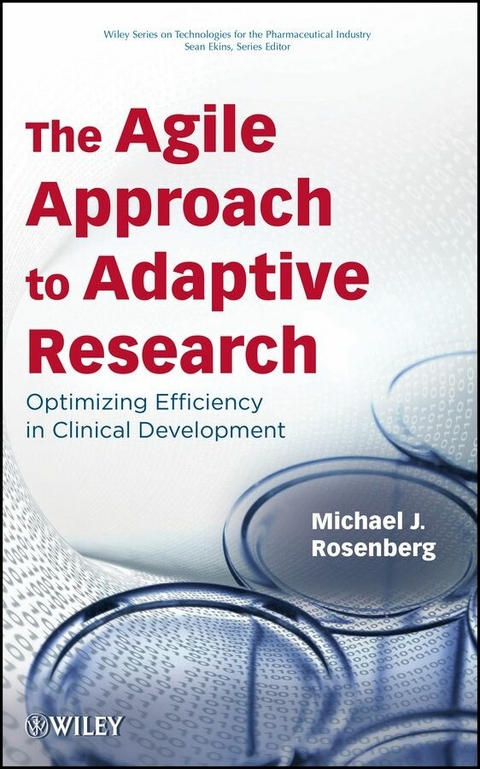
The Agile Approach to Adaptive Research (eBook)
John Wiley & Sons (Verlag)
978-0-470-59967-9 (ISBN)
The pharmaceutical industry today faces a deepening crisis: inefficiency in its core business, the development of new drugs. The Agile Approach to Adaptive Research offers a solution. It outlines how adaptive research, using already-available tools and techniques, can enable the industry to streamline clinical trials and reach decision points faster and more efficiently.
With a wealth of real-world cases and examples, author Michael Rosenberg gives readers a practical overview of drug development, the problems inherent in current practices, and the advantages of adaptive research technology and methods. He explains the concepts, principles, and specific techniques of adaptive research, and demonstrates why it is an essential evolutionary step toward improving drug research and development.
Chapters explore such subjects as:
The adaptive concept
Design and operational adaptations
Sample-size reestimation
Agile clinical development
Safety and dose finding
Statistics in adaptive research, including frequentist and Bayesian approaches
Data management technologies
The future of clinical development
By combining centuries-old intellectual foundations, recent technological advances, and modern management techniques, adaptive research preserves the integrity and validity of clinical research but dramatically improves efficiency.
MICHAEL J. ROSENBERG, MD, MPH, is President and Chief Executive Officer of Health Decisions, Inc. Involved in the design and execution of pharmaceutical development programs for more than twenty-five years, Dr. Rosenberg was selected as Entrepreneur of the Year by Ernst & Young (Health Sector, SE). His company's innovative applications of technology have been recognized by the CIO Enterprise Value Award and the Cisco Growing with Technology Award. Health Decisions has also been named three times to the Deloitte & Touche Technology Fast 500 and the Inc. 500. Dr. Rosenberg is the author of more than 150 scientific articles and serves on advisory groups in business, technology, and medicine.
Apply adaptive research to improve results in drug development The pharmaceutical industry today faces a deepening crisis: inefficiency in its core business, the development of new drugs. The Agile Approach to Adaptive Research offers a solution. It outlines how adaptive research, using already-available tools and techniques, can enable the industry to streamline clinical trials and reach decision points faster and more efficiently. With a wealth of real-world cases and examples, author Michael Rosenberg gives readers a practical overview of drug development, the problems inherent in current practices, and the advantages of adaptive research technology and methods. He explains the concepts, principles, and specific techniques of adaptive research, and demonstrates why it is an essential evolutionary step toward improving drug research and development. Chapters explore such subjects as: The adaptive concept Design and operational adaptations Sample-size reestimation Agile clinical development Safety and dose finding Statistics in adaptive research, including frequentist and Bayesian approaches Data management technologies The future of clinical development By combining centuries-old intellectual foundations, recent technological advances, and modern management techniques, adaptive research preserves the integrity and validity of clinical research but dramatically improves efficiency.
MICHAEL J. ROSENBERG, MD, MPH, is President and Chief Executive Officer of Health Decisions, Inc. Involved in the design and execution of pharmaceutical development programs for more than twenty-five years, Dr. Rosenberg was selected as Entrepreneur of the Year by Ernst & Young (Health Sector, SE). His company's innovative applications of technology have been recognized by the CIO Enterprise Value Award and the Cisco Growing with Technology Award. Health Decisions has also been named three times to the Deloitte & Touche Technology Fast 500 and the Inc. 500. Dr. Rosenberg is the author of more than 150 scientific articles and serves on advisory groups in business, technology, and medicine.
The Agile Approach to Adaptive Research: Optimizing Efficiency in Clinical Development 5
Contents 9
Preface 17
Acknowledgments 21
1 Opportunity for Efficiency 23
The Adaptive Solution 24
An Industrial Success Story 26
Signs of Trouble Ahead 27
Converging Challenges 28
The Struggle to Replace Lost Revenues 29
Clinical Research Is the Key 32
Behind the High Costs of Clinical Development 33
High Costs and Increasing Prices 34
Growing Pressures Mandate Greater Efficiency 38
The High Risk of Current Development Practices 43
Economic Consequences of Faster Clinical Development 44
Thriving in a New Era 44
References 47
2 Defining and Extending the Adaptive Approach 51
The Adaptive Concept 51
Knowledge, Time, and Decision Making 52
The Value of Early Knowledge 54
The Spectrum of Design and Operational Adaptations 56
Maximizing the Adaptive Approach: Agile Clinical Development 56
Measure Performance in Real Time 57
Metrics in Action 59
Right Information to the Right Eyes at the Right Time 61
Make Timely Decisions 62
Organize Work in Lean Processes 63
Rework in Clinical Studies 65
Backflow of Patient Data 66
Match Technology with Tasks 68
Objections to Adaptive Methods 69
Integrity and Validity 70
The Regulatory Environment 72
The Complexity of Clinical Research 72
Conclusion 74
References 74
3 Design Adaptations Part One: Finding the Right Dose 77
Background 78
Types of Design Adaptations 79
Order of Discussion 80
Dosing Nomenclature 80
Determining Maximum Safe Dose 81
Single Arm 81
Continual Reassessment Method 84
Other Bayesian Dose-Finding Methods 88
Determining Optimal Dose (Pruning) 89
Multiple Arms 89
Improvements over Conventional Approaches to Dose Finding 90
Dose Selection in Practice 91
Optimizing Dose Selection 93
Minimizing Costs Versus Maximizing Information 94
Surrogate Endpoints 95
Conclusion 97
References 97
4 Design Adaptations Part Two: Additional Design Changes 101
Sample-Size Reestimation 102
The Trouble with Planning Estimates 102
The High Cost of “Underbuilt” Studies 103
The Benefits of Reestimation and Rightsizing 104
Reestimation and Trial Stages 105
Rules to Restrict Reestimation 106
Adjusting Sample Size for Nuisance Parameters 106
Seamless Designs: Combining Multiple Phases 111
When to Consider Seamless Studies 112
Seamless Phase I/Phase II Trials 114
Seamless Phase II/Phase III Trials 115
Planning Issues in Seamless Trials 117
Phase I-II-III Designs 120
Adaptive Randomization 123
Response-Adaptive Randomization 124
Other Forms of Adaptive Randomization 124
Other Types of Design Adaptations 127
Noninferiority-to-Superiority Design 128
Adaptive Hypotheses and Subpopulations 129
Treatment Switching 131
Conclusions 131
References 131
5 Operational Adaptations 135
Design and Operational Adaptations 135
The Nature and Significance of Operational Adaptations 137
Implementing Operational Adaptations 138
Enrollment and Other Site Issues 138
Data Quality 149
Monitoring 152
Site Closeout and Database Lock 158
Supporting Functions for Efficient Operations 161
The Bottom Line 164
References 164
6 Agile Clinical Development 167
Benefits of Agile Development 168
A Development Example 168
Program Planning 170
Safety Testing (Phase I) 171
Design 171
Planning 174
Operational Considerations 174
Putting the Plan into Action 175
Benefits Realized 176
Transition to Dose-Finding 178
Dose Finding (Phase II) 179
Design 179
Planning 180
Operational Considerations 181
Putting the Plan into Action 182
Benefits Realized 185
Transition to Confirmatory Studies 186
Confirmatory Testing (Phase III) 186
Design 186
Planning 187
Operational 188
Putting the Plan into Action 189
Benefits Realized 191
Transition to Regulatory Filings 193
Summing Up: The Power of Agile Development 193
7 Planning Adaptive Programs 197
Determining Design Adaptations and Their Requirements 198
Determining Operational Requirements to Support Design Adaptations 199
Ensuring the Ability to Meet Operational Requirements 199
The Importance of Programmatic Thinking 200
Looking Ahead 200
Advisory and Oversight Groups 200
Optimizing the Planning Process 202
Regulatory Discussions 202
Contingency Planning 203
Planning Tools and Techniques 203
Decision Trees 204
Simulation 207
Uncertainties in Clinical Research 208
Simulation Tools 209
Simulation Step by Step 212
The Limitations of Simulation 215
Conclusions 218
References 219
Sources of Simulation Software 219
8 Statistics and Decision Making in Adaptive Research 221
The Frequentist Approach 221
What Frequentist Results Say about the Results of a Clinical Study 222
Using Frequentist Results to Make Decisions Based on Individual Trials 223
Other Issues with Frequentist Methods 225
The Bayesian Approach 226
Prior Distributions 227
How Bayesian Statistics Works 228
Bayesian Statistics in the Real World 229
Bayesian Methods in Clinical Research 230
Comparing Bayesian and Frequentist Methods 230
Prior Distributions 232
The Pharma Context 234
Learning and Confirming 234
Ethical and Operational Issues 234
Regulatory Considerations 235
Conclusions 236
Frequentists, Bayesians, and Pragmatists 237
References 238
9 The Agile Platform 241
Essential Types of Data 242
Management Cycles in Clinical Studies 243
The Common Platform for Design and Operational Adaptations 246
Data Capture 246
Data-Capture Technologies 247
The First Generation 249
The Second Generation 249
The Third Generation 252
Data Cleaning and Validation Technology 257
Data Analysis Tools 258
Randomization 259
Site Management 260
Supply-Chain Management 261
Communications 262
Conclusions 262
References 262
10 The Future of Clinical Development 265
Is Restructuring an Alternative to Improving Clinical Development? 268
Greater Efficiency: Changes That Everyone Can Applaud 270
Biotechs and Emerging Low-Cost Competitors 271
Globalization, Offshoring, and Outsourcing 272
Managing More Complex Trials 274
Individualized Medicine Demands Greater Efficiency 275
A More Important Role for Postmarketing Studies 276
The Reward for Greater Efficiency 277
Financial Implications of the Agile Approach 279
Financial Implications of the Agile Approach for the Drug Industry 282
A Brighter Future for Clinical Development 284
First Steps toward Agile Development 284
An Eight-Point Program for Embracing the Adaptive Approach 286
References 286
Index 289
"This book certainly brings the relevant issues upfront."
(Chemistry & Industry, June 2010)
"It is ideal for senior executives who want a strategic view of
adaptive methods, managers looking for practical opportunities to
significantly improve the efficiency of their operations, and
statisticians interested in learning the broader ramifications of
their arcane expertise." (Journal of Clinical Research Best
Practices, April 2010)
"Rosenberg captures the current excitement surrounding adaptive
clinical research, and provides a very readable introduction to the
methodologies involved in implementing such research." (Journal
for Clinical Studies, March 2010)
| Erscheint lt. Verlag | 18.2.2010 |
|---|---|
| Reihe/Serie | Wiley Series on Technologies for the Pharmaceutical |
| Wiley Series on Technologies for the Pharmaceutical | Wiley Series on Technologies for the Pharmaceutical Industry |
| Mitarbeit |
Herausgeber (Serie): Sean Ekins |
| Sprache | englisch |
| Themenwelt | Medizin / Pharmazie |
| Naturwissenschaften ► Chemie | |
| Technik | |
| Schlagworte | Chemie • Chemistry • Clinical Trials • Drug Discovery & Development • Klinische Studien • Medical Science • Medizin • Pharmacology & Pharmaceutical Medicine • Pharmakologie u. Pharmazeutische Medizin • Pharmazeutische Chemie • Rosenberg, Michnael Rosenberg, Ekins, Sean Ekins, clinical trials, designing clinical trials, managing clinical trials, adaptive design for clinical trials, adaptive research • Statistics • Statistik • Wirkstoffforschung • Wirkstoffforschung u. -entwicklung |
| ISBN-10 | 0-470-59967-7 / 0470599677 |
| ISBN-13 | 978-0-470-59967-9 / 9780470599679 |
| Informationen gemäß Produktsicherheitsverordnung (GPSR) | |
| Haben Sie eine Frage zum Produkt? |
 PDF (Adobe DRM)
Kopierschutz: Adobe-DRM
Adobe-DRM ist ein Kopierschutz, der das eBook vor Mißbrauch schützen soll. Dabei wird das eBook bereits beim Download auf Ihre persönliche Adobe-ID autorisiert. Lesen können Sie das eBook dann nur auf den Geräten, welche ebenfalls auf Ihre Adobe-ID registriert sind.
Details zum Adobe-DRM
Dateiformat: PDF (Portable Document Format)
Mit einem festen Seitenlayout eignet sich die PDF besonders für Fachbücher mit Spalten, Tabellen und Abbildungen. Eine PDF kann auf fast allen Geräten angezeigt werden, ist aber für kleine Displays (Smartphone, eReader) nur eingeschränkt geeignet.
Systemvoraussetzungen:
PC/Mac: Mit einem PC oder Mac können Sie dieses eBook lesen. Sie benötigen eine
eReader: Dieses eBook kann mit (fast) allen eBook-Readern gelesen werden. Mit dem amazon-Kindle ist es aber nicht kompatibel.
Smartphone/Tablet: Egal ob Apple oder Android, dieses eBook können Sie lesen. Sie benötigen eine
Geräteliste und zusätzliche Hinweise
Buying eBooks from abroad
For tax law reasons we can sell eBooks just within Germany and Switzerland. Regrettably we cannot fulfill eBook-orders from other countries.
aus dem Bereich