Protein Targeting with Small Molecules (eBook)
John Wiley & Sons (Verlag)
978-0-470-49500-1 (ISBN)
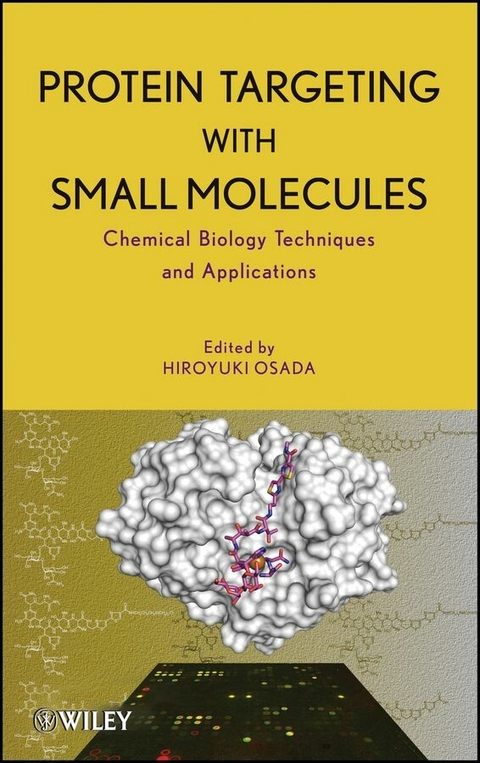
Protein Targeting with Small Molecules: Chemical Biology Techniques and Applications takes readers beyond the use of chemical biology in basic research, providing a highly relevant look at techniques that can address the challenges of biology and drug design and development.
This indispensable bench companion features up-to-date coverage of advances in chemistry and assesses their impact on developing new therapeutics, making it ideal for chemical biologists and medicinal chemists who are developing small molecule drugs to target proteins and treat diseases. In addition, the book examines the full range of complex biological systems and their interrelationship with chemistry, from the interaction of biological response modifiers with proteins to the chemical biology of cell surface oligosaccharides.
Distinguished by an overview of chemical biology that is reinforced and clarified by detailed examples and descriptions of techniques, Protein Targeting with Small Molecules: Chemical Biology Techniques and Applications:
- Introduces key technologies and methods of chemical biology designed to detect the interactions of small molecules and proteins
- Facilitates the discovery of small molecules that bind to proteins and describes the molecules' application in the investigation of biological processes
- Presents timely coverage of the development of fluorescent probes for small molecules, as well as the generation of small molecule ligands and inhibitors
- Reviews important techniques such as chemical genomics, target profiling, immobilization technology, detection methods, chemical inhibition, and structure-based targeting
- Offers a compelling synopsis of data that underscores the recent progress made in the area of targeting proteins by small molecules
Hiroyuki Osada is the Director and Chief Scientist in the Chemical Biology Department of RIKEN Advanced Science Institute and he is heading the RIKEN Natural Products Depository, RIKEN NPDepo. He is a former research fellow at the National Cancer Institute of the NIH. Dr. Osada is on the advisory boards of ACS Chemical Biology and Chemistry: An Asian Journal. In addition, he is an editorial member of four other journals, including Journal of Antibiotics and Journal of Microbiology and Biotechnology.
Discover the link between the latest chemical biology approaches and novel drug therapies! Protein Targeting with Small Molecules: Chemical Biology Techniques and Applications takes readers beyond the use of chemical biology in basic research, providing a highly relevant look at techniques that can address the challenges of biology and drug design and development. This indispensable bench companion features up-to-date coverage of advances in chemistry and assesses their impact on developing new therapeutics, making it ideal for chemical biologists and medicinal chemists who are developing small molecule drugs to target proteins and treat diseases. In addition, the book examines the full range of complex biological systems and their interrelationship with chemistry, from the interaction of biological response modifiers with proteins to the chemical biology of cell surface oligosaccharides. Distinguished by an overview of chemical biology that is reinforced and clarified by detailed examples and descriptions of techniques, Protein Targeting with Small Molecules: Chemical Biology Techniques and Applications: Introduces key technologies and methods of chemical biology designed to detect the interactions of small molecules and proteins Facilitates the discovery of small molecules that bind to proteins and describes the molecules' application in the investigation of biological processes Presents timely coverage of the development of fluorescent probes for small molecules, as well as the generation of small molecule ligands and inhibitors Reviews important techniques such as chemical genomics, target profiling, immobilization technology, detection methods, chemical inhibition, and structure-based targeting Offers a compelling synopsis of data that underscores the recent progress made in the area of targeting proteins by small molecules
Hiroyuki Osada is the Director and Chief Scientist in the Chemical Biology Department of RIKEN Advanced Science Institute and he is heading the RIKEN Natural Products Depository, RIKEN NPDepo. He is a former research fellow at the National Cancer Institute of the NIH. Dr. Osada is on the advisory boards of ACS Chemical Biology and Chemistry: An Asian Journal. In addition, he is an editorial member of four other journals, including Journal of Antibiotics and Journal of Microbiology and Biotechnology.
Contributors.
Preface.
Chapter 1: Chemical biology based on the small molecule-protein
interaction (Hiroyuki Osada).
Chapter 2: Target Profiling of Small Molecules (Leonid L.
Chepelev, and Michel Dumontier).
Chapter 3: Novel application of affinity beads (Yasuaki Kabe,
Mamoru Hatakeyama, Satoshi Sakamoto, Kousuke Nishio, and Hiroshi
Handa).
Chapter 4: Immolization of small molecules on solid phase
(Naoki Kanoh, and Hiroyuki Osada).
Chapter 5: Application of phage display technique to identify
the target protein (Yoon Sun Cho and Ho Jeong Kwon).
Chapter 6: Development of fluorescent probes for small molecules
(Adrian P. Neal, and Carsten Schultz).
Chapter 7: Development of small molecule ligands and inhibitors
(Leonid L. Chepelev, Nikolai L. Chepelev, Hooman Shadnia,
William G. Willmore, James S. Wright, and Michel
Dumontier).
Chapter 8: Interaction of biological response modifier with
proteins (Yuichi Hashimoto).
Chapter 9: Chemical biology of cell motility inhibitors
(Tatsuro Kawamura, Mitsuhiro Kitagawa, and Masaya
Imoto).
Chapter 10: Chemical biology of cell surface oligosaccarides
(Prabhani U. Atukorale, Sean S. Choi, Udayanath Aich,
Christopher T. Campbell, M. Adam Meledeo, and Kevin J.
Yarema).
Chapter 11: Chemical genomics based on yeast genetics
(Shinichi Nishimura, and Yoko Yashiroda Minoru Yoshida).
Chapter 12: Data Fact of small molecules and their target
proteins (Takeo Usui, Akiko Saito, and Hiroyuki Osada).
Index.
"The burgeoning are of chemical biology encompasses many subfields.
While it undergoes constant changes in what it covers necessitated
by the rapid changes in both chemistry and biology, one central
theme has remained constant--the use of small molecules as probes
of myriad biological processes. The majority of bioactive small
molecules of interest to chemical biologists manifest their unique
and selective biological effects through binding to and interfering
with the function of proteins. As such, experimental tools and
techniques for detecting and deconvoluting the interactions between
small molecules and proteins are of great interest to contemporary
chemical biologists. The book entitled "Protein Targetting with
Small Molecules" edited by Dr. Hiroyuki Osada thus fulfills an
important void in the field. In this book, different experimental
approaches and techniques were reviewed by the frontline
practitioners in the field. Both theoretical and practical aspects
of each general technique are thoughtfully covered, which were
further illustrated by specific examples. It can serve multiple
purposes, as a text book for graduate level chemical biology
education and a reference book for those looking for new tools to
study small-molecule protein and even small molecule-pathway
interactions."
--Dr. Jun Liu, Johns Hopkins University School of
Medicine
"The book edited by Hiroyuki Osada, one of the foremost chemical
biologists of the time, aims at covering this enormously wide field
by twelve complementary reviews written by experts in their
individual areas of research.... Taken together the book provides a
widespread overview of numerous techniques, approaches and methods
typically applied in small molecule ligand design, synthesis,
screening, target identification and validation as well as
applications in selected fields.... Thus, while reading the
chapters, the reader is exposed to the variety of chemical,
biophysical, biochemical and biological techniques typically
applied in small molecule based chemical biology research.... As
such, I strongly recommend the book to researchers with advanced
training in chemistry, biophysics, biochemistry and biology with a
desire to branch out their research into neighboring disciplines
and ready to become chemical biologists."
--Prof. Dr. Herbert Waldmann, Max Planck Institute of
Molecular Physiology
| Erscheint lt. Verlag | 31.7.2009 |
|---|---|
| Sprache | englisch |
| Themenwelt | Naturwissenschaften ► Biologie ► Biochemie |
| Naturwissenschaften ► Chemie | |
| Technik | |
| Schlagworte | Advances • Applications • bench companion • Biochemie u. Chemische Biologie • Biochemistry (Chemical Biology) • biologists • Biowissenschaften • challenges • Chemical • Chemie • Chemische Biologie • Chemistry • Coverage • Discover • Drugs • highly • Hiroyuki • Ideal • indispensable • Latest • Life Sciences • Link • Molecule • Molecules • New • Osada • Pharmaceutical & Medicinal Chemistry • Pharmazeutische Chemie • Pharmazeutische u. Medizinische Chemie • Proteine • Proteine u. Makromoleküle • Proteine u. Makromoleküle • Proteins & Macromolecules • relevant • techniques • therapeutics • uptodate |
| ISBN-10 | 0-470-49500-6 / 0470495006 |
| ISBN-13 | 978-0-470-49500-1 / 9780470495001 |
| Informationen gemäß Produktsicherheitsverordnung (GPSR) | |
| Haben Sie eine Frage zum Produkt? |
 PDF (Adobe DRM)
Kopierschutz: Adobe-DRM
Adobe-DRM ist ein Kopierschutz, der das eBook vor Mißbrauch schützen soll. Dabei wird das eBook bereits beim Download auf Ihre persönliche Adobe-ID autorisiert. Lesen können Sie das eBook dann nur auf den Geräten, welche ebenfalls auf Ihre Adobe-ID registriert sind.
Details zum Adobe-DRM
Dateiformat: PDF (Portable Document Format)
Mit einem festen Seitenlayout eignet sich die PDF besonders für Fachbücher mit Spalten, Tabellen und Abbildungen. Eine PDF kann auf fast allen Geräten angezeigt werden, ist aber für kleine Displays (Smartphone, eReader) nur eingeschränkt geeignet.
Systemvoraussetzungen:
PC/Mac: Mit einem PC oder Mac können Sie dieses eBook lesen. Sie benötigen eine
eReader: Dieses eBook kann mit (fast) allen eBook-Readern gelesen werden. Mit dem amazon-Kindle ist es aber nicht kompatibel.
Smartphone/Tablet: Egal ob Apple oder Android, dieses eBook können Sie lesen. Sie benötigen eine
Geräteliste und zusätzliche Hinweise
Buying eBooks from abroad
For tax law reasons we can sell eBooks just within Germany and Switzerland. Regrettably we cannot fulfill eBook-orders from other countries.
aus dem Bereich