Chromatography (eBook)
John Wiley & Sons (Verlag)
978-1-118-06029-2 (ISBN)
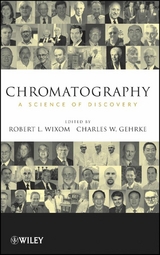
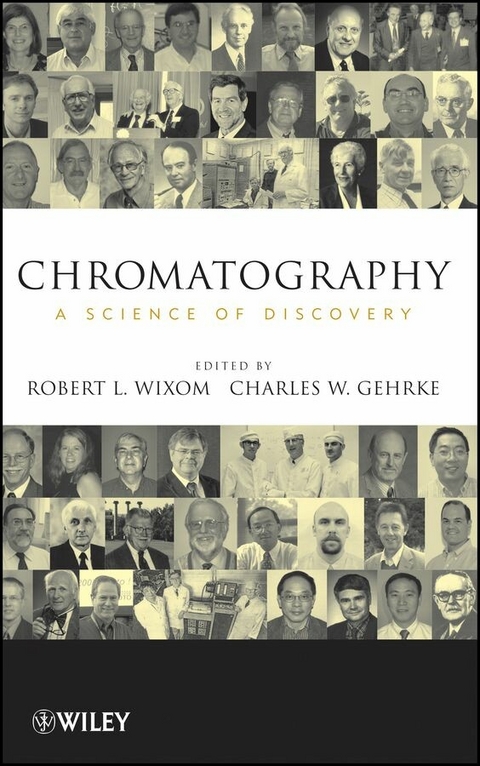
More than one hundred years after Mikhail Tswett pioneered adsorption chromatography, his separation technique has developed into an important branch of scientific study. Providing a full portrait of the discipline, Chromatography: A Science of Discovery bridges the gap between early, twentieth-century chromatography and the cutting edge of today’s research.
Featuring contributions from more than fifty award-winning chromatographers, Chromatography offers a multifaceted look at the development and maturation of this field into its current state, as well as its importance across various scientific endeavors. The coverage includes:
Consideration of chromatography as a unified science rather than just a separation method
Key breakthroughs, revolutions, and paradigm shifts in chromatography
Profiles of Nobel laureates who used chromatography in their research, and the role it played
Recent advances in column technology
Chromatography’s contributions to the agricultural, space, biological/medical sciences; pharmaceutical science; and environmental, natural products, and chemical analysis
Future trends in chromatography
With numerous references and an engaging series of voices, Chromatography: A Science of Discovery offers a diverse look at an essential area of science. It is a unique and invaluable resource for researchers, students, and other interested readers who seek a broader understanding of this field.
ROBERT L. WIXOM (1924–2009). As Professor and then Professor Emeritus of Biochemistry at University of Missouri–Columbia, Dr. Wixom received three teaching awards, including a nomination by MU students for the Conservation Educator of the Year (1996) for the State of Missouri. He served as a departmental representative to the Graduate Faculty Senate (1970–1993) and the chair of the Biological Sciences Sector, (1989–1992), which included a key role in three new major university programs. He was the co-initiator of the UMC Environmental Affairs Council, serving as their first chair for three years (1990–1994). In 2003, he received the Earlham College Outstanding Alumni Award.
CHARLES W. GEHRKE (1917–2009). As Professor and then Professor Emeritus of Biochemistry at University of Missouri–Columbia, Dr. Gehrke authored over 260 scientific publications in analytical chemistry and biochemistry, including a number of books. He was widely known for developing a quantitative gas chromatographic analysis method for amino acids, which, with NASA, advanced the analysis of moon rocks for signs of life. Dr. Gehrke developed many official analytical methods that were adopted by the Association of Analytical Chemists (AOAC) and received numerous awards, including the AOAC Harvey W. Wiley Award.
Drs. Wixom and Gehrke continued to contribute to the advancement of scientific knowledge and education in many ways long after retiring from teaching and research at the University of Missouri. With a great appreciation for history and the groundwork that has been laid for future generations of scientists, they teamed up to produce this book Chromatography: A Science of Discovery. This is their last publication, as they both have passed away. The future of chromatography will benefit from their lifelong efforts.
Leading researchers discuss the past and present of chromatography More than one hundred years after Mikhail Tswett pioneered adsorption chromatography, his separation technique has developed into an important branch of scientific study. Providing a full portrait of the discipline, Chromatography: A Science of Discovery bridges the gap between early, twentieth-century chromatography and the cutting edge of today s research. Featuring contributions from more than fifty award-winning chromatographers, Chromatography offers a multifaceted look at the development and maturation of this field into its current state, as well as its importance across various scientific endeavors. The coverage includes: Consideration of chromatography as a unified science rather than just a separation method Key breakthroughs, revolutions, and paradigm shifts in chromatography Profiles of Nobel laureates who used chromatography in their research, and the role it played Recent advances in column technology Chromatography s contributions to the agricultural, space, biological/medical sciences; pharmaceutical science; and environmental, natural products, and chemical analysis Future trends in chromatography With numerous references and an engaging series of voices, Chromatography: A Science of Discovery offers a diverse look at an essential area of science. It is a unique and invaluable resource for researchers, students, and other interested readers who seek a broader understanding of this field.
ROBERT L. WIXOM (1924-2009). As Professor and then Professor Emeritus of Biochemistry at University of Missouri-Columbia, Dr. Wixom received three teaching awards, including a nomination by MU students for the Conservation Educator of the Year (1996) for the State of Missouri. He served as a departmental representative to the Graduate Faculty Senate (1970-1993) and the chair of the Biological Sciences Sector, (1989-1992), which included a key role in three new major university programs. He was the co-initiator of the UMC Environmental Affairs Council, serving as their first chair for three years (1990-1994). In 2003, he received the Earlham College Outstanding Alumni Award. CHARLES W. GEHRKE (1917-2009). As Professor and then Professor Emeritus of Biochemistry at University of Missouri-Columbia, Dr. Gehrke authored over 260 scientific publications in analytical chemistry and biochemistry, including a number of books. He was widely known for developing a quantitative gas chromatographic analysis method for amino acids, which, with NASA, advanced the analysis of moon rocks for signs of life. Dr. Gehrke developed many official analytical methods that were adopted by the Association of Analytical Chemists (AOAC) and received numerous awards, including the AOAC Harvey W. Wiley Award. Drs. Wixom and Gehrke continued to contribute to the advancement of scientific knowledge and education in many ways long after retiring from teaching and research at the University of Missouri. With a great appreciation for history and the groundwork that has been laid for future generations of scientists, they teamed up to produce this book Chromatography: A Science of Discovery. This is their last publication, as they both have passed away. The future of chromatography will benefit from their lifelong efforts.
Dedication.
Preface.
Acknowledgments.
Editors/Authors.
Contributors.
1 Chromatography--A New Discipline of Science (Robert L.
Wixom, Charles W. Gehrke, Viktor G. Berezkin, and Jaroslav
Janak).
2 Chromatography--A Unified Science (Thomas L.
Chester).
3 Paradigm Shifts in Chromatography: Nobel Awardees (Robert
L. Wixom).
4 The Trails of Research in Chromatography (Robert L.
Wixom).
5 Today's Chromatographers and Their Discoveries
(2000-2008) (Robert L. Wixom and Charles W.
Gehrke).
6 History and Developments in Chromatographic Column Technology
and Validation to 2001 (Ernest Bayer, Walter G. Jennings, Ronald
E. Majors, J. Jack Kirkland, Klaus K. Unger, Heinz Engelhardt,
Gerard Schomburg, William H. Pirkle, Christopher J. Welch, Daniel
W. Armstrong, Jerker O. Porath, Jan B. Sjövall, and Charles W.
Gehrke).
7 Chromatography--Advances and Applications in
Environmental, Agricultural, Space, Biological, and Medical
Sciences (Charles W. Gehrke and David S. Hage).
8 Chromatography--Advances and Applications in
Pharmaceutical Analysis in the Corporate Sector (Pat Noland,
Terry N. Hopper, Michael W. Dong, Yong Guo, Todd D. Maloney, and
Raymond N. Xu).
9 Chromatography--Advances in Environmental and Natural
Products, Chemical Analysis and Synthesis (Del Koch, Lyle
Johnson, Charles W. Gehrke, Pat Sandra and Richard B. Van
Breemen).
10 The Chromatography Story Unfolds (Charles W. Gehrke and
Robert L. Wixom).
11 Chromatography in the Millennium--Perspectives
(Robert L. Wixom and Charles W. Gehrke).
Author/Scientist Index.
Subject Index.
Cover Photographs Key.
"In summary, the editors' objective of linking the
development of chemical separations to their modern practice was
met. The description of the development of various separation
techniques, and their impact on modern science, was most
interesting. Contributions from a variety of separation scientists
provide a breadth of coverage over nearly all areas of modern
chromatography." (Anal Bioanal Chem, 2011)
| Erscheint lt. Verlag | 31.1.2011 |
|---|---|
| Sprache | englisch |
| Themenwelt | Naturwissenschaften ► Biologie |
| Naturwissenschaften ► Chemie ► Analytische Chemie | |
| Technik | |
| Schlagworte | Adsorption • Bildungswesen • Biowissenschaften • Bridges • Cell & Molecular Biology • Chemie • Chemistry • Chromatographie • Chromatographie / Trennverfahren • Chromatography • Chromatography / Separation Techniques • Discipline • Education • Fifty • full • GAP • hundred • important branch • Lehrpläne / Naturwissenschaften • Lehrpläne / Naturwissenschaften • Life Sciences • mikhail • One • Portrait • present • Researchers • Science • Scientific • Separation • Study • technique • todays research • Tswett • years • Zell- u. Molekularbiologie |
| ISBN-10 | 1-118-06029-6 / 1118060296 |
| ISBN-13 | 978-1-118-06029-2 / 9781118060292 |
| Informationen gemäß Produktsicherheitsverordnung (GPSR) | |
| Haben Sie eine Frage zum Produkt? |
 PDF (Adobe DRM)
Größe: 7,0 MB
Kopierschutz: Adobe-DRM
Adobe-DRM ist ein Kopierschutz, der das eBook vor Mißbrauch schützen soll. Dabei wird das eBook bereits beim Download auf Ihre persönliche Adobe-ID autorisiert. Lesen können Sie das eBook dann nur auf den Geräten, welche ebenfalls auf Ihre Adobe-ID registriert sind.
Details zum Adobe-DRM
Dateiformat: PDF (Portable Document Format)
Mit einem festen Seitenlayout eignet sich die PDF besonders für Fachbücher mit Spalten, Tabellen und Abbildungen. Eine PDF kann auf fast allen Geräten angezeigt werden, ist aber für kleine Displays (Smartphone, eReader) nur eingeschränkt geeignet.
Systemvoraussetzungen:
PC/Mac: Mit einem PC oder Mac können Sie dieses eBook lesen. Sie benötigen eine
eReader: Dieses eBook kann mit (fast) allen eBook-Readern gelesen werden. Mit dem amazon-Kindle ist es aber nicht kompatibel.
Smartphone/Tablet: Egal ob Apple oder Android, dieses eBook können Sie lesen. Sie benötigen eine
Geräteliste und zusätzliche Hinweise
Buying eBooks from abroad
For tax law reasons we can sell eBooks just within Germany and Switzerland. Regrettably we cannot fulfill eBook-orders from other countries.
 EPUB (Adobe DRM)
Kopierschutz: Adobe-DRM
Adobe-DRM ist ein Kopierschutz, der das eBook vor Mißbrauch schützen soll. Dabei wird das eBook bereits beim Download auf Ihre persönliche Adobe-ID autorisiert. Lesen können Sie das eBook dann nur auf den Geräten, welche ebenfalls auf Ihre Adobe-ID registriert sind.
Details zum Adobe-DRM
Dateiformat: EPUB (Electronic Publication)
EPUB ist ein offener Standard für eBooks und eignet sich besonders zur Darstellung von Belletristik und Sachbüchern. Der Fließtext wird dynamisch an die Display- und Schriftgröße angepasst. Auch für mobile Lesegeräte ist EPUB daher gut geeignet.
Systemvoraussetzungen:
PC/Mac: Mit einem PC oder Mac können Sie dieses eBook lesen. Sie benötigen eine
eReader: Dieses eBook kann mit (fast) allen eBook-Readern gelesen werden. Mit dem amazon-Kindle ist es aber nicht kompatibel.
Smartphone/Tablet: Egal ob Apple oder Android, dieses eBook können Sie lesen. Sie benötigen eine
Geräteliste und zusätzliche Hinweise
Buying eBooks from abroad
For tax law reasons we can sell eBooks just within Germany and Switzerland. Regrettably we cannot fulfill eBook-orders from other countries.
aus dem Bereich