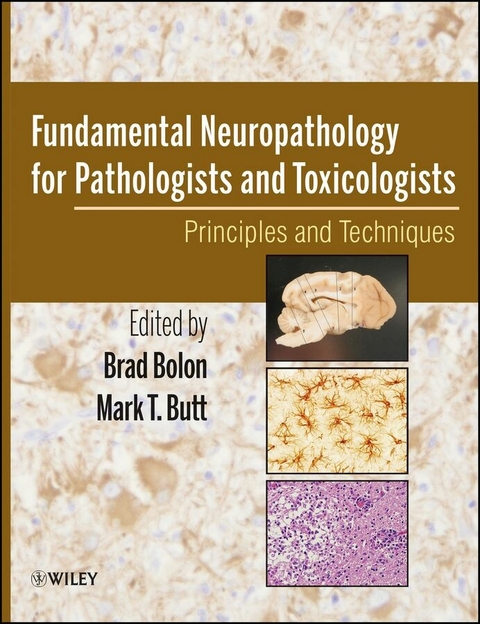
Fundamental Neuropathology for Pathologists and Toxicologists (eBook)
John Wiley & Sons (Verlag)
978-1-118-00223-0 (ISBN)
BRAD BOLON, DVM, MS, PhD, Diplomate ACVP, Diplomate ABT, Fellow ATS, Fellow IATP, has spent over twenty years as a practitioner and teacher of toxicologic neuropathology. He is the founder of GEMpath, Inc., an experimental pathology consultancy specializing in drug discovery research.
MARK T. BUTT, DVM, Diplomate ACVP, is the founder of Tox Path Specialists, LLC, a company that provides neuropathology and histology support to pharmaceutical and biotechnology firms developing novel therapies that target nervous system diseases. He has over twenty years' experience providing neuropathology support and has evaluated over four hundred studies supporting regulatory submissions for neuroactive compounds.
This book offers pathologists, toxicologists, other medical professionals, and students an introduction to the discipline and techniques of neuropathology including chemical and environmental, biological, medical, and regulatory details important for performing an analysis of toxicant-induced neurodiseases. In addition to a section on fundamentals, the book provides detailed coverage of current practices (bioassays, molecular analysis, and nervous system pathology) and practical aspects (data interpretation, regulatory considerations, and tips for preparing reports).
BRAD BOLON, DVM, MS, PhD, Diplomate ACVP, Diplomate ABT, Fellow ATS, Fellow IATP, has spent over twenty years as a practitioner and teacher of toxicologic neuropathology. He is the founder of GEMpath, Inc., an experimental pathology consultancy specializing in drug discovery research. MARK T. BUTT, DVM, Diplomate ACVP, is the founder of Tox Path Specialists, LLC, a company that provides neuropathology and histology support to pharmaceutical and biotechnology firms developing novel therapies that target nervous system diseases. He has over twenty years' experience providing neuropathology support and has evaluated over four hundred studies supporting regulatory submissions for neuroactive compounds.
Editors' Preface.
Forward.
Acknowledgments.
Part I. Fundamentals of Neurobiology.
Chapter 1. Fundamentals of Toxicologic Neuropathology: AnIntroduction.
Chapter 2. Functional Neuroanatomy.
Chapter 3. Atlas of Comparative Neuroanatomy.
Chapter 4. Principles of Comparative and CorrelativeNeurodevelopment, and their Implications for DevelopmentalNeurotoxicity.
Chapter 5. Localizing Neuropathologic Lesions Using NeurologicFindings.
Chapter 6. Behavioral Model Systems for EvaluatingNeuropathology.
Chapter 7. Cognitive Assessments in Non-Human Primates.
Chapter 8. The Impact of Aging on Brain Structure and Functionin Rodents and Canines.
Chapter 9. Fundamentals of Neurotoxicity Detection.
Part 2. Toxicologic Neuropathology: Methodology.
Chapter 10. Practical Neuropathology of the Rat and OtherSpecies.
Chapter 11. The Fluoro-Jade Dyes: Novel, Sensitive, and ReliableFluorochromes for the Histochemical Localization of DegeneratingNeurons.
Chapter 12. Histologic Markers of Neurotoxicity(Nonfluorenscence).
Chapter 13. Common Histologic Artifacts in Nervous SystemTissues.
Chapter 14. High-Definition Microscopic Analysis of the NervousSystem.
Chapter 15. Stereological Solutions for Common QuantitativeEndpoints in Neurotoxicity.
Chapter 16. Anatomy and Processing of Peripheral NerveTissues.
Chapter 17. Pathology Methods in Non-clinical NeurotoxicityStudies: Evaluation of Muscle.
Chapter 18. In Vivo Imaging Applications for the NervousSystem in Animal Models.
Chapter 19. Cerebrospinal Fluid Analysis in ToxicologicNeuropathology.
Chapter 20. Molecular Techniques in ToxicologicNeuropathology.
Part 3. Toxicologic Neuropathology: Current Practices.
Chapter 21. Evaluation of the Adult Nervous System inPreclinical Studies.
Chapter 22. Pathology Methods in Non-clinical NeurotoxicityStudies: Developing Central Nervous System.
Chapter 23. Neuropathology Analysis of the Peripheral NervousSystem.
Chapter 24. Toxicologic Pathology of the Retina and OpticNerve.
Chapter 25. Toxicologic Neurpathology of the Ear.
Chapter 26. Neurpathology of the Olfactory System.
Part 4. Applied Toxicologic Neuropathology.
Chapter 27. Spinal Delivery and Assessment of Drug Safety.
Chapter 28. Diagnostic Neuropathology.
Chapter 29. Toxicologic Neuropathology in Medical Practice.
Chapter 30. Toxiciologic Neuropathology in VeterinaryPractice.
Chapter 31. Regulatory Considerations in ToxicologicNeuropathology.
Chapter 32. The Neuropathology Report and the NeuropathologyPeer Review Report.
Chapter 33. Preparation of Personnel for NeuropathologyAssessment.
Chapter 34. Regulatory Guide to the Histopathologic Assessmentof Neurotoxicity Studies.
Chapter 35. Toxicologic Neuropathology: The Next TwoDecades.
Appendices.
Ready References of Neurobiology Knowledge.
Appendix 1. Neural Cell Markers of Potential Utility forToxicologic Neuropathology Applications.
Appendix 2. Neuroanatomic Atlases for Toxicologic NeuropathologyStudies.
Appendix 3. Text-Based Basic Neurobiology References forToxicologic Neuropathologists.
Appendix 4. Web-Based Neurobiology References for ToxicologicNeuropathogists.
Appendix 5. Toxicologic Neuropathology References for NervousSystem Targets.
Appendix 6. Comparative and Correlative NeurobiologicalParameters Related to Neuropathology Assessment.
Appendix 7. Comparison of Central Nervous System ProportionsBetween Humans and Rats.
Appendix 8. Chemical Composition of Central Nervous SystemTissues and Fluids.
"This is a comprehensive text that includes a wealth of
information on a very wide range of subjects. It will, of course,
appeal to veterinary pathologists and neurotoxicologists, but it
will also serve as a very good guide for diagnostic
neuropathologists or histopathologists entering the world of
toxicological or pharmacological research." (The
Bulletin of The Royal College of Pathologists, 1 October
2012)
"Overall this is a long awaited, extremely useful book
which should be on the shelf of all pathologists, toxicologists and
students working in the field of neurotoxicology or pathology.
" (British Toxicology Society Newsletter, 1 June
2012)
"This exceptional, high quality book will greatly benefit
its intended audience."
(Doody's, 4 May 2012)
| Erscheint lt. Verlag | 8.8.2011 |
|---|---|
| Sprache | englisch |
| Themenwelt | Naturwissenschaften ► Biologie |
| Naturwissenschaften ► Chemie | |
| Technik | |
| Schlagworte | Biowissenschaften • Chemie • Chemistry • Life Sciences • Medical Science • Medizin • Neuroscience • Neurowissenschaften • Pathologie • Pathology • Toxicology • Toxikologie • xenobiotics, nervous system, neuropathology, toxicologists, chemical toxicity, bioassays, molecular analysis, nervous system pathology |
| ISBN-10 | 1-118-00223-7 / 1118002237 |
| ISBN-13 | 978-1-118-00223-0 / 9781118002230 |
| Informationen gemäß Produktsicherheitsverordnung (GPSR) | |
| Haben Sie eine Frage zum Produkt? |
 EPUB (Adobe DRM)
Kopierschutz: Adobe-DRM
Adobe-DRM ist ein Kopierschutz, der das eBook vor Mißbrauch schützen soll. Dabei wird das eBook bereits beim Download auf Ihre persönliche Adobe-ID autorisiert. Lesen können Sie das eBook dann nur auf den Geräten, welche ebenfalls auf Ihre Adobe-ID registriert sind.
Details zum Adobe-DRM
Dateiformat: EPUB (Electronic Publication)
EPUB ist ein offener Standard für eBooks und eignet sich besonders zur Darstellung von Belletristik und Sachbüchern. Der Fließtext wird dynamisch an die Display- und Schriftgröße angepasst. Auch für mobile Lesegeräte ist EPUB daher gut geeignet.
Systemvoraussetzungen:
PC/Mac: Mit einem PC oder Mac können Sie dieses eBook lesen. Sie benötigen eine
eReader: Dieses eBook kann mit (fast) allen eBook-Readern gelesen werden. Mit dem amazon-Kindle ist es aber nicht kompatibel.
Smartphone/Tablet: Egal ob Apple oder Android, dieses eBook können Sie lesen. Sie benötigen eine
Geräteliste und zusätzliche Hinweise
Buying eBooks from abroad
For tax law reasons we can sell eBooks just within Germany and Switzerland. Regrettably we cannot fulfill eBook-orders from other countries.
aus dem Bereich