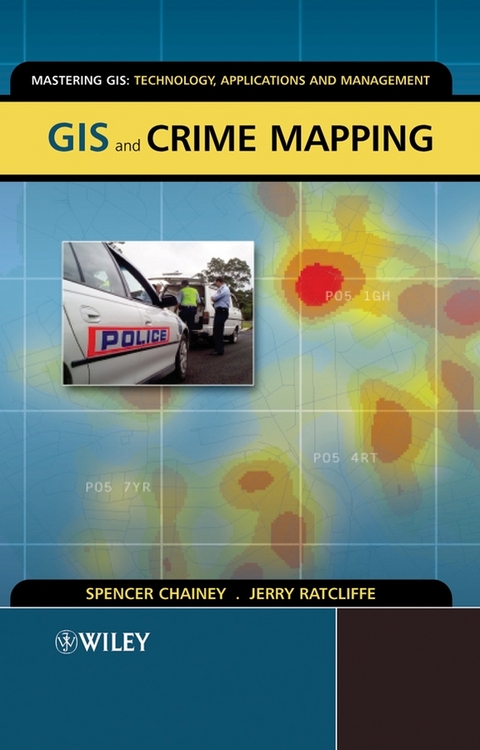
GIS and Crime Mapping provides essential information and reference material to support readers in developing and implementing crime mapping. Relevant case studies help demonstrate the key principles, concepts and applications of crime mapping.
This book combines the topics of theoretical principles, GIS, analytical techniques, data processing solutions, information sharing, problem-solving approaches, map design, and organisational structures for using crime mapping for policing and crime reduction. Delivered in an accessible style, topics are covered in a manner that underpins crime mapping use in the three broad areas of operations, tactics and strategy.
- Provides a complete start-to-finish coverage of crime mapping, including theory, scientific methodologies, analysis techniques and design principles.
- Includes a comprehensive presentation of crime mapping applications for operational, tactical and strategic purposes.
- Includes global case studies and examples to demonstrate good practice.
- Co-authored by Spencer Chainey, a leading researcher and consultant on GIS and crime mapping, and Jerry Ratcliffe, a renowned professor and former police officer.
This book is essential reading for crime analysts and other professionals working in intelligence roles in law enforcement or crime reduction, at the local, regional and national government levels. It is also an excellent reference for undergraduate and Masters students taking courses in GIS, Geomatics, Crime Mapping, Crime Science, Criminal Justice and Criminology.
Spencer Chainey is the author of GIS and Crime Mapping, published by Wiley.
Jerry Ratcliffe is the author of GIS and Crime Mapping, published by Wiley.
The growing potential of GIS for supporting policing and crime reduction is now being recognised by a broader community. GIS can be employed at different levels to support operational policing, tactical crime mapping, detection, and wider-ranging strategic analyses. With the use of GIS for crime mapping increasing, this book provides a definitive reference. GIS and Crime Mapping provides essential information and reference material to support readers in developing and implementing crime mapping. Relevant case studies help demonstrate the key principles, concepts and applications of crime mapping. This book combines the topics of theoretical principles, GIS, analytical techniques, data processing solutions, information sharing, problem-solving approaches, map design, and organisational structures for using crime mapping for policing and crime reduction. Delivered in an accessible style, topics are covered in a manner that underpins crime mapping use in the three broad areas of operations, tactics and strategy. Provides a complete start-to-finish coverage of crime mapping, including theory, scientific methodologies, analysis techniques and design principles. Includes a comprehensive presentation of crime mapping applications for operational, tactical and strategic purposes. Includes global case studies and examples to demonstrate good practice. Co-authored by Spencer Chainey, a leading researcher and consultant on GIS and crime mapping, and Jerry Ratcliffe, a renowned professor and former police officer. This book is essential reading for crime analysts and other professionals working in intelligence roles in law enforcement or crime reduction, at the local, regional and national government levels. It is also an excellent reference for undergraduate and Masters students taking courses in GIS, Geomatics, Crime Mapping, Crime Science, Criminal Justice and Criminology.
Spencer Chainey is the author of GIS and Crime Mapping, published by Wiley. Jerry Ratcliffe is the author of GIS and Crime Mapping, published by Wiley.
| Erscheint lt. Verlag | 13.12.2005 |
|---|---|
| Reihe/Serie | Mastering GIS: Technol, Applications & Mgmnt | Mastering GIS: Technology, Applications & Management |
| Sprache | englisch |
| Themenwelt | Naturwissenschaften ► Geowissenschaften ► Geografie / Kartografie |
| Naturwissenschaften ► Geowissenschaften ► Geologie | |
| Technik | |
| Schlagworte | Analyses • Book • Broader • CASE • Community • Crime • crime reduction • definitive • Different • earth sciences • Essential • Geographie • Geography • Geoinformationssystem • Geowissenschaften • GIS • GIS & Remote Sensing • GIS, Fernerkundung u. Kartographie • GIS, Remote Sensing & Cartography • GIS u. Fernerkundung • growing • Implementing • Information • Kartographische Darstellung • levels • mapping • Material • operational • Potential • Readers • Reference • tactical crime • use • Verbrechen |
| ISBN-13 | 9780470861059 / 9780470861059 |
| Informationen gemäß Produktsicherheitsverordnung (GPSR) | |
| Haben Sie eine Frage zum Produkt? |
 PDF (Adobe DRM)
Kopierschutz: Adobe-DRM
Adobe-DRM ist ein Kopierschutz, der das eBook vor Mißbrauch schützen soll. Dabei wird das eBook bereits beim Download auf Ihre persönliche Adobe-ID autorisiert. Lesen können Sie das eBook dann nur auf den Geräten, welche ebenfalls auf Ihre Adobe-ID registriert sind.
Details zum Adobe-DRM
Dateiformat: PDF (Portable Document Format)
Mit einem festen Seitenlayout eignet sich die PDF besonders für Fachbücher mit Spalten, Tabellen und Abbildungen. Eine PDF kann auf fast allen Geräten angezeigt werden, ist aber für kleine Displays (Smartphone, eReader) nur eingeschränkt geeignet.
Systemvoraussetzungen:
PC/Mac: Mit einem PC oder Mac können Sie dieses eBook lesen. Sie benötigen eine
eReader: Dieses eBook kann mit (fast) allen eBook-Readern gelesen werden. Mit dem amazon-Kindle ist es aber nicht kompatibel.
Smartphone/Tablet: Egal ob Apple oder Android, dieses eBook können Sie lesen. Sie benötigen eine
Geräteliste und zusätzliche Hinweise
Buying eBooks from abroad
For tax law reasons we can sell eBooks just within Germany and Switzerland. Regrettably we cannot fulfill eBook-orders from other countries.
aus dem Bereich