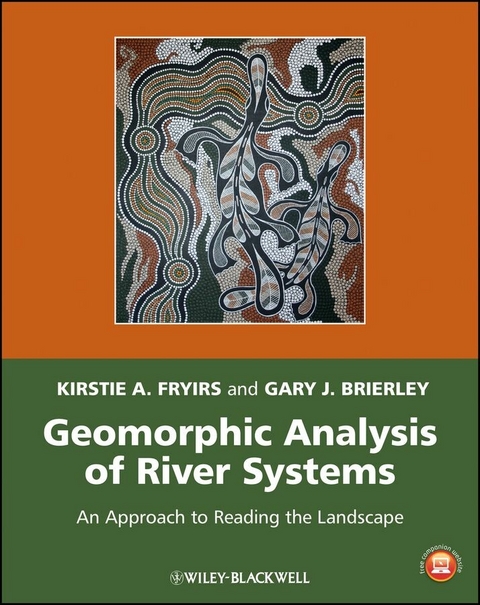
Geomorphic Analysis of River Systems (eBook)
Filling a niche in the geomorphology teaching market, this introductory book is built around a 12 week course in fluvial geomorphology.
'Reading the landscape' entails making sense of what a riverscape looks like, how it works, how it has evolved over time, and how alterations to one part of a catchment may have secondary consequences elsewhere, over different timeframes. These place-based field analyses are framed within their topographic, climatic and environmental context. Issues and principles presented in the first part of this book provide foundational understandings that underpin the approach to reading the landscape that is presented in the second half of the book. In reading the landscape, detective-style investigations and interpretations are tied to theoretical and conceptual principles to generate catchment-specific analyses of river character, behaviour and evolution, including responses to human disturbance.
This book has been constructed as an introductory text on river landscapes, providing a bridge and/or companion to quantitatively-framed or modelled approaches to landscape analysis that are addressed elsewhere. Key principles outlined in the book emphasise the importance of complexity, contingency and emergence in interpreting the character, behaviour and evolution of any given system.
The target audience is second and third year undergraduate students in geomorphology, hydrology, earth science and environmental science, as well as river practitioners who use geomorphic understandings to guide scientific and/or management applications.
The primary focus of Kirstie and Gary's research and teaching entails the use of geomorphic principles as a tool with which to develop coherent scientific understandings of river systems, and the application of these understandings in management practice. Kirstie and Gary are co-developers of the River Styles® Framework and Short Course that is widely used in river management, decision-making and training.
Additional resources for this book can be found at: www.wiley.com/go/fryirs/riversystems.
Kirstie Fryirs is a Senior Lecturer in the Department of Environment and Geography at Macquarie University in Sydney, Australia. She has worked extensively on river systems in Australia. Her research focuses on geomorphic river evolution, post-European disturbance responses, sediment budgets and connectivity, and geoecology. Her research is used extensively in river management practice.
Gary Brierley is Chair of Physical Geography in the School of Environment at the University of Auckland, New Zealand. Building upon his geomorphic research on river systems in western Canada, Australia and New Zealand, his recent work has been undertaken in western China and parts of South America. His research interests also include concerns for environmental justice, transitional practices in river science and management, and emerging approaches to environmental governance.
Filling a niche in the geomorphology teaching market, this introductory book is built around a 12 week course in fluvial geomorphology. Reading the landscape entails making sense of what a riverscape looks like, how it works, how it has evolved over time, and how alterations to one part of a catchment may have secondary consequences elsewhere, over different timeframes. These place-based field analyses are framed within their topographic, climatic and environmental context. Issues and principles presented in the first part of this book provide foundational understandings that underpin the approach to reading the landscape that is presented in the second half of the book. In reading the landscape, detective-style investigations and interpretations are tied to theoretical and conceptual principles to generate catchment-specific analyses of river character, behaviour and evolution, including responses to human disturbance. This book has been constructed as an introductory text on river landscapes, providing a bridge and/or companion to quantitatively-framed or modelled approaches to landscape analysis that are addressed elsewhere. Key principles outlined in the book emphasise the importance of complexity, contingency and emergence in interpreting the character, behaviour and evolution of any given system. The target audience is second and third year undergraduate students in geomorphology, hydrology, earth science and environmental science, as well as river practitioners who use geomorphic understandings to guide scientific and/or management applications. The primary focus of Kirstie and Gary s research and teaching entails the use of geomorphic principles as a tool with which to develop coherent scientific understandings of river systems, and the application of these understandings in management practice. Kirstie and Gary are co-developers of the River Styles Framework and Short Course that is widely used in river management, decision-making and training. Additional resources for this book can be found at: www.wiley.com/go/fryirs/riversystems.
Kirstie Fryirs is a Senior Lecturer in the Department of Environment and Geography at Macquarie University in Sydney, Australia. She has worked extensively on river systems in Australia. Her research focuses on geomorphic river evolution, post-European disturbance responses, sediment budgets and connectivity, and geoecology. Her research is used extensively in river management practice. Gary Brierley is Chair of Physical Geography in the School of Environment at the University of Auckland, New Zealand. Building upon his geomorphic research on river systems in western Canada, Australia and New Zealand, his recent work has been undertaken in western China and parts of South America. His research interests also include concerns for environmental justice, transitional practices in river science and management, and emerging approaches to environmental governance.
Chapter 1 introduces the reader to key conceptual tools with which to analyse rivers. We will examine what fluvial geomorphology is, and introduce the notion of reading the landscape..
Chapter 2 considers process relationships at the catchment-scale, emphasizing patterns and linkages within drainage basins and along longitudinal profiles..
Chapter 3 examines the fundamental energy conditions that fashion the geomorphology of rivers, emphasizing how these relationships vary at different positions in catchments..
Chapters 4-7 build up a picture of the primary components of river systems, starting at the finer scale and working through to a synthesis on river diversity in Chapter 8. Chapter 4 examines processes on the bed of rivers, focusing upon sediment transport and bed material organization. Chapter 5 analyses the erosional and depositional landforms that make up river channels. Chapter 6 integrates processes on the bed and banks of rivers to analyse variation in channel geometry. Chapter 7 considers the range of forms and processes that create and rework floodplains. The synthesis presented in chapter 8 reviews the spectrum of river character and behaviour..
Chapter 9 analyses forms and scales of river adjustment. River behaviour is differentiated from river change. River evolution is framed in context of geological and climatic controls..
Chapter 10 appraises river responses to human disturbance..
Management implications are examined in Chapter 11.
"Recommended readings for each chapter complement the
bibliography and enhance the book's overall value. Summing Up:
Highly recommended. Upper-division undergraduates, graduate
students, and professionals/practitioners."
(Choice, 1 August 2013)
| Erscheint lt. Verlag | 26.9.2012 |
|---|---|
| Sprache | englisch |
| Themenwelt | Naturwissenschaften ► Geowissenschaften ► Geologie |
| Naturwissenschaften ► Geowissenschaften ► Hydrologie / Ozeanografie | |
| Technik | |
| Schlagworte | earth sciences • Fluvial Hydrology & Limnology • Geomorphologie • geomorphology • Geowissenschaften • Hydrologie der Flüsse u. Binnengewässer • Hydrologie der Flüsse u. Binnengewässer • river geomorphology, fluvial geomorphology, reading the landscape, geomorphology of rivers, scales or river adjustments, river channels, river character, river behavior |
| ISBN-13 | 9781118305447 / 9781118305447 |
| Informationen gemäß Produktsicherheitsverordnung (GPSR) | |
| Haben Sie eine Frage zum Produkt? |
 EPUB (Adobe DRM)
Kopierschutz: Adobe-DRM
Adobe-DRM ist ein Kopierschutz, der das eBook vor Mißbrauch schützen soll. Dabei wird das eBook bereits beim Download auf Ihre persönliche Adobe-ID autorisiert. Lesen können Sie das eBook dann nur auf den Geräten, welche ebenfalls auf Ihre Adobe-ID registriert sind.
Details zum Adobe-DRM
Dateiformat: EPUB (Electronic Publication)
EPUB ist ein offener Standard für eBooks und eignet sich besonders zur Darstellung von Belletristik und Sachbüchern. Der Fließtext wird dynamisch an die Display- und Schriftgröße angepasst. Auch für mobile Lesegeräte ist EPUB daher gut geeignet.
Systemvoraussetzungen:
PC/Mac: Mit einem PC oder Mac können Sie dieses eBook lesen. Sie benötigen eine
eReader: Dieses eBook kann mit (fast) allen eBook-Readern gelesen werden. Mit dem amazon-Kindle ist es aber nicht kompatibel.
Smartphone/Tablet: Egal ob Apple oder Android, dieses eBook können Sie lesen. Sie benötigen eine
Geräteliste und zusätzliche Hinweise
Buying eBooks from abroad
For tax law reasons we can sell eBooks just within Germany and Switzerland. Regrettably we cannot fulfill eBook-orders from other countries.
aus dem Bereich