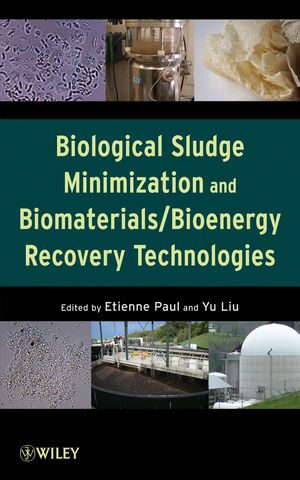
Biological Sludge Minimization and Biomaterials/Bioenergy Recovery Technologies (eBook)
536 Seiten
John Wiley & Sons (Verlag)
978-1-118-30965-0 (ISBN)
disposal
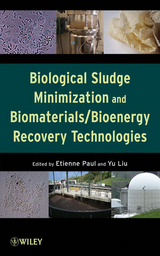
When wastewater is treated, reducing organic material to carbon
dioxide, water, and bacterial cells--the cells are disposed of,
producing a semisolid and nutrient-rich byproduct called sludge.
The expansion in global population and industrial activity has
turned the production of excess sludge into an international
environmental challenge, with the ultimate disposal of excess
sludge now one of the most expensive problems faced by wastewater
facilities.
Written by two leading environmental engineers, Biological
Sludge Minimization and Biomaterials/Bioenergy Recovery
Technologies offers a comprehensive look at cutting-edge
techniques for reducing sludge production, converting sludge into a
value-added material, recovering useful resources from sludge, and
sludge incineration. Reflecting the impact of new stringent
environmental legislation, this book offers a frank appraisal of
how sludge can be realistically managed, covering key concerns and
the latest tools:
* Fundamentals of biological processes for wastewater treatment,
wastewater microbiology, and microbial metabolism, essential to
understanding how sludge is produced
* Prediction of primary sludge and waste-activated sludge
production, among the chief design and operational challenges of a
wastewater treatment plant
* Technologies for sludge reduction, with a focus on reducing
microbial growth yield as well as enhancing sludge
disintegration
* The use of anerobic digestion of sewage sludge for biogas
recovery, in terms of process fundamentals, design, and
operation
* The use of the microbial fuel cell (MFC) system for the
sustainable treatment of organic wastes and electrical energy
recovery
ETIENNE PAUL, PhD, is a professor in the Department of Chemical and Environmental Engineering at the National Institute of Applied Sciences. He has more than fifteen years of experience in the field of biological treatment of water, wastewater, and waste. YU LIU, PhD, is an associate professor in the School of Civil and Environmental Engineering at Nanyang Technological University. He has authored or edited six books, four book chapters, and over ninety journal articles.
| Erscheint lt. Verlag | 6.5.2012 |
|---|---|
| Sprache | englisch |
| Themenwelt | Naturwissenschaften ► Chemie |
| Technik ► Umwelttechnik / Biotechnologie | |
| Schlagworte | Bauingenieur- u. Bauwesen • chemical engineering • Chemie • Chemische Verfahrenstechnik • Chemistry • Civil Engineering & Construction • Environmental Chemistry • Environmental Engineering • Umweltchemie • Umwelttechnik |
| ISBN-10 | 1-118-30965-0 / 1118309650 |
| ISBN-13 | 978-1-118-30965-0 / 9781118309650 |
| Informationen gemäß Produktsicherheitsverordnung (GPSR) | |
| Haben Sie eine Frage zum Produkt? |
 PDF (Adobe DRM)
Kopierschutz: Adobe-DRM
Adobe-DRM ist ein Kopierschutz, der das eBook vor Mißbrauch schützen soll. Dabei wird das eBook bereits beim Download auf Ihre persönliche Adobe-ID autorisiert. Lesen können Sie das eBook dann nur auf den Geräten, welche ebenfalls auf Ihre Adobe-ID registriert sind.
Details zum Adobe-DRM
Dateiformat: PDF (Portable Document Format)
Mit einem festen Seitenlayout eignet sich die PDF besonders für Fachbücher mit Spalten, Tabellen und Abbildungen. Eine PDF kann auf fast allen Geräten angezeigt werden, ist aber für kleine Displays (Smartphone, eReader) nur eingeschränkt geeignet.
Systemvoraussetzungen:
PC/Mac: Mit einem PC oder Mac können Sie dieses eBook lesen. Sie benötigen eine
eReader: Dieses eBook kann mit (fast) allen eBook-Readern gelesen werden. Mit dem amazon-Kindle ist es aber nicht kompatibel.
Smartphone/Tablet: Egal ob Apple oder Android, dieses eBook können Sie lesen. Sie benötigen eine
Geräteliste und zusätzliche Hinweise
Buying eBooks from abroad
For tax law reasons we can sell eBooks just within Germany and Switzerland. Regrettably we cannot fulfill eBook-orders from other countries.
aus dem Bereich