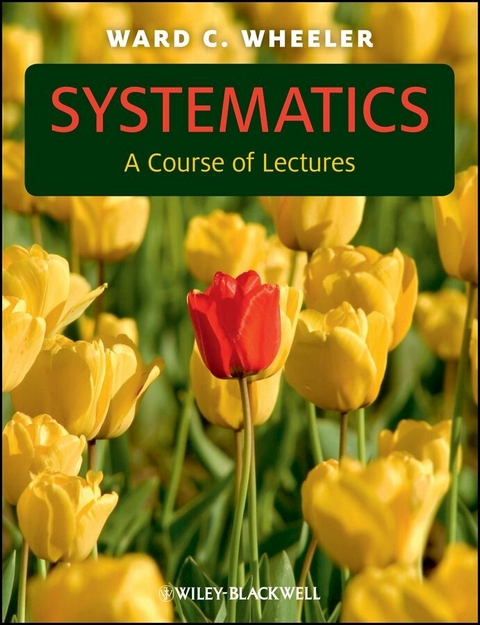
Systematics (eBook)
John Wiley & Sons (Verlag)
978-1-118-30111-1 (ISBN)
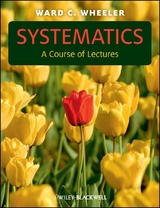
The work is not a bleeding-edge statement or in-depth review of the entirety of systematics, but covers the basics as broadly as could be handled in a one semester course. Most chapters are designed to be a single 1.5 hour class, with those on parsimony, likelihood, posterior probability, and tree searching two classes (2 x 1.5 hours).
Ward Wheeler is Professor in the Richard Gilder Graduate School and Curator of Invertebrate Zoology at the American Museum of Natural History. He is the author of several books, software packages, and over 100 technical papers in empirical and theoretical systematics.
Ward Wheeler is Professor in the Richard Gilder Graduate School and Curator of Invertebrate Zoology at the American Museum of Natural History. He is the author of several books, software packages, and over 100 technical papers in empirical and theoretical systematics.
"Viewed as a series of lectures, this is clearly aimed at
graduate level courses in systematics, although some elements would
prove useful at undergraduate level." (British
Ecological Society Bulletin, 1 August 2013)
"If you want to teach yourself systematics, this book is
for you. It's just a series of lectures and exercises
compiled by Wheeler, one of the top systematic
biologists." (Teaching Biology, 20 December
2012)
"All things considered, I strongly recommend this work as
a textbook for those teaching in systematics, biologists and
palaeontologists alike . . . I would advise this book to graduate
students - MSc and above." (Journal of
Zoological Systematics and Evolutionary Research, 1 February
2013)
Chapter 2
Fundamental Concepts
This section is a bit of a grab-bag. These are the fundamental concepts upon which systematics discussions are based. They include concepts and definitions of characters, taxa, trees, and optimality. From these, definitions of higher level concepts such as homology, polarity, and ancestors are built.
2.1 Characters
Characters are the basis of systematic analysis. In principle, any variant in an organism (at any life stage) could be used for comparison, but we usually limit ourselves to those features that are intrinsic and heritable. However impartially observations can be made, characters are theory-laden objects (Popper, 1934, 1959). By this, we mean that characters are not unorganized observations, but ones that convey notions of relevance, comparability, and correspondence. It is important to keep this in mind as we attempt to test hypotheses of character evolution and relationship in as rigorous a manner as possible (Popper, 1959). Patterson (1982) and DePinna (1991) regarded the establishment of the characters themselves as the primary step (or test in the case of Patterson) of establishing homology.
Karl Popper (1902–1994)
Biological variants may be intrinsic or extrinsic to an organism. Intrinsic features would include the familiar character types of morphology, behavior, and biochemistry. Extrinsic features are a diverse lot, including variation in population size, geographic location, or environmental conditions. Such external features are not usually a component of phylogenetic analysis (at least in the construction and testing of hypotheses) due to the difficulty in establishing homology relationships and the absence of a direct connection to the organism itself. There is a gradation here, however, from aspects that are clearly properties of an organism itself (e.g. obligate feeding on a specific host) to those that are not (e.g. annual mean temperature).
Intrinsic features are the more frequent sources of systematic information. These may be divided further into genotypic and phenotypic aspects. Genotypic information is the most obviously appropriate source of comparative variation since its genomic origin requires that variation be passed through nucleic acids from generation to generation. All changes are inheritable. Aspects of the phenotype, such as anatomy, behavior, overall shape and size, are clearly more similar in parents and offspring than they are to other creatures (heritable; Fig. 2.1) even if their specific genetic basis is unknown, and hence have utility as characters. For example, the precise genomic origins of the collum in Diplopoda (millipedes) are unknown, but its strict passage from parent to offspring and restricted variation show that it is clearly appropriate for systematic study. Similarly, behavioral features such as stridulation in Orthoptera—whose genetics are also unknown—show intrinsic variation useful to systematics (Fig. 2.2). Developmental features may straddle this division, but are technically phenotypic.
Figure 2.1 Heritability sensu Galton (1889).
Figure 2.2 Cladogram of orthopteran stridulation (Robillard et al., 2006).
There are many heritable features that are not intrinsic to organisms, hence, they are not usually employed as grouping information. Examples of these would be location (offspring usually live near parents), mean rainfall, and population size. There are gray areas, however. A larval lepidopteran species may be found exclusively on a particular plant taxon and may eat only the leaves of that species. The notion that the metabolism of the caterpillar (and its genetics) is specific to this habitat suggest that this is an intrinsic, even inherited feature, hence of comparative use (Freudenstein et al., 2003).
In general, we would like to include as broad and large a collection of characters as possible. This may include molecular sequence, developmental expression, anatomical information, and behavioral observations. With burgeoning molecular genetic and developmental data, situations are rapidly approaching where an observed variation may be present in multiple data types. Clearly, if we “know” the genetic origins of an anatomical variant, we cannot code a single feature in both data sets [contra Freudenstein et al. (2003)]. The issue, in this case, is independent information. Can the transformations be traced back to a single change or multiple? If single, only one variant can be coded, if multiple (or unknown), the changes are potentially independent and should all be used.
2.1.1 Classes of Characters and Total Evidence
Systematists, being classifiers, typically divide characters into classes: morphological, molecular, behavioral, developmental and so forth. Although these classes can have descriptive meaning, they do not require that their variation be valued differentially. The observations “compound eyes” and “adenine at position 234,” although helpful in understanding where these characters come from (anatomy and molecular sequence) and how they were observed, do not convey any inherent strength or weakness in their ability to participate in hypothesis testing. In short, there may be descriptive character classes, but analytical classes do not necessarily follow.
Arnold Kluge
The argument over whether to evaluate all characters simultaneously (“Total Evidence” Kluge, 1989; or “Simultaneous Analysis” Nixon and Carpenter, 1996b) or separately (partitioned analysis) has focused on two very different ideas of the determination of the “best” phylogenetic hypothesis. The concept behind partitioned analysis is one of robustness (i.e. how do different data sources agree or disagree) as opposed to one of optimality and quantity (which is the best hypothesis given all the data). These will be discussed later in more detail (Chapter 16).
2.1.2 Ontogeny, Tokogeny, and Phylogeny
Characters and character states can have three types of relationship: “ontogenetic,” “tokogenetic,” and “phylogenetic” (Hennig, 1950, 1966). When states transform into one another during development, they have an ontogenetic relationship. An example is the imaginal disks of holometabolous insects, which transform into adult features such as eyes, genitalia, and wings. Although ontogenetic relationships have been used as indicators of character polarity (primitive versus derived) since Haeckel (1868), the transformations in this type of relationship are within a single organism.
Tokogeny is the relationship among features that vary within a sexually reproducing species1 (Fig. 2.3). As variation within species, such features have been considered not to reflect relationships above the species level, hence were termed “traits” by Nixon and Wheeler (1990). Examples of traits would be color variation over the geographic range of a taxon or protein polymorphisms within populations. Nixon and Wheeler argued that true characters must be invariant within a species, but variable across species. One of the key issues with this distinction is the definition of and distinction between species. Where is the line drawn to separate traits and characters (Vrana and Wheeler, 1992)?
Figure 2.3 Tokogenetic and phylogenetic relationships of Hennig (1966).
Features that vary across taxa are referred to as phylogenetic features and are by consensus available for systematic analysis. The fraction of total variation this constitutes varies.
2.1.3 Characters and Character States
Traditionally, there are characters, which represent comparable features among organisms, and character states, which are the set of variations in aspect or expression of a character. The distinction between the two concepts has always been fluid (are crustacean biramous antennae absent/present or a state of appendages?) (Eldredge and Cracraft, 1980), and in dynamic homology (sensu Wheeler, 2001b), largely meaningless.
As discussed by Platnick (1989), the distinction between character and character state (at least for anatomical features) can be entirely linguistic.
In practice, objections like these sometimes amount only to linguistic quibbles. Abdominal spinnerets are not found in organisms other than spiders, and they are a valid synapomorphy of the order Araneae regardless of whether they are coded as spinnerets absent versus present, or as ‘distoventral abdominal cuticle smoothly rounded’ versus ‘distoventral abdominal cuticle distended into spigot-bearing projections.’ The more important point of these objections is that spinneret structure varies among different groups of spiders. One might treat each identifiable variant in the same way, resulting in a large number of binary characters, with each ‘presence’ representing a different, and additional, modification. If the sequence of modifications is detected correctly, an unobjectionable additive binary coding of the variable could be achieved. But as the number of variants under consideration grows, the likelihood that some of the relationships among variants will be misconstrued also grows. If all the variants are coded in binary form, such misconstruals can produce erroneous cladograms, as Pimentel and Riggins [Pimentel and Riggins, 1987] demonstrated.
Platnick also raised the issue of alternate coding schemes. Traditional characters, those where character correspondences are at least thought to be known, are treated...
| Erscheint lt. Verlag | 14.6.2012 |
|---|---|
| Sprache | englisch |
| Themenwelt | Naturwissenschaften ► Biologie |
| Technik | |
| Schlagworte | advanced • Alignment • Analytical • Biowissenschaften • Book • Chapters • Course • Detail • Distance • Evolution • evolutionary biology • Evolutionsbiologie • Evolution / Systematik • Field • fundamental concepts • graduate • History • Including • introductory • Lectures • Level • Life Sciences • Methods • relevant topics • sections • species • Systematic • Systematics • Topics • use |
| ISBN-10 | 1-118-30111-0 / 1118301110 |
| ISBN-13 | 978-1-118-30111-1 / 9781118301111 |
| Informationen gemäß Produktsicherheitsverordnung (GPSR) | |
| Haben Sie eine Frage zum Produkt? |
 EPUB (Adobe DRM)
Kopierschutz: Adobe-DRM
Adobe-DRM ist ein Kopierschutz, der das eBook vor Mißbrauch schützen soll. Dabei wird das eBook bereits beim Download auf Ihre persönliche Adobe-ID autorisiert. Lesen können Sie das eBook dann nur auf den Geräten, welche ebenfalls auf Ihre Adobe-ID registriert sind.
Details zum Adobe-DRM
Dateiformat: EPUB (Electronic Publication)
EPUB ist ein offener Standard für eBooks und eignet sich besonders zur Darstellung von Belletristik und Sachbüchern. Der Fließtext wird dynamisch an die Display- und Schriftgröße angepasst. Auch für mobile Lesegeräte ist EPUB daher gut geeignet.
Systemvoraussetzungen:
PC/Mac: Mit einem PC oder Mac können Sie dieses eBook lesen. Sie benötigen eine
eReader: Dieses eBook kann mit (fast) allen eBook-Readern gelesen werden. Mit dem amazon-Kindle ist es aber nicht kompatibel.
Smartphone/Tablet: Egal ob Apple oder Android, dieses eBook können Sie lesen. Sie benötigen eine
Geräteliste und zusätzliche Hinweise
Buying eBooks from abroad
For tax law reasons we can sell eBooks just within Germany and Switzerland. Regrettably we cannot fulfill eBook-orders from other countries.
aus dem Bereich