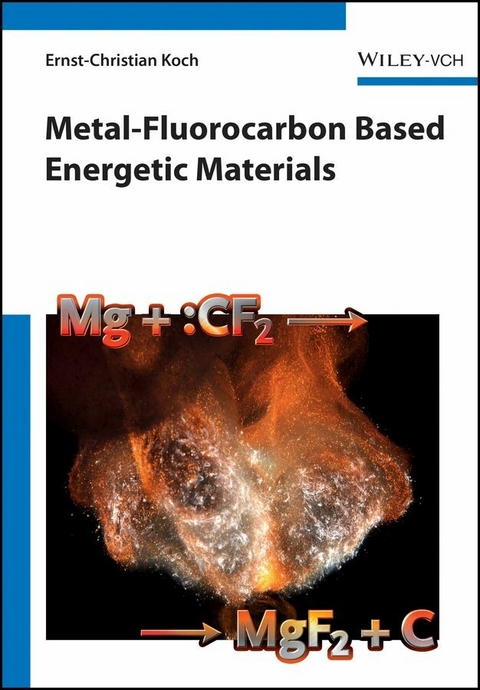
This exciting new book details all aspects of a major class of pyrolants and elucidates the progress that has been made in the field, covering both the chemistry and applications of these compounds.
Written by a pre-eminent authority on the subject from the NATO Munitions Safety Information Analysis Center (MSIAC), it begins with a historical overview of the development of these materials, followed by a thorough discussion of their ignition, combustion and radiative properties. The next section explores the multiple facets of their military and civilian applications, as well as industrial synthetic techniques. The critical importance of the associated hazards, namely sensitivity, stability and aging, are discussed in detail, and the book is rounded off by an examination of the future of this vital and expanding field.
The result is a complete guide to the chemistry, manufacture, applications and required safety precautions of pyrolants for both the military and chemical industries.
From the preface:
'... This book fills a void in the collection of pyrotechnic literature...
it will make an excellent reference book that all researchers of pyrolants and energetics must have...'
Dr. Bernard E. Douda, Dr. Sara Pliskin, NAVSEA Crane, IN, USA
Dr. Ernst-Christian Koch is Technical Specialist Officer at the NATO Munitions Safety Information Center (MSIAC), Brussels, Belgium. He studied chemistry at the Technical University of Kaiserslautern, Germany and was awarded his doctoral degree by the same university in 1995. Before joining NATO in 2008, Dr. Koch spent 12 years working as a scientist for the German defense industry, developing energetic mate-rials and countermeasures. He is author of more than 20 peer reviewed papers and two book chapters. He holds more than 100 patents on energetic materials and countermeasures. Dr. Koch is a Lecturer on Energetic Materials at Technical University of Kaiserslautern/Germany and Pardubice Univer-sity/Czech Republic and he currently serves as Vice President of the International Pyrotechnics Society and as an Editorial Board Member of Propellants Explosives Pyrotechnics.
Dr. Ernst-Christian Koch is Technical Specialist Officer at the NATO Munitions Safety Information Center (MSIAC), Brussels, Belgium. He studied chemistry at the Technical University of Kaiserslautern, Germany and was awared his doctoral degree at the same university in 1995. Before joining NATO in 2008, Dr. Koch spent 12 years working as a scientist for the German defence industry developing energetic materials and countermeasures. He is author of more than 20 peer reviewed papers and two book chapters. He holds more than 100 patents on energetic materials and countermeasures. Dr. Koch is a Lecturer on Energetic Materials at Technical University of Kaiserslautern/Germany and Pardubice University/Czech Republic and he currently serves as Vice President of the International Pyrotechnics Society and as an Editorial Board Member of Propellants Explosives Pyrotechnics.
INTRODUCTION TO PYROLANTS
HISTORY
Organometallic Beginning
Explosive & Obscurant Properties
Rise of Fluorocarbons
Rockets Fired Against Aircraft
Metal/Fluorocarbon Pyrolants
PROPERTIES OF FLUOROCARBONS
Polytetrafluoroethylene (PTFE)
Polychlorotrifluoroethylene (PCTFE)
Polyvinylidene Fluoride (PVDF)
Polycarbon Monofluoride (PMF)
Vinylidene Fluoride - Hexafluoropropene Copolymer
Vinylidene Fluoride - Chlorotrifluoroethylene Copolymer
Copolymer of TFE and VDF
Terpolymers of FE, HFP and VDF
Summary of Chemical and Physical Properties of Common Fluoropolymers
THERMOCHEMICAL AND PHYSICAL PROPERTIES OF METALS AND THEIR FLUORIDES
REACTIVITY AND THERMOCHEMISTRY OF SELECTED METAL/FLUORCARBON SYSTEMS
Lithium
Magnesium
Titanium
Zirconium
Hafnium
Niob
Tantalum
Zinc
Cadmium
Boron
Aluminium
Silicon
Calcium Silicide
Tin
IGNITION AND COMBUSTION MECHANISM OF MTV
Ignition and Pre-Ignition of Metal/Fluorocarbon Pyrolants
Magnesium-Grignard Hypothesis
IGNITION OF MTV
COMBUSTION
Magnesium/Teflon/Viton
Porosity
Burn Rate Description
Combustion of Metal-Fluorocarbon Pyrolants with Fuels Other than Magnesium
Underwater Combustion
SPECTROSCOPY
Introduction
UV-VIS Spectra
MWIR Spectra
Temperature Determination
INFRARED EMITTERS
Decoy Flares
Nonexpendable Flares
Metal-Fluorocarbon Flare Combustion Flames as Sources of Radiation
Infrared Compositions
Operational Effects
Outlook
OBSCURANTS
Introduction
Metal-Fluorocarbon Reactions in Aerosol Generation
IGNITERS
INCENDIARIES, AGENT DEFEAT, REACTIVE FRAGMENTS AND DETONATION PHENOMENA
Incendiaries
Curable Fluorocarbon Resin-Based Compositions
Document Destruction
Agent Defeat
Reactive Fragments
Shockwave Loading of Metal-Fluorocarbons and Detonation-Like Phenomena
MISCELLANEOUS APPLICATIONS
Submerged Applications
Mine-Disposal Torch
Stored Chemical Energy
Tracers
Propellants
SELF-PROPAGATING HIGH-TEMPERATURE SYNTHESIS
Introduction
Magnesium
Silicon and Silicides
VAPOUR-DEPOSITED MATERIALS
AGEING
MANUFACTURE
Introduction
Treatment of Metal Powder
Mixing
Pressing
Cutting
Priming
Miscellaneous
Accidents and Process Safety
SENSITIVITY
Introduction
Impact Sensitivity
Friction and Shear Sensitivity
Thermal Sensitivity
ESD Sensitivity
Insensitive Munitions Testing
Hazards Posed by Loose In-Process MTV Crumb and TNT
TOXIC COMBUSTION PRODUCTS
MTV Flare Composition
Obscurrant Formulations
Fluorine Compounds
OUTLOOK
Chapter 1
Introduction to Pyrolants
Energetic materials are characterised by their ability to undergo spontaneous (ΔG < 0) and highly exothermic reactions (ΔH < 0). In addition, the specific amount of energy released by an energetic material is always sufficient to facilitate excitation of electronic transitions, thus causing known luminous effects such as glow, spark and flame. Energetic materials are typically classified according to their effects. Thus, they can be classified into high explosives, propellants and pyrolants (Figure 1.1). Typical energetic materials and some of the salient properties are listed in Table 1.1.
Figure 1.1 Classification of energetic materials.
Table 1.1 Performance Parameters of Selected Energetic Materials.
When initiated, high explosives undergo a detonation. That is a supersonic shockwave supported by exothermic chemical reactions [1–3]. In contrast, propellants and pyrolants undergo subsonic reactions and mainly yield gaseous products as in the case of propellants [4, 5] or predominantly condensed reaction products as in the case of pyrolants. The term pyrolant was originally coined by Kuwahara to emphasise on the difference between these materials and propellants [6]. Thus, the term aims at defining those energetic materials that upon combustion yield both hot flames and large amount of condensed products. Hence, pyrolants often find use where radiative and conductive heat transfer is necessary. Pyrolants also prominently differ from other energetic materials in that they have both very high gravimetric and volumetric enthalpy of combustion and very often densities far beyond 2.0 g cm−3 (see Table 1.1 for examples).
Pyrolants are typically constituted from metallic or non-metallic fuels (e.g. Al, Mg, Ti, B, Si, C(gr) and S8) and inorganic (e.g. Fe2O3, NaNO3, KClO4 and BaCrO4) and/or organic (e.g. C2Cl6 and (C2F4)n) oxidizers or alloying partners (e.g. Ni and Pd). In contrast to propellants, they are mainly fuel rich and their combustion is influenced by afterburn reactions with atmospheric oxygen or other ambient species such as nitrogen or water vapour.
Pyrolants serve a surprisingly broad spectrum of applications such as payloads for mine-clearing torches (Al/Ba(NO3)2/PVC) [7, 8], delays (Ti/KClO4/BaCrO4) [9], heating charges (Fe/KClO4) [10, 11], igniters (B/KNO3) [12, 13], illuminants (Mg/NaNO3) [14, 15], thermites (Al/Fe2O3) [16, 17], obscurants (RP/Zr/KNO3) (RP, red phosphorus) [18], (Al/ZnO/C2Cl6) [20], tracers (MgH2/SrO2/PVC) [21], initiators (Ni/Al) [22] and many more. Recently, pyrolant combustion is increasingly used for the synthesis of new materials.
An important group of pyrolants are those constituted from metal powder and halocarbon compounds [19]. The high energy density of metal–halocarbon pyrolants stems from the high enthalpy of formation of the corresponding metal–halogen bond (M–X). Thus, chlorocarbon but mainly fluorocarbon compounds are used as oxidizers.
On the basis of metal fluorocarbon combinations, pyrolants show superior exothermicity compared to many of the aforementioned fluorine-free systems [22]. This advantage is due to the high enthalpy of formation of the metal–fluorine bond not outperformed by any other combination of the respective metal. Thus, the exothermic step
is the driving force behind the reaction (w = maximum valence).
Owing to a great number of metallic elemental fluorophiles (∼70), metal fluorocarbon pyrolants (MFPs) offer a great variability in performance. In addition, many alloys and binary compositions of fluorophiles may also come into play to further tailor the performance of the pyrolant: Mg4Al3, MgH2, MgB2, Mg3N2, Mg(N3)2, Mg2Si and so on [23]. Very often MFPs find use in volume-restricted applications where other materials would not satisfy the requirements – see, for example, payloads for infrared decoy flares (see Chapter 10). Within the scope of this book, the following applications are discussed:
- agent defeat payloads
- countermeasure flares
- cutting torches
- heating devices
- igniters
- incendiaries
- material synthesis
- obscurants
- propellants
- reactive fragments
- stored chemical energy propulsion systems
- tracers
- tracking flares
- underwater flares.
This book focuses only on specialised pyrotechnic applications; thus, for a more generalised introduction to pyrotechnics, the interested reader is referred to the books by Shidlovski [24], Ellern [25], McLain [26], Conkling [27, 28], Hardt [29] and Kosanke et al. [30].
References
1. Fickett, W. and Davis, W.C. (2000) Detonation – Theory and Experiment, Dover Publications Inc., Mineola, New York.
2. Zukas, J.A. and Walters, W.P. (1998) Explosive Effects and Applications, Springer Publishers, New York.
3. Cooper, P.W. (1996) Explosives Engineering, Wiley-VCH Verlag GmbH, New York.
4. Kubota, N. (2007) Propellants and Explosives, Thermochemical Aspects of Combustion, 2nd completely revised and extended edn, Wiley-VCH Verlag GmbH, Weinheim.
5. Assovskiy, I.G. (2005) Physics of Combustion and Interior Ballistics, Nauka, Moscow.
6. Kuwahara, T. and Ochiai, T. (1992) Burning rate of magnesium/TF pyrolants. Kogyo Kayaku, 53 (6), 301–306.
7. Kannberger, G. (2005) Test and Evaluation of Pyrotechnical Mine Neutralisation Means. ITEP Work Plan Project Nr. 6.2.4, Final Report, Bundeswehr Technical Center for Weapons and Ammunition (WTD 91), Germany.
8. N.N. (2005) Operational Evaluation Test of Mine Neutralization Systems, Institute for Defense Analyses, Alexandria, http://en.wikipedia.org/wiki/Political_divisions_of_the_United_States VA.
9. Wilson, M.A. and Hancox, R.J. (2001) Pyrotechnic delays and thermal sources. J. Pyrotech., 13, 9–30.
10. Callaway, J., Davies, N. and Stringer, M. (2001) Pyrotechnic heater compositions for use in thermal batteries. 28th International Pyrotechnics Seminar, Adelaide Australia, November 4–9, 2001, pp. 153–168.
11. Czajka, B. and Wachowski, L. (2005) Some thermochemical properties of high calorific mixture of Fe-KClO4. Cent. Eur. J. Energetic Mater., 2 (1), 55–68.
12. Klingenberg, G. (1984) Experimental study on the performance of pyrotechnic igniters. Propellants Explos. Pyrotech., 9 (3), 91–107.
13. Weiser, V., Roth, E., Eisenreich, N., Berger, B. and Haas, B. (2006) Burning behaviour of different B/KNO3 mixtures at pressures up to 4 MPa. 37th International Annual ICT Conference, Karlsruhe Germany, June 27–30, p. 125.
14. Beardell, A.J. and Anderson, D.A. (1972) Factors affecting the stoichiometry of the magnesium-sodium nitrate combustion reaction. 3rd International Pyrotechnics Seminar, Colorado Springs, CO, 21–25 August, pp. 445–459.
15. Singh, H., Somayajulu, M.R. and Rao, B. (1989) A study on combustion behaviour of magnesium – sodium nitrate binary mixtures. Combust. Flame, 76 (1), 57–61.
16. Fischer, S.H. and Grubelich, M.C. (1998) Theoretical energy release of thermites, intermetallics, and combustible metals. 24th International Pyrotechnics Seminar, Monterey CA, July 27–31, pp. 231–286.
17. Weiser, V., Roth, E., Raab, A., del Mar Juez-Lorenzo, M., Kelzenberg, S. and Eisenreich, N. (2010) Thermite type reactions of different metals with iron-oxide and the influence of pressure. Propellants Explos. Pyrotech., 35 (3), 240–247.
18. Koch, E.-C. (2008) Special materials in pyrotechnics: V. Military applications of phosphorus and its compounds. Propellants Explos. Pyrotech., 33 (3), 165–176.
19. Koch, E.-C. (2010) Handbook of Combustion, Wiley-VCH Verlag GmbH, pp. 355–402.
20. Ward, J.R. (1981) MgH2 and Sr(NO3)2 pyrotechnic composition. US Patent 4, 302,259, USA.
21. Gash, A.E., Barbee, T. and Cervantes, O. (2006) Stab sensitivity of energetic nanolaminates. 33rd International Pyrotechnics Seminar, Fort Collins CO, July 16–21, pp. 59–70.
22. Cudzilo, S. and Trzcinski, W.A. (2001) Calorimetric studies of metal/polytetrafluoroethylene pyrolants. Pol. J. Appl. Chem., 45, 25–32.
23. Koch, E.-C., Weiser, V. and Roth, E. (2011) Combustion behaviour of binary pyrolants based on MgH2, MgB2, Mg3N2, Mg2Si, and polytetrafluoroethylene. EUROPYRO 2011, Reims, France, May 16–19.
24. Shidlovski, A.A. (1965) Fundamentals of Pyrotechnics.
25. Ellern, H. (1968) Military and Civilian Pyrotechnics, Chemical Publishing Company, New York.
26. McLain, J.H. (1980) Pyrotechnics from the Viewpoint of Solid State Chemistry, The Franklin Institute Press, Philadelphia, PA.
27. Conkling, J. (1985) Chemistry of Pyrotechnics – Basic Principles and Theory, Marcel Dekker, Inc., Basel.
28. Conkling, J. and Mocella, C.J. (2011) Chemistry of Pyrotechnics – Basic Principles and Theory, CRC Press, Boca Raton, FL.
29. Hardt, A. (2001) Pyrotechnics, Pyrotechnica Publications, Post Falls, ID.
30. Kosanke, K., Kosanke, B., Sturman, B., Shimizu, B., Wilson, A.M., von Maltitz, I., Hancox, R.J., Kubota, N., Jennings-White, C., Chapman, D., Dillehay, D.R., Smith, T. and Podlesak, M. (2004) Pyrotechnic Chemistry, Pyrotechnic Reference Series,...
| Erscheint lt. Verlag | 6.4.2012 |
|---|---|
| Sprache | englisch |
| Themenwelt | Naturwissenschaften ► Chemie |
| Technik | |
| Schlagworte | Arbeitssicherheit u. Umweltschutz i. d. Chemie • Chemical and Environmental Health and Safety • chemical engineering • Chemie • Chemische Verfahrenstechnik • Chemistry • Explosives and Propellants • Explosiv- und Treibstoffe • Materials Science • Materialwissenschaften • Organic Chemistry • Organische Chemie • Pyrolant • Pyrotechnik |
| ISBN-13 | 9783527644193 / 9783527644193 |
| Informationen gemäß Produktsicherheitsverordnung (GPSR) | |
| Haben Sie eine Frage zum Produkt? |
 EPUB (Adobe DRM)
Kopierschutz: Adobe-DRM
Adobe-DRM ist ein Kopierschutz, der das eBook vor Mißbrauch schützen soll. Dabei wird das eBook bereits beim Download auf Ihre persönliche Adobe-ID autorisiert. Lesen können Sie das eBook dann nur auf den Geräten, welche ebenfalls auf Ihre Adobe-ID registriert sind.
Details zum Adobe-DRM
Dateiformat: EPUB (Electronic Publication)
EPUB ist ein offener Standard für eBooks und eignet sich besonders zur Darstellung von Belletristik und Sachbüchern. Der Fließtext wird dynamisch an die Display- und Schriftgröße angepasst. Auch für mobile Lesegeräte ist EPUB daher gut geeignet.
Systemvoraussetzungen:
PC/Mac: Mit einem PC oder Mac können Sie dieses eBook lesen. Sie benötigen eine
eReader: Dieses eBook kann mit (fast) allen eBook-Readern gelesen werden. Mit dem amazon-Kindle ist es aber nicht kompatibel.
Smartphone/Tablet: Egal ob Apple oder Android, dieses eBook können Sie lesen. Sie benötigen eine
Geräteliste und zusätzliche Hinweise
Buying eBooks from abroad
For tax law reasons we can sell eBooks just within Germany and Switzerland. Regrettably we cannot fulfill eBook-orders from other countries.
aus dem Bereich