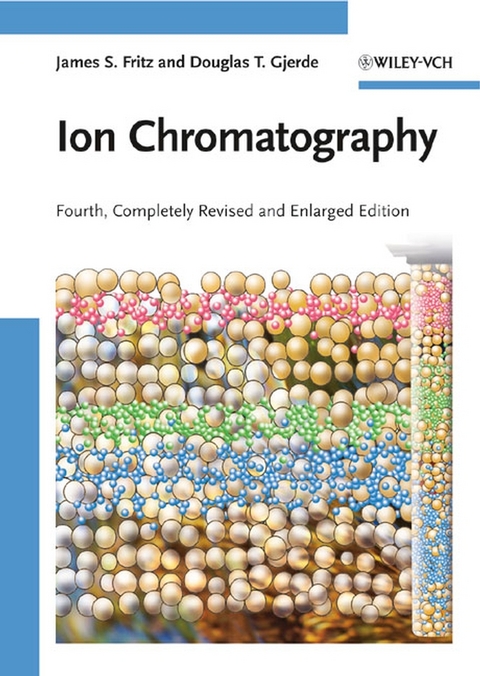
Ion Chromatography (eBook)
XVI, 378 Seiten
Wiley-VCH (Verlag)
978-3-527-62688-5 (ISBN)
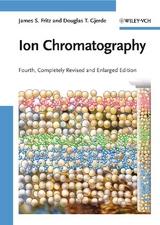
After having obtained his Ph.D. in 1948 by the University of Illinois, Professor James S. Fritz became Senior Chemist and Professor of Chemistry at Iowa State University in 1960. He was named Distinguished Professor in Liberal Arts and Sciences in 1990. Besides Ion Chromatography his research interests are titrations, solid-phase extractions, capillary electrophoresis and analytical complexing reagents. He has authored or coauthored several scientific books, including Fritz and Gjerde's "Ion Chromatography", now in its 4th printing. In addition, he has published more than 325 scientific publications. Douglas T. Gjerde received his PhD in analytical chemistry from Iowa State University. After having worked in large and small companies for a number of years, Gjerde founded Sarasep, Inc. in 1990 for the commercialization of polymeric separation technologies and co-founded Transgenomic, Inc. in 1997 for the commercialization of nucleic acid separation technology. He is now working on his third start-up company, PhyNexus, Inc. PhyNexus produces miniaturized sample preparation tools for the biological research market. Gjerde has authored and coauthored numerous articles, book chapters and 5 books and holds over fifty patents in separation science.
INTRODUCTION AND OVERVIEW
Introduction
Historical Development
Principles of Ion Chromatographic Separation and Detection
INSTRUMENTATION
Components of an Ion Chromatograph (IC) Instrument
General Considerations
Eluent
Pump
Sample Injector
Columns
Suppressor
Detector
Data Acquisition and Calculation of Results
RESINS AND COLUMNS
Introduction
Polymeric Resins
Resins and Columns for Ion Chromatography
Anion Exchangers
Cation Exchangers
Other Resins
DETECTORS
Introduction
Conductivity Detectors
Ultraviolet-Visible (UV-Vis) Detectors
Fluorescence Detector
Electrochemical Detectors
Refractive Index Detector
Evaporative Light Scattering Detector (ELSD)
Other Detectors
PRINCIPLES OF ION CHROMATOGRAPHIC SEPARATIONS
General Considerations
Chromatographic Terms
Selectivity
Chromatographic Efficiency
ANION CHROMATOGRAPHY
Scope and Conditions for Separation
Suppressed Anion Chromatography
Nonsuppressed Ion Chromatography
Coated Columns
Optical Absorbance Detection
Detection
Pulsed Amperometric Detector (PAD)
Evaporative Light Scattering Detector (ELSD)
Inductively Coupled Plasma Methods (ICP)
CATION CHROMATOGRAPHY
Introduction
Columns
Separations
Effect of Organic Solvents
Separation of Metal Ions with a Complexing Eluent
Chelating Ion-Exchange Resins and Chelation Ion Chromatography
ION-EXCLUSION CHROMATOGRAPHY
Principles
Separation of Organic Acids
Simultaneous Determination of Anions and Cations
Conclusions
Determination of Carbon Dioxide and Bicarbonate
Separation of Bases
Determination of Water
Separation of Saccharides and Alcohols
ION PAIR CHROMATOGRAPHY
Principles
Typical Separations
Mechanism
ZWITTERION STATIONARY PHASES
Introduction
Simultaneous Separation of Anions and Cations
Separation of Anions
Separation of Cations
Mechanism
CAPILLARY ELECTROPHORESIS
Introduction
Principles
Electroosmotic Flow (EOF)
Separations of Ions
Capillary Electrophoretic Ion Chromatography
DNA AND RNA CHROMATOGRAPHY
Introduction
DNA and RNA Chemical Structure and Properties
DNA and RNA Chromatography
Temperature Modes of DNA and RNA Chromatography
Instrumentation
Applications of DNA Chromatography
Applications of RNA Chromatography
SAMPLE PRETREATMENT
Dilute and Shoot or Pre-Treat the Sample?
Particulate and Column-Contaminating Matter
Preconcentration
Sample Pretreatment
METHOD DEVELOPMENT AND VALIDATION
Choosing a Method
Some Applications of Ion Chromatography
Statistical Evaluation of Data
Validation of Analytical Procedures
CHEMICAL SPECIATION
Introduction
Detection
Chromatography
Valveless Injection IC
Speciation of Some Elements
INTRODUCTION AND OVERVIEW
Introduction
Historical Development
Principles of Ion Chromatographic Separation and Detection
INSTRUMENTATION
Components of an Ion Chromatograph (IC) Instrument
General Considerations
Eluent
Pump
Sample Injector
Columns
Suppressor
Detector
Data Acquisition and Calculation of Results
RESINS AND COLUMNS
Introduction
Polymeric Resins
Resins and Columns for Ion Chromatography
Anion Exchangers
Cation Exchangers
Other Resins
DETECTORS
Introduction
Conductivity Detectors
Ultraviolet-Visible (UV-Vis) Detectors
Fluorescence Detector
Electrochemical Detectors
Refractive Index Detector
Evaporative Light Scattering Detector (ELSD)
Other Detectors
PRINCIPLES OF ION CHROMATOGRAPHIC SEPARATIONS
General Considerations
Chromatographic Terms
Selectivity
Chromatographic Efficiency
ANION CHROMATOGRAPHY
Scope and Conditions for Separation
Suppressed Anion Chromatography
Nonsuppressed Ion Chromatography
Coated Columns
Optical Absorbance Detection
Detection
Pulsed Amperometric Detector (PAD)
Evaporative Light Scattering Detector (ELSD)
Inductively Coupled Plasma Methods (ICP)
CATION CHROMATOGRAPHY
Introduction
Columns
Separations
Effect of Organic Solvents
Separation of Metal Ions with a Complexing Eluent
Chelating Ion-Exchange Resins and Chelation Ion Chromatography
ION-EXCLUSION CHROMATOGRAPHY
Principles
Separation of Organic Acids
Simultaneous Determination of Anions and Cations
Conclusions
Determination of Carbon Dioxide and Bicarbonate
Separation of Bases
Determination of Water
Separation of Saccharides and Alcohols
ION PAIR CHROMATOGRAPHY
Principles
Typical Separations
Mechanism
ZWITTERION STATIONARY PHASES
Introduction
Simultaneous Separation of Anions and Cations
Separation of Anions
Separation of Cations
Mechanism
CAPILLARY ELECTROPHORESIS
Introduction
Principles
Electroosmotic Flow (EOF)
Separations of Ions
Capillary Electrophoretic Ion Chromatography
DNA AND RNA CHROMATOGRAPHY
Introduction
DNA and RNA Chemical Structure and Properties
DNA and RNA Chromatography
Temperature Modes of DNA and RNA Chromatography
Instrumentation
Applications of DNA Chromatography
Applications of RNA Chromatography
SAMPLE PRETREATMENT
Dilute and Shoot or Pre-Treat the Sample?
Particulate and Column-Contaminating Matter
Preconcentration
Sample Pretreatment
METHOD DEVELOPMENT AND VALIDATION
Choosing a Method
Some Applications of Ion Chromatography
Statistical Evaluation of Data
Validation of Analytical Procedures
CHEMICAL SPECIATION
Introduction
Detection
Chromatography
Valveless Injection IC
Speciation of Some Elements
| Erscheint lt. Verlag | 9.3.2009 |
|---|---|
| Sprache | englisch |
| Themenwelt | Naturwissenschaften ► Chemie |
| Technik | |
| Schlagworte | Analytical Chemistry • Analytische Chemie • Chemie • Chemische Analyse • Chemistry • Chromatographie / Trennverfahren • Chromatography / Separation Techniques • Food Science & Technology • Ionenchromatographie • Kapillarelektrophorese • Lebensmittelforschung u. -technologie • Pharmaceutical & Medicinal Chemistry • Pharmazeutische u. Medizinische Chemie • spectroscopy • Spektroskopie |
| ISBN-10 | 3-527-62688-3 / 3527626883 |
| ISBN-13 | 978-3-527-62688-5 / 9783527626885 |
| Informationen gemäß Produktsicherheitsverordnung (GPSR) | |
| Haben Sie eine Frage zum Produkt? |
 PDF (Adobe DRM)
Kopierschutz: Adobe-DRM
Adobe-DRM ist ein Kopierschutz, der das eBook vor Mißbrauch schützen soll. Dabei wird das eBook bereits beim Download auf Ihre persönliche Adobe-ID autorisiert. Lesen können Sie das eBook dann nur auf den Geräten, welche ebenfalls auf Ihre Adobe-ID registriert sind.
Details zum Adobe-DRM
Dateiformat: PDF (Portable Document Format)
Mit einem festen Seitenlayout eignet sich die PDF besonders für Fachbücher mit Spalten, Tabellen und Abbildungen. Eine PDF kann auf fast allen Geräten angezeigt werden, ist aber für kleine Displays (Smartphone, eReader) nur eingeschränkt geeignet.
Systemvoraussetzungen:
PC/Mac: Mit einem PC oder Mac können Sie dieses eBook lesen. Sie benötigen eine
eReader: Dieses eBook kann mit (fast) allen eBook-Readern gelesen werden. Mit dem amazon-Kindle ist es aber nicht kompatibel.
Smartphone/Tablet: Egal ob Apple oder Android, dieses eBook können Sie lesen. Sie benötigen eine
Geräteliste und zusätzliche Hinweise
Buying eBooks from abroad
For tax law reasons we can sell eBooks just within Germany and Switzerland. Regrettably we cannot fulfill eBook-orders from other countries.
aus dem Bereich