


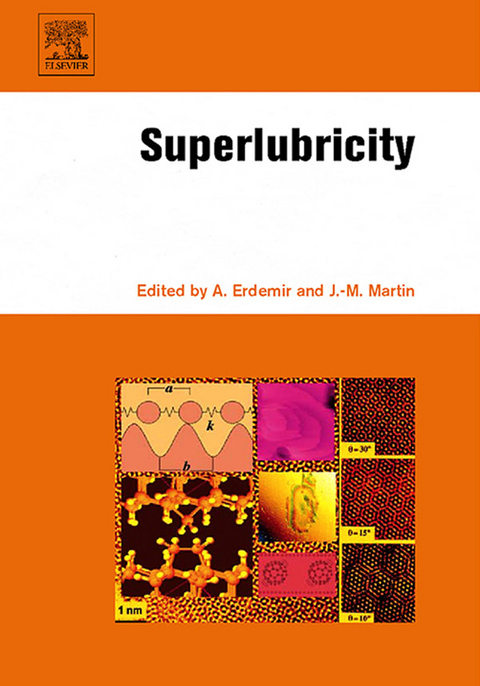
Superlubricity (eBook)
524 Seiten
Elsevier Science (Verlag)
978-0-08-052530-3 (ISBN)
* Reviews the latest fundamental research in superlubricity today
* Presents 'state-of-the-art' methods, materials, and experimental techniques
* Latest developments in tribomaterials, coatings, and lubricants providing superlubricity
Superlubricity is defined as a sliding regime in which friction or resistance to sliding vanishes. It has been shown that energy can be conserved by further reducing/removing friction in moving mechanical systems and this book includes contributions from world-renowned scientists who address some of the most fundamental research issues in overcoming friction. Superlubricity reviews the latest methods and materials in this area of research that are aimed at removing friction in nano-to-micro scale machines and large scale engineering components. Insight is also given into the atomic-scale origins of friction in general and superlubricity while other chapters focus on experimental and practical aspects or impacts of superlubricity that will be very useful for broader industrial community.* Reviews the latest fundamental research in superlubricity today* Presents 'state-of-the-art' methods, materials, and experimental techniques* Latest developments in tribomaterials, coatings, and lubricants providing superlubricity
Front cover 1
Superlubricity 4
Copyright page 5
Contents 6
Foreword “From Hard to Soft” 16
Introduction 18
Contributors 22
Chapter 1. Superlubricity for Incommensurate Crystalline and Disordered Interfaces 26
1.1 Superlubricity for Incommensurate Interfaces 26
1.2 Superlubricity for Disordered Interfaces 28
1.3 Friction Resulting from Multiscale Roughness 31
1.4 Superlubricity Resulting from Polymer Brushes 36
1.5 Conclusions 39
References 39
Chapter 2. Superlubricity of Clean Surfaces 42
2.1 Introduction 42
2.2 Preliminaries: Tomlinson's Picture 43
2.3 The Criterion for the Occurrence of Tomlinson's Mechanism 46
2.4 Atomistic Origin of Friction 50
2.5 Superlubricity 55
2.6 Summary 61
References 62
Chapter 3. Theoretical Studies of Superlubricity 64
3.1 Introduction 64
3.2 Theory 65
3.3 Computer Simulations 72
3.4 Conclusions 79
References 80
Chapter 4. Ab-initio Atomic Scale Study of Nearly Frictionless Surfaces 82
4.1 Introduction 82
4.2 Frictionless Sliding 84
4.3 Description of Theoretical Model 85
4.4 Superlow Friction Coefficient Between Hydrogenated Diamond Surfaces 86
4.5 Ab-Initio Study of Atomic-Scale Friction Between Cubic BN-Surfaces 93
4.6 Conclusions 100
Acknowledgements 100
References 101
Chapter 5. Molecular Dynamics Simulations of Tribology 104
5.1 Introduction 104
5.2 MD Simulation Methods 105
5.3 Reactive Potentials 109
5.4 Recent MD Work 117
5.5 Conclusion 125
Acknowledgements 125
References 125
Chapter 6. What Causes Low Friction What Causes High Friction
6.1 Introduction 128
6.2 Superlubricity in Boundary Lubrication 128
6.3 Controlling the Boundary Condition of Hydrodynamic Flow 133
6.4 Outlook-The Purposeful Reduction in Friction 139
6.5 Concluding Remarks 140
Acknowledgements 140
References 140
Chapter 7. Frictional Dynamics at the Atomic Scale in Presence of Small Oscillations of the Sliding Surfaces 144
7.1 Introduction 144
7.2 Experimental 145
Acknowledgements 154
References 154
Chapter 8. Effect of Surface Roughness and Adsorbates on Superlubricity 156
8.1 Introduction 156
8.2 Model 157
8.3 Numerical Results 159
8.4 Summary and Conclusion 170
Acknowledgements 171
References 171
Chapter 9. Atomic-Scale Investigation of Superlubricity on Insulating Surfaces 172
9.1 Introduction 172
9.2 The Tomlinson-Prandtl Model 173
9.3 The Superlubric Regime 177
9.4 Experimental Evidence of Superlubricity: Quasistatic Case 179
9.5 Experimental Evidence of Superlubricity: Dynamic Case 182
9.6 Conclusions and Outlook 184
References 185
Chapter 10. Superlubricity of Fullerene Intercalated Graphite Composite 186
10.1 Introduction 186
10.2 Sliding of Graphite Flakes 187
10.3 Superlubricity of a Graphite/C60 Monolayer Film/Graphite 10 190
10.4 Superlubricity of C60 (C70) Intercalated Graphite Composite 193
10.5 Origin of Superlubricity of Fullerene Intercalated Graphite Composite 197
References 202
Chapter 11. Superlubricity of Ag Nanometer-Thick Layers under Macroscopic Sliding System in UHV Condition 204
11.1 Introduction 204
11.2 Experimental Details 205
11.3 Film-Thickness Effect on the Lubricity of Ag Film 207
11.4 Determination of the Shear Plane in Superlubricity of Ag Film 211
11.5 Morphological Effect on Superlubricity 213
11.6 Effect of Crystal Orientation on Superlubricity 217
11.7 Origin of Ag Film Superlubricity 220
11.8 Conclusion 222
References 223
Chapter 12. Superlubricity between Graphite Surfaces 224
12.1 Introduction 224
12.2 Incommensurability-Induced Transition to Frictionless Sliding 225
12.3 Atomic-Scale Observation of Superlubricity between Graphite Surfaces 225
12.4 Towards Applications 229
12.5 Summary 230
Acknowledgements 231
References 231
Chapter 13. Superlubricity of Molybdenum Disulfide 232
13.1 Low, Ultralow and Superlow Friction 232
13.2 Characterization of Sputter-Deposited MoS2 Coatings 233
13.3 Experimental Details for UHV Tribometry and MoS2 Film Deposition 235
13.4 Ultralow and Superlow Friction of MoS2 Coatings 235
13.5 HRTEM Investigation of MoS2 Wear Debris 241
13.6 Possible Explanation for Superlubricity of MoS2 242
13.7 Ultralow Friction by MoS2 Single Sheets. Towards Superlubricity under Boundary Lubrication 245
13.8 Ultralow Friction by MoS2 Nanoparticles 248
References 249
Chapter 14. Superlubricity of Tungsten Disulfide Coatings in Ultra High Vacuum 252
14.1 Introduction 252
14.2 WS2 Coatings 253
14.3 IF-WS2 coatings 255
14.4 Conclusions 260
Acknowledgements 260
References 260
Chapter 15. Superlubricity by H2S Gas Lubrication of Mo 262
Abstract 262
15.1 Introduction 262
15.2 Experimental 264
15.3 Results 265
15.4 Discussion 272
15.5 Conclusions 275
Acknowledgements 275
References 275
Chapter 16. Superlubricity in Diamondlike Carbon Films 278
16.1 Introduction 278
16.2 Superlubricity in Crystalline Solids 279
16.3 Superlubricity in Amorphous Carbons 282
16.4 Summary and Future Direction 293
Acknowledgements 294
References 294
Chapter 17. Superlow Friction of a-C:H Films: Tribochemical and Rheological Effects 298
17.1 Introduction 298
17.2 The Wide Friction Range of DLC Films 299
17.3 Conditions for a-C:H Films to Achieve Superlow Friction 302
17.4 Achievement and Preservation of Superlow Friction with a-C:H Films 308
17.5 Conclusion 317
References 318
Chapter 18. Suppression of Moisture Sensitivity of Friction in Carbon-Based Coatings 320
18.1 Introduction 320
18.2 Synthesis 322
18.3 Surface Characterization 323
18.4 Tribological Testing 327
18.5 Water-Film Interactions 329
18.6 Mechanical Properties 331
18.7 Conclusion 334
References 334
Chapter 19. Application of Carbon Based Nano-Materials to Aeronautics and Space Lubrication 336
19.1 Introduction 336
19.2 Experimental 337
19.3 Results and Discussion 342
19.4 Concluding Remarks 363
References 363
Chapter 20. Superlubricity of CNx-coatings in Nitrogen Gas Atmosphere 366
20.1 Introduction 366
20.2 Fundamental Properties of CNx-coatings 366
20.3 Superlubricity of CNx-coating on Si-wafer sliding against Si3N4 ball 370
20.4 Superlubricity of CNx-coating on Si3N4 Disk Sliding against Si3N4 Ball or CNx-coating on Si3N4 Ball 373
20.5 Mechanisms of Low Friction and Low Wear of CNx-coatings 376
20.6 Summary 388
References 388
Chapter 21. Achieving Ultralow Friction by Aqueous, Brush-Assisted Lubrication 390
21.1 Introduction 390
21.2 Macroscopic Scale Contacts 393
21.3 Micro/Nanoscopic Scale Studies 403
21.4 Summary and Outlook 416
References 417
Chapter 22. Friction Control at The Molecular Level: From Superlubricity to Stick-Slip 422
22.1 Introduction 422
22.2 Experimental 427
22.3 Results and Discussion 434
References 449
Chapter 23. Super Low Traction under EHD & Mixed Lubrication Regimes
23.1 Introduction 452
23.2 Traction versus Super Low Traction 453
23.3 Experimental conditions 456
23.4 Lubricated Super Low Traction 457
23.5 Discussion and Conclusion 465
Acknowledgements 467
Annex: Main Properties of the Lubricants 467
References 467
Chapter 24. Superlubricity of In Situ Generated Protective Layer on Worn Metal Surfacesin situ generated protective layer on worn metal surfaces in Presence of Mg6Si4O10(OH)8Mg6Si4O10(OH)8 470
24.1 Introduction 470
24.2 Tribochemical Principles of In Situ Reconditioning of Rubbing Metal Surfaces 471
24.3 Superlubricity of Protective Layer Generated by ART Mechanochemical Reconditioner Package 475
24.4 Possible Sources of Superlubricity of In Situ Generated Protective Layer on Worn Metal Surfaces 486
Acknowledgements 492
References 492
Chapter 25. Superlubricity of Diamond/Glycerol Technology Applied to Automotive Gasoline Engines 496
25.1 Introduction 496
25.2 Methods 497
25.3 Results and Discussion 502
25.4 Conclusion 516
Acknowledgements 516
References 517
Subject Index 518
| Erscheint lt. Verlag | 30.3.2007 |
|---|---|
| Sprache | englisch |
| Themenwelt | Mathematik / Informatik ► Informatik ► Datenbanken |
| Mathematik / Informatik ► Informatik ► Theorie / Studium | |
| Naturwissenschaften ► Chemie ► Physikalische Chemie | |
| Naturwissenschaften ► Physik / Astronomie | |
| Technik ► Bauwesen | |
| Technik ► Maschinenbau | |
| ISBN-10 | 0-08-052530-X / 008052530X |
| ISBN-13 | 978-0-08-052530-3 / 9780080525303 |
| Informationen gemäß Produktsicherheitsverordnung (GPSR) | |
| Haben Sie eine Frage zum Produkt? |
 EPUB (Adobe DRM)
Kopierschutz: Adobe-DRM
Adobe-DRM ist ein Kopierschutz, der das eBook vor Mißbrauch schützen soll. Dabei wird das eBook bereits beim Download auf Ihre persönliche Adobe-ID autorisiert. Lesen können Sie das eBook dann nur auf den Geräten, welche ebenfalls auf Ihre Adobe-ID registriert sind.
Details zum Adobe-DRM
Dateiformat: EPUB (Electronic Publication)
EPUB ist ein offener Standard für eBooks und eignet sich besonders zur Darstellung von Belletristik und Sachbüchern. Der Fließtext wird dynamisch an die Display- und Schriftgröße angepasst. Auch für mobile Lesegeräte ist EPUB daher gut geeignet.
Systemvoraussetzungen:
PC/Mac: Mit einem PC oder Mac können Sie dieses eBook lesen. Sie benötigen eine
eReader: Dieses eBook kann mit (fast) allen eBook-Readern gelesen werden. Mit dem amazon-Kindle ist es aber nicht kompatibel.
Smartphone/Tablet: Egal ob Apple oder Android, dieses eBook können Sie lesen. Sie benötigen eine
Geräteliste und zusätzliche Hinweise
Buying eBooks from abroad
For tax law reasons we can sell eBooks just within Germany and Switzerland. Regrettably we cannot fulfill eBook-orders from other countries.
aus dem Bereich


