Red Panda (eBook)
488 Seiten
Elsevier Science (Verlag)
978-1-4377-7814-4 (ISBN)
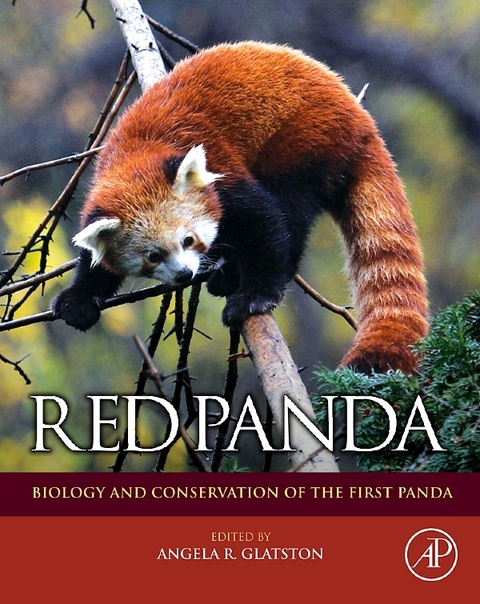
Red Panda: Biology and Conservation of the First Panda provides a broad-based overview of the biology of the red panda, Ailurus fulgens. A carnivore that feeds almost entirely on vegetable material and is colored chestnut red, chocolate brown and cream rather than the expected black and white. This book gathers all the information that is available on the red panda both from the field and captivity as well as from cultural aspects, and attempts to answer that most fundamental of questions, 'What is a red panda?' Scientists have long focused on the red panda's controversial taxonomy. Is it in fact an Old World procyonid, a very strange bear or simply a panda? All of these hypotheses are addressed in an attempt to classify a unique species and provide an in-depth look at the scientific and conservation-based issues urgently facing the red panda today.
Red Panda not only presents an overview of the current state of our knowledge about this intriguing species but it is also intended to bring the red panda out of obscurity and into the spotlight of public attention.
- Wide-ranging account of the red panda (Ailurus fulgens) covers all the information that is available on this species both in and ex situ
- Discusses the status of the species in the wild, examines how human activities impact on their habitat, and develops projections to translate this in terms of overall panda numbers
- Reports on status in the wild, looks at conservation issues and considers the future of this unique species
- Includes contributions from long-standing red panda experts as well as those specializing in fields involving cutting-edge red panda research.
Red Panda: Biology and Conservation of the First Panda provides a broad-based overview of the biology of the red panda, Ailurus fulgens. A carnivore that feeds almost entirely on vegetable material and is colored chestnut red, chocolate brown and cream rather than the expected black and white. This book gathers all the information that is available on the red panda both from the field and captivity as well as from cultural aspects, and attempts to answer that most fundamental of questions, "e;What is a red panda?"e; Scientists have long focused on the red panda's controversial taxonomy. Is it in fact an Old World procyonid, a very strange bear or simply a panda? All of these hypotheses are addressed in an attempt to classify a unique species and provide an in-depth look at the scientific and conservation-based issues urgently facing the red panda today. Red Panda not only presents an overview of the current state of our knowledge about this intriguing species but it is also intended to bring the red panda out of obscurity and into the spotlight of public attention. - Wide-ranging account of the red panda (Ailurus fulgens) covers all the information that is available on this species both in and ex situ- Discusses the status of the species in the wild, examines how human activities impact on their habitat, and develops projections to translate this in terms of overall panda numbers- Reports on status in the wild, looks at conservation issues and considers the future of this unique species- Includes contributions from long-standing red panda experts as well as those specializing in fields involving cutting-edge red panda research.
Front Cover 1
Red Panda: Biology and Conservation of the First Panda 4
Copyright Page 5
Contents 6
Foreword 8
Prologue 10
List of Contributors 12
Acknowledgements 14
Chapter 1. Introduction 16
References 24
Chapter 2. People and Red Pandas: The Red Panda’s Role in Economy and Culture 26
THE RED PANDA IN CULTURE AND TRADITION OF THE RANGE STATES 27
THE RED PANDA IN TODAY’S RANGE STATES 30
RED PANDAS IN WESTERN CULTURE 33
CONCLUSION 38
References 39
Chapter 3. Evolution of the Family Ailuridae: Origins and Old-World Fossil Record 42
INTRODUCTION 42
ORIGIN OF THE AILURIDAE 43
THE PRIMITIVE AILURIDS 43
CONCLUSIONS 53
ACKNOWLEDGEMENTS 54
References 55
Chapter 4. Advanced Members of the Ailuridae (Lesser or Red Pandas – Subfamily Ailurinae) 58
INTRODUCTION 58
THE FIRST FOSSIL AILURINE SKELETON 63
RELATIONSHIPS WITHIN THE AILURINAE 67
PALEOGEOGRAPHY 70
CONCLUSIONS/SUMMARY 71
References 72
Chapter 5. Phenotypic and Geographic Diversity of the Lesser Panda Parailurus 76
INTRODUCTION 76
TAXONOMIC REDUNDANCY OF PARAILURUS HUNGARICUS 79
THE EXTINCT LESSER PANDA FROM THE VCELÁRE LOCALITY 82
APPENDIX 87
ACKNOWLEDGEMENTS 98
References 99
Chapter 6. Red Panda Anatomy 104
HISTORY OF ANATOMICAL STUDY 104
EXTERNAL ANATOMY 106
SKULL AND DENTITION 106
NECK AND THORACIC VISCERA 109
ORAL CAVITY AND ABDOMINALVISCERA 109
PELVIC AND PERINEAL VISCERA 110
ACKNOWLEDGEMENTS 113
References 113
Chapter 7. The Taxonomy and Phylogeny of Ailurus 116
INTRODUCTION 116
RELATIONSHIPS TO OTHER CARNIVORA 117
ALPHA TAXONOMY 120
CONCLUSIONS AND SUMMARY 133
ACKNOWLEDGEMENTS 137
NOTE 137
References 137
Chapter 8. Reproduction of the Red Panda 140
REPRODUCTIVE RELATION TO MUSTELIDS AND PROCYONIDAE 140
AGE OF SEXUAL MATURATION 141
INTER-BIRTH INTERVAL 141
OVULATION STYLE: MONO- OR POLYOESTROUS 142
INDUCED OVULATION 145
BREEDING SEASON 146
MATING BEHAVIOUR: PAIRED IN CAPTIVITY, SOLITARY IN THE WILD 147
PREGNANCY 148
PARTURITION 149
FUTURE GOALS OF DEFINING RED PANDA REPRODUCTION 152
References 159
Chapter 9. Placentation of the Red Panda 162
References 171
Chapter 10. The Early Days: Maternal Behaviour and Infant Development 172
INTRODUCTION 172
METHODS 173
MATERNAL BEHAVIOURS 173
CUB BEHAVIOURS 179
MOTHER–INFANT BEHAVIOUR AND COMMUNICATION 189
NON-VOCAL COMMUNICATION 195
VOCALIZATIONS 197
References 204
Chapter 11. Red Panda Ecology 208
INTRODUCTION 208
POPULATION ECOLOGY 209
FORAGING ECOLOGY 210
COMMUNITY ECOLOGY: HOW CAN RED AND GIANT PANDAS COEXIST IN SYMPATRY? 222
CONCLUSIONS AND PERSPECTIVES 224
References 225
Chapter 12. A Brief History of the Red Panda in Captivity 228
RED PANDAS IN CAPTIVITY: 1908–1940 228
HISTORY OF THE SAN DIEGO PANDAS 230
RED PANDAS IN CAPTIVITY POST-1950 232
ACKNOWLEDGEMENTS 244
References 244
Chapter 13. Red Panda Husbandry for Reproductive Management 246
ENCLOSURE SPACE AND DESIGN 254
NUTRITION 257
NEST BOXES AND KEEPER INTERFERENCE WITH NESTS 259
SOCIAL GROUPING 260
BEHAVIOURAL MANAGEMENT AND ENRICHMENT 262
HAND-REARING RED PANDA CUBS 263
MEDICINE 265
CONCLUSION 267
ACKNOWLEDGEMENTS 269
References 269
Chapter 14. Red Panda Nutrition: How to Feed a Vegetarian Carnivore 272
INTRODUCTION 272
ANATOMY AND BASAL METABOLIC RATE IN THE RED PANDA 273
NATURAL DIETS 274
ZOO DIETS 277
SUMMARY 284
References 284
Chapter 15. Captive Red Panda Medicine 286
PAEDIATRIC HEALTH ISSUES 287
ADULT HEALTH ISSUES 288
PARASITES 292
BACTERIAL AND FUNGAL DISEASES 293
VIRAL DISEASES AND VACCINATION 294
IMMOBILIZATION 297
CONCLUDING COMMENTS 297
References 298
Chapter 16. Red Panda Pathology 302
PATHOLOGY FINDINGS 303
NEONATES 305
JUVENILES 307
ADULTS 309
SUGGESTIONS FOR THE FUTURE 315
ACKNOWLEDGEMENTS 317
References 317
Chapter 17. Red Pandas in Zoos Today The History of the Current Captive Population
THE DEVELOPMENT OF AILURUS FULGENS FULGENS POPULATION 320
THE DEVELOPMENT OF THE AILURUS FULGENS STYANI POPULATION 325
THE CURRENT POPULATIONS OF A. F. FULGENS AND A. F. STYANI 328
THE INDIAN POPULATION OF A. F. FULGENS 330
CONCLUSIONS 334
References 335
Chapter 18. Management, Husbandry and Veterinary Medicine of Red Pandas Living ex situ in China 338
MANAGEMENT OF THE EX SITU RED PANDA POPULATION IN CHINA 338
RED PANDA HUSBANDRY IN CHINESE FACILITIES 341
VETERINARY MEDICINE OF EX SITU RED PANDAS IN CHINA 345
CONCLUSION 347
References 347
Chapter 19. The Global Captive Population of the Red Panda – Possibilities for the Future 350
INTRODUCTION 350
A BACKUP FOR THE WILD POPULATION 352
REINTRODUCTION CONSIDERATIONS 368
GENERAL CONCLUSIONS 369
ACKNOWLEDGEMENTS 370
References 370
Chapter 20. Status and Distribution of Red Panda Ailurus fulgens fulgens in India 372
INTRODUCTION 372
METHODS 373
RESULTS 375
DISCUSSION 382
ACKNOWLEDGEMENTS 387
References 387
Chapter 21. Red Pandas in the Wild in China 390
INTRODUCTION 390
SURVEY METHODS IN THE FIELD 391
DISTRIBUTION 391
HABITAT 396
POPULATION 397
THREATS 398
SUMMARY 403
References 404
Chapter 22. Project Punde Kundo: Community-based Monitoring of a Red Panda Population in Eastern Nepal 408
HISTORY AND IMPORTANCE 408
OVERVIEW 411
LOCATION 411
METHODOLOGY 412
OUTCOMES 415
CONCLUSIONS 422
ACKNOWLEDGEMENTS 422
References 423
Chapter 23. Conservation Initiatives in China 424
WHY DO WE PROTECT RED PANDAS? 424
CONSERVATION INITIATIVES 425
CONSERVATION PERSPECTIVES 431
References 432
Chapter 24. Records and Reports of Red Pandas Ailurus fulgens from Areas with Warm Climates 434
INTRODUCTION 434
VIETNAM 435
LAO PEOPLE’S DEMOCRATIC REPUBLIC 437
PEOPLE’S REPUBLIC OF CHINA 441
INDIA 441
CONCLUDING REMARKS 445
ACKNOWLEDGEMENTS 446
References 446
Chapter 25. Release and Reintroduction of Captive-bred Red Pandas into Singalila National Park, Darjeeling, India 450
INTRODUCTION 450
THE STATUS OF RED PANDAS IN THE DARJEELING AREA 451
THE REINTRODUCTION 454
CONCLUSION 460
References 461
Chapter 26. Synthesis 462
IS IT A RACCOON? IS IT A BEAR? – NO, IT’S A RED PANDA 463
RED PANDA REPRODUCTIVE BIOLOGY 465
RED PANDAS IN ZOOS – WILL THEY SURVIVE? 466
RED PANDAS IN THE WILD – CAN THEY SURVIVE? 471
CONCLUSION 477
ACKNOWLEDGEMENTS 477
References 478
APPENDIX I: RED PANDA AILURUS FULGENS STATUS AND DISTRIBUTION IN MYANMAR
APPENDIX II: RED PANDAS – AN ANALYSIS OF THE THREATS POSED BY TRADE 480
Index 484
A 484
B 484
C 484
D 485
E 485
F 486
G 486
H 486
I 486
J 487
K 487
L 487
M 487
N 487
O 487
P 487
Q 488
R 488
S 488
T 488
U 489
V 489
W 489
X 489
Y 489
Z 489
| Erscheint lt. Verlag | 25.11.2010 |
|---|---|
| Sprache | englisch |
| Themenwelt | Naturwissenschaften ► Biologie ► Ökologie / Naturschutz |
| Naturwissenschaften ► Biologie ► Zoologie | |
| Sozialwissenschaften ► Politik / Verwaltung | |
| Sozialwissenschaften ► Soziologie | |
| Technik | |
| ISBN-10 | 1-4377-7814-3 / 1437778143 |
| ISBN-13 | 978-1-4377-7814-4 / 9781437778144 |
| Informationen gemäß Produktsicherheitsverordnung (GPSR) | |
| Haben Sie eine Frage zum Produkt? |
 EPUB (Adobe DRM)
Kopierschutz: Adobe-DRM
Adobe-DRM ist ein Kopierschutz, der das eBook vor Mißbrauch schützen soll. Dabei wird das eBook bereits beim Download auf Ihre persönliche Adobe-ID autorisiert. Lesen können Sie das eBook dann nur auf den Geräten, welche ebenfalls auf Ihre Adobe-ID registriert sind.
Details zum Adobe-DRM
Dateiformat: EPUB (Electronic Publication)
EPUB ist ein offener Standard für eBooks und eignet sich besonders zur Darstellung von Belletristik und Sachbüchern. Der Fließtext wird dynamisch an die Display- und Schriftgröße angepasst. Auch für mobile Lesegeräte ist EPUB daher gut geeignet.
Systemvoraussetzungen:
PC/Mac: Mit einem PC oder Mac können Sie dieses eBook lesen. Sie benötigen eine
eReader: Dieses eBook kann mit (fast) allen eBook-Readern gelesen werden. Mit dem amazon-Kindle ist es aber nicht kompatibel.
Smartphone/Tablet: Egal ob Apple oder Android, dieses eBook können Sie lesen. Sie benötigen eine
Geräteliste und zusätzliche Hinweise
Buying eBooks from abroad
For tax law reasons we can sell eBooks just within Germany and Switzerland. Regrettably we cannot fulfill eBook-orders from other countries.
aus dem Bereich