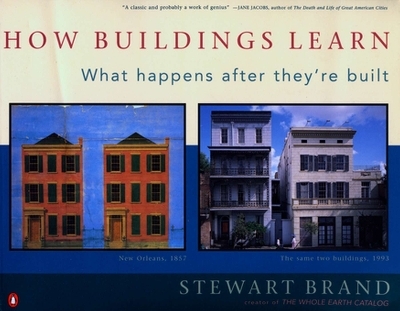
How Buildings Learn
Penguin (Verlag)
9780140139969 (ISBN)
This practical book aims to integrate all different aspects of fragmented design and construction process, so buildings can be seen as embodying a functional and aesthetic and capacious vision, not conflicts, compromises and conveniences of clients, architects, engineers, contractors-all working in their own interest.
Though honored as a writer with the National Book Award for the Whole Earth Catalog, Eliot Montroll Award for The Media Lab, Golden Gadfly Award for his years as editor of CoEvolution Quarterly Steward Brand is primarily an inventor/designer. Trained as a biologist and army officer, he was an early multimedia artist. He has created a number of lasting institutions, including New Games Tournaments, the Hackers Conference, and The WELL, a bellwether computer conference system. He is co-founder of Global Business Network, a futurist research organization fostering "the art of the long view."
Acknowledgments
Cover Story
1. Flow
2. Shearing Layers
3. "Nobody Cares What You Do In There": The Low Road
4. Houseproud: The High Road
5. Magazine Architecture: No Road
6. Unreal Estate
7. Preservation: A Quiet, Populist, Conservative, Victorious Revolution
8. The Romance of Maintenance
9. Vernacular: How Buildings Learn from Each Other
10. Function Melts Form: Satisficing Home and Office
11. The Scenario-buffered Building
12. Built for Change
APPENDIX: The Study of Buildings in Time
Recommended Bibliography: Books for Time-kindly Buildings
Index
»How Buildings Learn - What happens after they're built« ist kein Buch über Softwareentwicklung, aber dennoch für Softwarearchitekten meiner Meinung nach ein sehr lesenswertes Buch. Obwohl keine sofort umsetzbaren Ratschläge enthalten sind, hat das Buch bei mir dennoch einen Umdenkprozess angestossen, der mich auch noch in vielen Jahren begleiten wird. Das Buch zeigt, wie sich große Strukturen (in diesem Fall Gebäude) über die Jahre hinweg verändern und von den Benutzern an deren aktuelle Bedürfnissen angepasst werden – auch wenn die ursprünglichen Pläne anderes vorgesehen hatten. Und das kennen wir doch auch sehr gut ...
Ingo Rammer
| Erscheint lt. Verlag | 26.10.1995 |
|---|---|
| Verlagsort | New York, NY |
| Sprache | englisch |
| Gewicht | 822 g |
| Themenwelt | Technik ► Architektur |
| Technik ► Bauwesen | |
| ISBN-13 | 9780140139969 / 9780140139969 |
| Zustand | Neuware |
| Informationen gemäß Produktsicherheitsverordnung (GPSR) | |
| Haben Sie eine Frage zum Produkt? |
aus dem Bereich