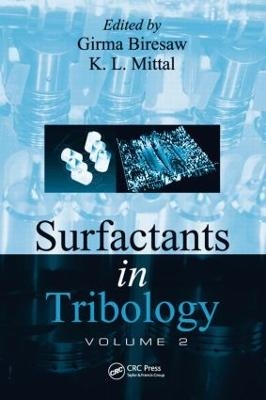
Surfactants in Tribology, Volume 2
Crc Press Inc (Verlag)
978-1-4398-4064-1 (ISBN)
Topics discussed in this second volume include:
Properties of silane, thio, phthalocyanine and phospholipid films, membranes, grafts, and SAMs on gold, silica, and graphite substrates
Water/oil emulsions used as oil-well drilling fluids
Properties of organized surfactant assemblies and aqueous solutions of alkyl polyglucosides
Surfactants as demulsifiers in enhanced crude oil production from old wells
Oil/water emulsions with biobased surfactants
The synthesis of novel biobased materials
Properties of biobased lubricants and surfactants
Modeling and statistical predictive methods in the development of biobased lubricants
The fundamentals of surface chemistry at tribological interfaces
The role of surface science in magnetic recording tribology
Antiwear and friction modifier compounds for automotive applications
Surfactants as antimicrobial agents in lubricants
Tribological phenomena are of significant importance in a host of industries ranging from simple products to high-tech devices. This volume and its predecessor reflect the sage contributions of a cadre of experts who report on current possibilities and future potential for harnessing sur
Girma Biresaw is at the Agricultural Research Service (ARS) of the U.S. Department of Agriculture. At ARS, Biresaw conducts research in tribology, adhesion, and surface/colloid science in support of programs aimed at developing biobased products from farm-based raw materials. He is a member of the editorial board of the Journal of Biobased Materials and Bioenergy and has authored/coauthored more than 200 invited and contributed scientific publications and presentations, including more than 50 peer-reviewed manuscripts, 6 patents, 2 edited books, more than 30 proceedings and book chapters, and more than 100 scientific abstracts. Kashmiri Lal Mittal is currently teaching and consulting worldwide in the areas of adhesion and surface cleaning. He is the editor of 100 published books, as well as others that are in the process of publication, within the realms of surface and colloid science and of adhesion. Mittal is a founding editor of the Journal of Adhesion Science and Technology and has served on the editorial boards of a number of scientific and technical journals. He was recently honored by the international adhesion community on the occasion of the publication of his 100th edited book.
Part I: Films, Membranes, and Self-Assembled Monolayers: Relevance to Tribological Behavior. Tribological Properties of Self-Assembled Monolayers. Nano-Tribological Properties of Aromatic and Polyaromatic Thiol Self-Assembled Monolayers. Friction of Graphite against Silane-Functionalized Silicon Wafers. Frictional Properties of Physisorbed Layers of Self-Organized Molecules at Solid–Liquid Interface. Temperature Dependence of Molecular Packing in Self-Assembled Monolayer Films. Mechanical Properties of Phospholipid-Based Biolubricant Films and Membranes. Part II: Emulsions and Aqueous Systems: Relevance to Tribological Phenomena. Influence of Surfactants on Wetting and Colloidal Processes of Lubricant Emulsions on Metal Surfaces. Surfactant Effects on Bio-Based Emulsions Used as Lubrication Fluids. Hydrolyzed Fatty Oil Surfactants as Friction Modifiers at Water-in-Oil Emulsion Interface. Antiwear and Antiseizure Properties of Aqueous Solutions of Alkyl Polyglucosides.Formulation Effects on the Lubricity of O/W Emulsions Used as Oil Well Working Fluids. Part III: Biobased Lubricants. Estolides: Biobased Lubricants. Development and Tribological Behavior of Advanced Biobased Lubricants. Characterization of Surface-Active Materials Derived from Farm Products. Chemically Modified Fatty Acid Methyl Esters: Their Potential Use as Lubrication Fluids and Surfactants. Vaporization and Carbonization Tendency of Vegetable Oils as a Function of Chemical Composition: Morphology of Carbon Deposits on Steel Surfaces at Elevated Temperature. Part IV: General Topics and Applications. Surface Chemistry at the Tribological Interface. The Role of Surface Science in Magnetic Recording Tribology. Improving Organic Antiwear and Friction Modifier Compounds for Automotive Applications. Antimicrobial–Surface Activity Relationship of Novel Di-Schiff Base Cationic Gemini Amphiphiles Bearing Homogeneous Hydrophobes.In
| Erscheint lt. Verlag | 13.5.2011 |
|---|---|
| Zusatzinfo | 90 Tables, black and white; 304 Illustrations, black and white |
| Verlagsort | Bosa Roca |
| Sprache | englisch |
| Maße | 156 x 234 mm |
| Gewicht | 1370 g |
| Themenwelt | Technik ► Maschinenbau |
| ISBN-10 | 1-4398-4064-4 / 1439840644 |
| ISBN-13 | 978-1-4398-4064-1 / 9781439840641 |
| Zustand | Neuware |
| Informationen gemäß Produktsicherheitsverordnung (GPSR) | |
| Haben Sie eine Frage zum Produkt? |
aus dem Bereich