


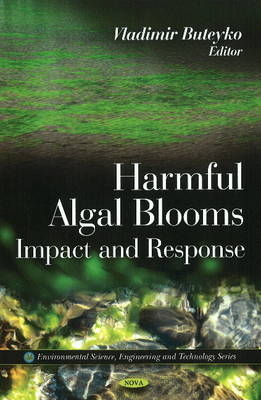
Harmful Algal Blooms
Impact & Response
Seiten
2010
Nova Science Publishers Inc (Verlag)
978-1-60741-665-4 (ISBN)
Nova Science Publishers Inc (Verlag)
978-1-60741-665-4 (ISBN)
- Titel ist leider vergriffen;
keine Neuauflage - Artikel merken
Algae are the most abundant photosynthetic organisms in marine and freshwater ecosystems. Harmful algal bloom or 'HAB' species are a small subset of algal species that produce toxins and/or bloom to excess, thus creating harm to humans and ecosystems. The authors analyse and discuss the research done in this field.
Algae are the most abundant photosynthetic organisms in marine and freshwater ecosystems and are essential, energy-producing components of aquatic food webs. Harmful algal bloom or "HAB" species are a small subset of algal species that produce toxins and/or bloom to excess, thus creating harm to humans and ecosystems. Humans, domestic animals, and wildlife, including endangered species, can be exposed to algal toxins through their food, drinking water, the water in which they swim, or aerosols. It is widely believed that the frequency and geographic distribution of HABs have been increasing world-wide. All U.S. coastal states have experienced HABs over the last decade, and new species have emerged in some locations that were not previously known to cause problems. The authors of this book analyse and discuss the most recent research done in this field. This book consists of public documents which have been located, gathered, combined, reformatted, and enhanced with a subject index, selectively edited and bound to provide easy access.
Algae are the most abundant photosynthetic organisms in marine and freshwater ecosystems and are essential, energy-producing components of aquatic food webs. Harmful algal bloom or "HAB" species are a small subset of algal species that produce toxins and/or bloom to excess, thus creating harm to humans and ecosystems. Humans, domestic animals, and wildlife, including endangered species, can be exposed to algal toxins through their food, drinking water, the water in which they swim, or aerosols. It is widely believed that the frequency and geographic distribution of HABs have been increasing world-wide. All U.S. coastal states have experienced HABs over the last decade, and new species have emerged in some locations that were not previously known to cause problems. The authors of this book analyse and discuss the most recent research done in this field. This book consists of public documents which have been located, gathered, combined, reformatted, and enhanced with a subject index, selectively edited and bound to provide easy access.
Preface; Harmful Algal Bloom Management and Response: Assessment & Plan; Harmful Algal Blooms Hearing: Anderson Testimony; Harmful Algal Blooms Hearing: Magnien Testimony; Reducing Harmful Algal Blooms & Impacts; Index.
| Erscheint lt. Verlag | 1.7.2010 |
|---|---|
| Zusatzinfo | Illustrations |
| Verlagsort | New York |
| Sprache | englisch |
| Maße | 260 x 180 mm |
| Gewicht | 250 g |
| Themenwelt | Technik ► Umwelttechnik / Biotechnologie |
| ISBN-10 | 1-60741-665-4 / 1607416654 |
| ISBN-13 | 978-1-60741-665-4 / 9781607416654 |
| Zustand | Neuware |
| Informationen gemäß Produktsicherheitsverordnung (GPSR) | |
| Haben Sie eine Frage zum Produkt? |
Mehr entdecken
aus dem Bereich
aus dem Bereich
Kommentar der DIN 15905-5, LärmVibrationsArbSchV und …
Buch | Softcover (2023)
DIN Media (Verlag)
CHF 79,95
Buch | Softcover (2023)
DIN Media (Verlag)
CHF 105,55
Buch | Softcover (2024)
Verlag Dr. Köster
CHF 48,90


