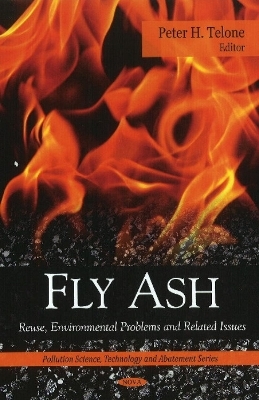
Fly Ash
Nova Science Publishers Inc (Verlag)
978-1-60741-632-6 (ISBN)
Preface; Effects of Residual Oil Fly Ash on Pulmonary Host Defence; Fly ash properties, disposal, and treatment in modernised waste incineration plant with catalytic filter; Theoretical Foundation Of Using Fly Ash For Improving Durability And Inhibiting Alkali-Silica Reaction-Induced Deterioration of Concrete; Deposition of fly ash and atmospheric particles on historical monuments: comparative results from polluted and non-polluted areas; Fly Ash Composites with Polyaniline: Synthesis, Characterisation and Conductivity Measurements; Fly ash from the main lignite-fired power plants of northern Greece: utilisation constraints and environmental implications; Recycling of Solid Waste Fly ash and Residue Carbon as Low Cost Adsorbents; A Fast Structure Identification Method for the Abundant Organic and Inorganic Compounds in MSWI Ash Wastes; Recycling of wood ash for reintroduction to forest soils; Combining Spent Refractory, Coal Fly Ash, and Japanese Roof Tiles (Kawara) as Concrete Additives; Index.
| Erscheint lt. Verlag | 1.7.2010 |
|---|---|
| Zusatzinfo | Illustrations |
| Verlagsort | New York |
| Sprache | englisch |
| Maße | 260 x 180 mm |
| Gewicht | 628 g |
| Themenwelt | Technik ► Umwelttechnik / Biotechnologie |
| ISBN-10 | 1-60741-632-8 / 1607416328 |
| ISBN-13 | 978-1-60741-632-6 / 9781607416326 |
| Zustand | Neuware |
| Informationen gemäß Produktsicherheitsverordnung (GPSR) | |
| Haben Sie eine Frage zum Produkt? |
aus dem Bereich