


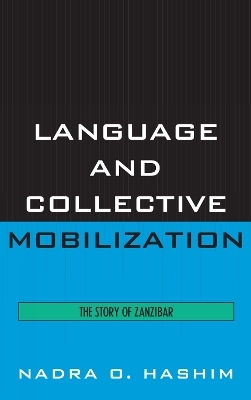
Language and Collective Mobilization
The Story of Zanzibar
Seiten
2009
Lexington Books (Verlag)
978-0-7391-2211-2 (ISBN)
Lexington Books (Verlag)
978-0-7391-2211-2 (ISBN)
Language and Collective Mobilization analyzes the origins of communal conflict in five phases of Zanzibar's modern history. The first phase examines the implementation of British colonial control, focusing on the conversion of Zanzibar's subsistence farming economy to a cash-crop plantation complex.This first phase of colonial rule disrupted a variety of indigenous political and social institutions which traditionally promoted peace and stability. During subsequent phases of colonial rule, the British government devised political, economic and educational policies that promoted elite Arab rule at the expense of the majority Swahili- speaking population. Colonial authorities rendered illegal any attempts by Swahilis to organize political resistance, a rule which exacerbated anti-Arab animosity.
Colonial rule ended in 1964, when Swahili-speaking Zanzibaris led a violent revolution against English command and Arab control. Having forced a variety of wealthy Arab and Indian communities off the island, Swahili revolutionaries allowed a small number of Indian merchants and a few Shirazi farmers to remain. Less than twenty years after the revolution, in this fifth phase of Zanzibar's political history, partisan conflict between the Shirazi and Swahili populations threatens to unleash a new rash of violence. The social climate mirrors the first phase of British rule, where economic stratification deepens and political tensions grow.
The analysis offered in this book will find an audience in students, scholars, journalists, and policymakers interested in understanding so-called "ethnic" conflict in Africa.
Colonial rule ended in 1964, when Swahili-speaking Zanzibaris led a violent revolution against English command and Arab control. Having forced a variety of wealthy Arab and Indian communities off the island, Swahili revolutionaries allowed a small number of Indian merchants and a few Shirazi farmers to remain. Less than twenty years after the revolution, in this fifth phase of Zanzibar's political history, partisan conflict between the Shirazi and Swahili populations threatens to unleash a new rash of violence. The social climate mirrors the first phase of British rule, where economic stratification deepens and political tensions grow.
The analysis offered in this book will find an audience in students, scholars, journalists, and policymakers interested in understanding so-called "ethnic" conflict in Africa.
Nadra O. Hashim is adjunct professor at DeVry University and an independent researcher.
Chapter 1 A Preface to Zanzibar
Chapter 2 Introduction: The Five Phase Model
Chapter 3 Chapter I: Stratification
Chapter 4 Chapter II: Disarticulation
Chapter 5 Chapter III: Repression
Chapter 6 Chapter IV: Resistance & Revolution
Chapter 7 Chapter V: Inversion
| Erscheint lt. Verlag | 16.5.2009 |
|---|---|
| Sprache | englisch |
| Maße | 161 x 240 mm |
| Gewicht | 535 g |
| Themenwelt | Sonstiges ► Geschenkbücher |
| Sozialwissenschaften ► Politik / Verwaltung ► Europäische / Internationale Politik | |
| ISBN-10 | 0-7391-2211-8 / 0739122118 |
| ISBN-13 | 978-0-7391-2211-2 / 9780739122112 |
| Zustand | Neuware |
| Informationen gemäß Produktsicherheitsverordnung (GPSR) | |
| Haben Sie eine Frage zum Produkt? |
Mehr entdecken
aus dem Bereich



aus dem Bereich
Amerikas Strategie der Vorherrschaft und der Kampf um Eurasien
Buch | Softcover (2024)
NOMEN Verlag
CHF 27,95
kurze Geschichte einer langen Beziehung
Buch | Hardcover (2025)
Suhrkamp (Verlag)
CHF 36,40
erfolgreiche Interessenvertretung durch Prozesskompetenz im komplexen …
Buch | Hardcover (2023)
Wiley-VCH (Verlag)
CHF 58,75


