


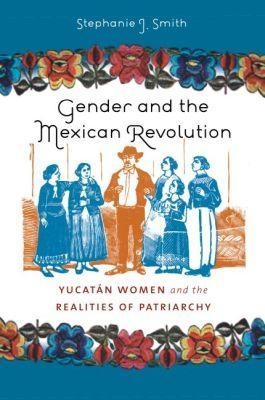
Gender and the Mexican Revolution
Yucatán Women and the Realities of Patriarchy
Seiten
2009
|
New edition
The University of North Carolina Press (Verlag)
978-0-8078-5953-7 (ISBN)
The University of North Carolina Press (Verlag)
978-0-8078-5953-7 (ISBN)
The state of Yucatan is commonly considered to have been a hotbed of radical feminism during the Mexican Revolution. Challenging this romanticized view, this book examines the revolutionary reforms designed to break women's ties to tradition and religion, as well as the ways in which women shaped these developments.
Women face the possibility of change and a deeply entrenched patriarchy. The state of Yucatan is commonly considered to have been a hotbed of radical feminism during the Mexican Revolution. Challenging this romanticized view, Stephanie Smith examines the revolutionary reforms designed to break women's ties to tradition and religion, as well as the ways in which women shaped these developments.Smith analyzes the various regulations introduced by Yucatan's two revolution-era governors, Salvador Alvarado and Felipe Carrillo Puerto. Like many revolutionary leaders throughout Mexico, the Yucatan policy makers professed allegiance to women's rights and socialist principles. Yet they, too, passed laws and condoned legal practices that excluded women from equal participation and reinforced their inferior status.Using court cases brought by ordinary women, including those of Mayan descent, Smith demonstrates the importance of women's agency during the Mexican Revolution. But, she says, despite the intervention of women at many levels of Yucatecan society, the rigid definition of women's social roles as strictly that of wives and mothers within the Mexican nation guaranteed that long-term, substantial gains remained out of reach for most women for years to come.
Women face the possibility of change and a deeply entrenched patriarchy. The state of Yucatan is commonly considered to have been a hotbed of radical feminism during the Mexican Revolution. Challenging this romanticized view, Stephanie Smith examines the revolutionary reforms designed to break women's ties to tradition and religion, as well as the ways in which women shaped these developments.Smith analyzes the various regulations introduced by Yucatan's two revolution-era governors, Salvador Alvarado and Felipe Carrillo Puerto. Like many revolutionary leaders throughout Mexico, the Yucatan policy makers professed allegiance to women's rights and socialist principles. Yet they, too, passed laws and condoned legal practices that excluded women from equal participation and reinforced their inferior status.Using court cases brought by ordinary women, including those of Mayan descent, Smith demonstrates the importance of women's agency during the Mexican Revolution. But, she says, despite the intervention of women at many levels of Yucatecan society, the rigid definition of women's social roles as strictly that of wives and mothers within the Mexican nation guaranteed that long-term, substantial gains remained out of reach for most women for years to come.
STEPHANIE J. SMITH is assistant professor of history at The Ohio State University.
| Erscheint lt. Verlag | 30.6.2009 |
|---|---|
| Verlagsort | Chapel Hill |
| Sprache | englisch |
| Maße | 154 x 231 mm |
| Gewicht | 458 g |
| Themenwelt | Geschichte ► Allgemeine Geschichte ► Neuzeit (bis 1918) |
| Geisteswissenschaften ► Geschichte ► Regional- / Ländergeschichte | |
| Sozialwissenschaften ► Soziologie ► Gender Studies | |
| ISBN-10 | 0-8078-5953-2 / 0807859532 |
| ISBN-13 | 978-0-8078-5953-7 / 9780807859537 |
| Zustand | Neuware |
| Informationen gemäß Produktsicherheitsverordnung (GPSR) | |
| Haben Sie eine Frage zum Produkt? |
Mehr entdecken
aus dem Bereich



aus dem Bereich
Geschichte einer wilden Handlung
Buch | Hardcover (2024)
C.H.Beck (Verlag)
CHF 47,60


