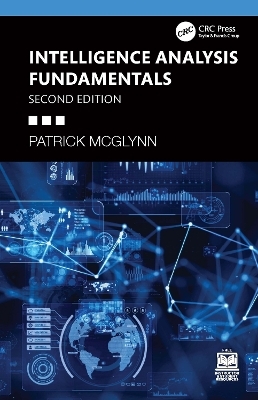
Intelligence Analysis Fundamentals
CRC Press (Verlag)
978-1-032-91174-8 (ISBN)
- Noch nicht erschienen (ca. Juli 2026)
- Versandkostenfrei
- Auch auf Rechnung
- Artikel merken
Since the first edition appeared, the global threat landscape has been reshaped by Russia’s full-scale invasion of Ukraine, the protracted Gaza war and its ripple effects across the Middle East, Houthi disruption of Red Sea shipping lanes, and the transformative role of commercial space systems—most notably SpaceX’s Starlink constellation and the emerging Starshield intelligence architecture. Simultaneously, generative AI, large-language models, and autonomous sensing platforms have begun reshaping collection, processing, and analytic judgment itself. These developments are not theoretical; they are already altering how intelligence is gathered, analyzed, and disseminated in real time. Written by a practitioner-scholar with decades of operational experience across military, law-enforcement, and corporate intelligence environments, this edition integrates declassified and open-source case studies—from the predictive failures preceding October 7, 2023, to the rapid exploitation of commercial satellite imagery in Ukraine—that illuminate both best practices and the recurring pitfalls that lead to intelligence failure. Sixteen comprehensively updated chapters follow the complete intelligence cycle, enriched with new sections on OSINT in contested environments, AI-assisted analysis and its cognitive risks, counter-deception in the information age, and structured analytic techniques proven to mitigate bias. Designed as the definitive textbook for undergraduate and graduate intelligence studies programs—and as an essential desk reference for working professionals—this second edition combines conceptual clarity with practical immediacy. End-of-chapter exercises, red-team simulations, and a companion online resource suite enable students to apply rigorous tradecraft to contemporary problems, while seasoned analysts will find fresh frameworks for navigating today’s hybrid and hyper-connected threat environment.
Intelligence Analysis Fundamentals, Second Edition is more than an update; it is a field-tested guide to mastering the craft of intelligence in an age of permanent disruption. Whether you are preparing for a career in the intelligence community, teaching the next generation of analysts, or seeking to sharpen your professional edge, this book delivers the foundational knowledge and practical wisdom required to anticipate, understand, and outthink tomorrow’s adversaries.
Patrick J. McGlynn is a retired U.S. Army Intelligence Major with over three decades of operational and analytical experience in military, interagency, and joint environments. A veteran of multiple combat tours in Iraq, Afghanistan, and broader Middle East assignments, he served in senior theater-level intelligence positions and contributed directly to strategic assessments at the Defense Intelligence Agency (DIA). His classified portfolio includes lead authorship of high-impact strategic reports on terrorism, irregular warfare, weapons of mass destruction proliferation, and information operations. A recognized authority in analytic tradecraft, Major McGlynn designed and delivered flagship training programs for the U.S. military and allied partners in Counter-IED analysis, Counterinsurgency (COIN), Collection Management, Network Targeting, Terrorism Analysis, and Information Operations. He is a graduate of the U.S. Army Command and General Staff College and holds an M.Ed. in Adult Education and Industrial Technology from Georgia Southern University. Since retiring from active duty in 2007, he has remained a leading voice in the discipline, publishing extensively in professional journals and law-enforcement reviews. His widely adopted advanced textbook, Taking Intelligence Analysis to the Next Level (CRC Press, 2022), is considered a standard reference for structured analytic techniques and critical thinking in the intelligence profession. In this second edition of Intelligence Analysis Fundamentals, Major McGlynn distills lessons from the front lines of both classified operations and today’s open-source revolution to prepare the next generation of analysts for the challenges of great-power competition, hybrid warfare, and the AI-augmented intelligence landscape.
1. Defining Intelligence Analysis 2. The Intelligence Cycle 3. Thinking About Thinking 4. Perception and Deception 5. Knowing Your Audience 6. Analytical Communication 7. Brainstorming Techniques Used to Define the Problem 8. Generate the Hypothesis 9. The Collection Process 10. The Art and Science of Analytical Tradecraft 11. Navigating Cognitive Traps in Intelligence Analysis 12. Probability Estimation and the Visualisation of Data 13. Crafting an Analytical Plan for Intelligence Operations 14. Preparing and Conducting Intelligence Briefings 15. Best Practices 16. OPSEC: Protect What Matters Most
| Erscheint lt. Verlag | 23.7.2026 |
|---|---|
| Zusatzinfo | 47 Tables, black and white; 46 Line drawings, color; 35 Line drawings, black and white; 84 Halftones, color; 9 Halftones, black and white; 130 Illustrations, color; 44 Illustrations, black and white |
| Verlagsort | London |
| Sprache | englisch |
| Maße | 156 x 234 mm |
| Gewicht | 453 g |
| Themenwelt | Geisteswissenschaften ► Psychologie ► Allgemeine Psychologie |
| Sozialwissenschaften ► Politik / Verwaltung | |
| Wirtschaft | |
| ISBN-10 | 1-032-91174-3 / 1032911743 |
| ISBN-13 | 978-1-032-91174-8 / 9781032911748 |
| Zustand | Neuware |
| Informationen gemäß Produktsicherheitsverordnung (GPSR) | |
| Haben Sie eine Frage zum Produkt? |
aus dem Bereich