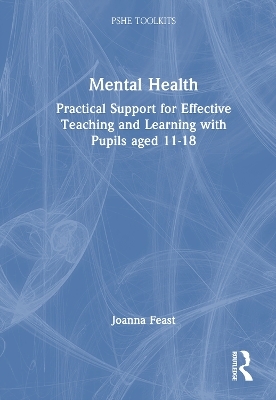
Mental Health
Routledge (Verlag)
978-1-041-00738-8 (ISBN)
- Noch nicht erschienen (ca. Juni 2026)
- Versandkostenfrei
- Auch auf Rechnung
- Artikel merken
Drawing on evidence-based approaches and psychological research, it equips teachers with tools to create safe, inclusive spaces where pupils feel heard and supported. Topics include understanding adolescent brain development, needs-led education, working ‘upstream’ and using language sensitively. The suite of detailed, inclusive and progressive PSHE lesson plans for key stages 3-5 is easy to follow, while accessible tutor time activities encourage further the promotion and protection of mental health. Staff coaching tools ensure adults develop their thinking and skills too. The book advocates best-practice, whole-school approaches that prioritise mental health as part of a thriving and safe learning environment.
Whether you're a PSHE lead, form tutor or senior leader, this resource empowers you to navigate sensitive topics with confidence, competence, clarity and care. Ultimately, it champions the idea that mental health education is not an add-on, but a vital component of preparing young people for life, emotionally, socially and academically.
Joanna Feast is an education consultant specialising in PSHE and wellbeing culture and is the founder and director of Epiphany ETC Ltd. A former mental health worker, teacher and school improvement adviser, she has worked in education and public health for over 26 years.
Chapter 1
Introduction; Getting the most out of this book; PSHE: the subject and its parameters; Universal and targeted PSHE; Knowledge and understanding, skills, attitudes and values; Health Education; Why is health education important in the context of learning? ; Healthy or healthier? ; What is mental health? ; Defining mental health; Mental health and learning; Mental health and brain development; Understanding and meeting needs for mental health; Maslow’s theory of need; Taking an evidence-based approach to mental health and PSHE; An evidence-based approach to PSHE; Establishing a safe and positive PSHE learning environment; Effective teaching and learning in PSHE, according to the evidence; External contributors in PSHE; PSHE and assemblies; Using evidence and guidance in PSHE; Guidance to set the scene; The Public Health approach – working ‘upstream’; What is the longer-term impact of working upstream? ; Viewing life through a pupil lens; Values in PSHE; Different levels of prior knowledge; A whole-school approach to mental health; What is involved in a whole-school approach to mental health? ; From the macro to the micro; What makes up the macro? ; What’s involved in the micro? ; Regulation; The window of tolerance; What can help when someone is outside the window of tolerance? ; Window of tolerance and mental health; Bringing it together; Emotional literacy, PSHE and mental health; What are the steps to building emotional literacy? ; Language and mental health: ‘Mad’ headlines; Trauma-sensitive language; ‘We were never meant to do it alone’; Your way of being; Commonalities and individualities; Health-related behaviour change; Why might we need to re-think health-related behaviour?; Explaining health-related behaviour in children; Explaining children’s behaviour in terms of trauma; Theories of behaviour change; The Stages of Behaviour Change (Transtheoretical Model); The Locus of Control Theory; Links to universal and targeted PSHE; Teaching around and about mental health; Understanding the ‘micro’ of mental health and how this translates to the PSHE classroom; How does this translate to the PSHE classroom? ; Sink or swim? ; Mental health for staff and the wider school community; How can adults better care for their mental health? ; Using a coaching model to support better mental health; Sources of support for adult mental health concerns
Chapter 2
Effective teaching and learning in PSHE; Setting the scene for effective teaching and learning in PSHE; What does effective PSHE look like?; Who? What? When? Where? How? ; Distancing techniques; Examples of distancing techniques; Reframed language and questions (and what not to say); Answering questions from pupils; Engagement, not entertainment; Eliciting pupil opinion; Inclusivity of content; Inclusivity of language; Assessment in PSHE; Safeguarding; Work alongside parents/carers; Signposting for teachers’ continuing professional development (CPD)
Lesson plans
Age 11-14
The connection between mind and body
Mental health and my emotions
Keeping myself safe and promoting mental health
Change and mental health
Being connected to myself and to others
Skills for life – promoting and protecting my mental health
Age 14-16
The language of mental health and emotions (emotional literacy)
Recognising and managing the early signs of mental illness
How mental illness can affect people and how to promote mental health
The effects of our actions on our own and others’ mental health
Mental health and identity
Mental health and life events
Age 16-18
Understanding health-related behaviour and mental health
Reframing the language of mental health
Relationships and mental health
Mental health, work and money
Managing mental health during change
Mental health: now and in the future
Tutor time activities
Tutor time activities for Age 11-14
Self-awareness for mental health
Practical ways to support mental health: breathing
Practical ways to support mental health: food and drink
Practical ways to support mental health: movement and physical activity
Practical ways to support mental health: positive affirmations
Practical ways to support mental health: sleep
Tutor time activities for Age 14-16
Self-awareness for mental health
Practical ways to support mental health: breathing
Practical ways to support mental health: food and drink
Practical ways to support mental health: movement and physical activity
Practical ways to support mental health: positive affirmations
Practical ways to support mental health: sleep
Tutor time activities for Age 16-18
Self-awareness for mental health
Practical ways to support mental health: breathing
Practical ways to support mental health: food and drink
Practical ways to support mental health: movement and physical activity
Practical ways to support mental health: positive affirmations
Practical ways to support mental health: sleep
Appendix 1: Using External Contributors Effectively and Safely
| Erscheint lt. Verlag | 17.6.2026 |
|---|---|
| Reihe/Serie | PSHE Toolkits |
| Zusatzinfo | 25 Tables, black and white; 10 Line drawings, black and white; 10 Illustrations, black and white |
| Verlagsort | London |
| Sprache | englisch |
| Maße | 148 x 210 mm |
| Themenwelt | Sozialwissenschaften ► Pädagogik ► Bildungstheorie |
| Sozialwissenschaften ► Pädagogik ► Schulpädagogik / Sekundarstufe I+II | |
| Sozialwissenschaften ► Pädagogik ► Sonder-, Heil- und Förderpädagogik | |
| ISBN-10 | 1-041-00738-8 / 1041007388 |
| ISBN-13 | 978-1-041-00738-8 / 9781041007388 |
| Zustand | Neuware |
| Informationen gemäß Produktsicherheitsverordnung (GPSR) | |
| Haben Sie eine Frage zum Produkt? |
aus dem Bereich