


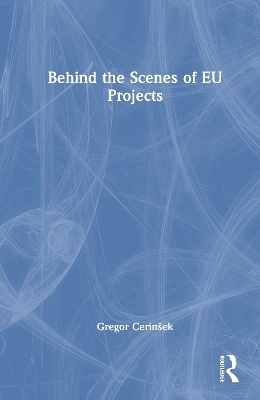
Behind the Scenes of EU Projects
Seiten
2026
Routledge (Verlag)
978-1-041-12604-1 (ISBN)
Routledge (Verlag)
978-1-041-12604-1 (ISBN)
- Noch nicht erschienen (ca. August 2026)
- Versandkostenfrei
- Auch auf Rechnung
- Artikel merken
This book offers a novel anthropological account of how European Union’s research, development, and innovation projects are imagined, enacted, and experienced. The book employs critical ethnography and discourse analysis, weaving theory with rich narrative vignettes, illuminating the human and symbolic dimensions of EU projects.
This book offers a novel anthropological account of how European Union’s research, development, and innovation projects are imagined, enacted, and experienced through actual project practice. In contrast to the majority of existing literature, which focuses on management techniques, performance metrics, or policy frameworks, this book brings into focus the overlooked everyday realities of project life: its unwritten rules, social rituals, symbolic capital, and linguistic choreography. Drawing on over fifteen years of immersive fieldwork and guided by Pierre Bourdieu’s theory of practice and Goffman’s dramaturgy, the book reveals how dominant project concepts like “innovation,” “impact,” and “sustainability” are collectively constructed and reproduced, often becoming performative illusions that serve institutional interests.
Methodologically, the book employs critical ethnography and discourse analysis, weaving theory with rich narrative vignettes (e.g., from the dramaturgy of meetings to the peculiar semiotics of email communication), illuminating the human and symbolic dimensions of EU projects. It introduces the concept of “Lingua EU”, a tribal language that distinguishes experienced practitioners from novices and sustains the illusion of coherence in a fragmented project landscape. This book contributes to contemporary debates in anthropology, critical policy analysis, and higher education studies by offering not only critique but also a deeply reflexive tool for scholars, students, and practitioners. It invites readers to rethink the cultural infrastructures of European collaboration and project work, making it uniquely valuable as both an academic intervention and a practical companion for those navigating through the EU project world.
This book offers a novel anthropological account of how European Union’s research, development, and innovation projects are imagined, enacted, and experienced through actual project practice. In contrast to the majority of existing literature, which focuses on management techniques, performance metrics, or policy frameworks, this book brings into focus the overlooked everyday realities of project life: its unwritten rules, social rituals, symbolic capital, and linguistic choreography. Drawing on over fifteen years of immersive fieldwork and guided by Pierre Bourdieu’s theory of practice and Goffman’s dramaturgy, the book reveals how dominant project concepts like “innovation,” “impact,” and “sustainability” are collectively constructed and reproduced, often becoming performative illusions that serve institutional interests.
Methodologically, the book employs critical ethnography and discourse analysis, weaving theory with rich narrative vignettes (e.g., from the dramaturgy of meetings to the peculiar semiotics of email communication), illuminating the human and symbolic dimensions of EU projects. It introduces the concept of “Lingua EU”, a tribal language that distinguishes experienced practitioners from novices and sustains the illusion of coherence in a fragmented project landscape. This book contributes to contemporary debates in anthropology, critical policy analysis, and higher education studies by offering not only critique but also a deeply reflexive tool for scholars, students, and practitioners. It invites readers to rethink the cultural infrastructures of European collaboration and project work, making it uniquely valuable as both an academic intervention and a practical companion for those navigating through the EU project world.
Dr Gregor Cerinšek is the Head of the Department for Applied Social Science Research at the Institute for Innovation and Development of the University of Ljubljana, Slovenia, and a Senior Impact Strategist at Halmstad University, Sweden. With a PhD in anthropology, his work explores the structural dynamics of European research & innovation infrastructures, particularly within EU-funded projects.
Introduction 1. The EU as a Living Project 2. Habemus Prōiectum! 3. A Feel for the Project Game 4. Capital and Strategies in the Project Field 5. The Dramaturgy of Everyday Project Life 6. Project Representations and Performances 7. Lifting the Curtain on the Project World Conclusion
| Erscheint lt. Verlag | 15.8.2026 |
|---|---|
| Zusatzinfo | 1 Tables, black and white; 11 Halftones, black and white; 11 Illustrations, black and white |
| Verlagsort | London |
| Sprache | englisch |
| Maße | 152 x 229 mm |
| Themenwelt | Sozialwissenschaften ► Ethnologie |
| Sozialwissenschaften ► Politik / Verwaltung ► Europäische / Internationale Politik | |
| Sozialwissenschaften ► Soziologie | |
| ISBN-10 | 1-041-12604-2 / 1041126042 |
| ISBN-13 | 978-1-041-12604-1 / 9781041126041 |
| Zustand | Neuware |
| Informationen gemäß Produktsicherheitsverordnung (GPSR) | |
| Haben Sie eine Frage zum Produkt? |
Mehr entdecken
aus dem Bereich


aus dem Bereich
kurze Geschichte einer langen Beziehung
Buch | Hardcover (2025)
Suhrkamp (Verlag)
CHF 36,40
Amerikas Strategie der Vorherrschaft und der Kampf um Eurasien
Buch | Softcover (2024)
NOMEN Verlag
CHF 27,95
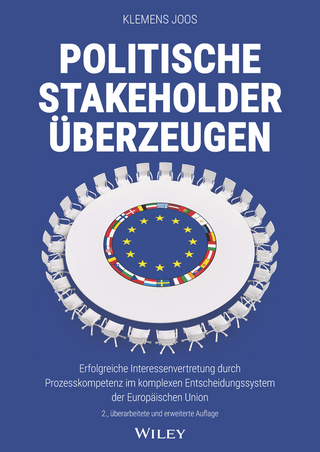
erfolgreiche Interessenvertretung durch Prozesskompetenz im komplexen …
Buch | Hardcover (2023)
Wiley-VCH (Verlag)
CHF 58,75


