


Soleil Ô
Seiten
2026
BFI Publishing (Verlag)
978-1-83902-959-2 (ISBN)
BFI Publishing (Verlag)
978-1-83902-959-2 (ISBN)
- Noch nicht erschienen (ca. September 2026)
- Portofrei ab CHF 40
- Auch auf Rechnung
- Artikel merken
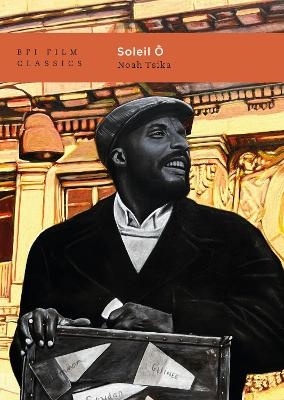
An in-depth study of Med Hondo's landmark of African cinema, Soleil Ô (1967), in the BFI Film Classics series.
Med Hondo’s debut feature, Soleil Ô (1970), follows an unnamed African immigrant as he travels to Paris in search of work and a better life. Instead, he faces unemployment, exploitation and a deep sense of isolation from French society. Told through a non-linear structure and blending surrealist and satirical elements, the film is a searing critique of racism and the broader legacies of colonialism.
Noah Tsika’s study situates Soleil Ô within its historical and political contexts, as well as within Hondo’s broader career and lifelong commitment to anti-colonial principles. He considers the film’s depiction of the modern exilic experience as a cinematic response to anti-immigrant rhetoric and nativist sentiment in France. Tsika also traces the film’s lengthy five-year production, examining Hondo’s guerrilla film-making tactics through which he staged scripted scenes on the teeming streets of Paris and captured the immediate reactions of perplexed passers-by.
In doing so, Tsika suggests that by using the devices of documentary to tell a fictional story, and the devices of fiction to document a precise, seismic moment in world history, Soleil Ô daringly extends the techniques of film-makers such as Paulin Soumanou Vieyra and Ousmane Sembene into narrative, thematic and political terrain not previously encountered in African cinemas.
Med Hondo’s debut feature, Soleil Ô (1970), follows an unnamed African immigrant as he travels to Paris in search of work and a better life. Instead, he faces unemployment, exploitation and a deep sense of isolation from French society. Told through a non-linear structure and blending surrealist and satirical elements, the film is a searing critique of racism and the broader legacies of colonialism.
Noah Tsika’s study situates Soleil Ô within its historical and political contexts, as well as within Hondo’s broader career and lifelong commitment to anti-colonial principles. He considers the film’s depiction of the modern exilic experience as a cinematic response to anti-immigrant rhetoric and nativist sentiment in France. Tsika also traces the film’s lengthy five-year production, examining Hondo’s guerrilla film-making tactics through which he staged scripted scenes on the teeming streets of Paris and captured the immediate reactions of perplexed passers-by.
In doing so, Tsika suggests that by using the devices of documentary to tell a fictional story, and the devices of fiction to document a precise, seismic moment in world history, Soleil Ô daringly extends the techniques of film-makers such as Paulin Soumanou Vieyra and Ousmane Sembene into narrative, thematic and political terrain not previously encountered in African cinemas.
Noah Tsika is Professor of Film and Media Studies at Queens College and the Graduate Center, CUNY, USA. His books include Nollywood Stars: Media and Migration in West Africa and the Diaspora (2015), Traumatic Imprints: Cinema, Military Psychiatry, and the Aftermath of War (2018), Screening the Police: Film and Law Enforcement in the United States (2021), Cinematic Independence: Constructing the Big Screen in Nigeria (2022) and African Media in an Age of Extraction: Nollywood Geographies (2025). He has published widely on the representational, infrastructural and corporate relationships between Hollywood and Nollywood.
Introduction
1. Migrations
2. Theorisations
3. Soleil Ô as Essay Film
4. Reverberations
5. Restorations
Notes
Credits
| Erscheint lt. Verlag | 3.9.2026 |
|---|---|
| Reihe/Serie | BFI Film Classics |
| Zusatzinfo | 60 bw illus |
| Sprache | englisch |
| Maße | 135 x 190 mm |
| Themenwelt | Kunst / Musik / Theater ► Film / TV |
| Sozialwissenschaften ► Kommunikation / Medien ► Medienwissenschaft | |
| ISBN-10 | 1-83902-959-5 / 1839029595 |
| ISBN-13 | 978-1-83902-959-2 / 9781839029592 |
| Zustand | Neuware |
| Informationen gemäß Produktsicherheitsverordnung (GPSR) | |
| Haben Sie eine Frage zum Produkt? |
Mehr entdecken
aus dem Bereich


aus dem Bereich


