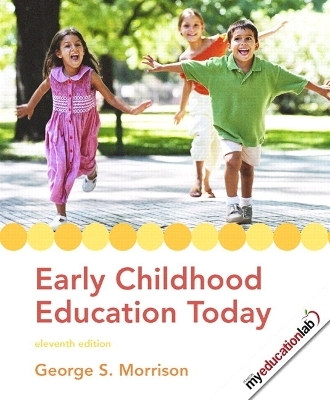
Early Childhood Education Today
Pearson (Verlag)
9780135010525 (ISBN)
- Titel erscheint in neuer Auflage
- Artikel merken
Seven core themes are integrated throughout the text and provide a framework for understanding and implementing these practical and applied strategies to become an effective teacher. The seven themes are:
· Professionalism in Practice
· Theory into Practice
· Diversity
· Family-Centered, Community-Based Practice
· Timeliness
· Developmentally Appropriate Practice
· Technology Applied to Teaching and Learning
The new edition also continues its strong coverage of development in the age-specific chapters (chapters 9-12,) as well as the strongest coverage of special needs on the market.
George S. Morrison is professor of early childhood education at the University of North Texas where he teaches child development and early childhood classes to undergraduate and graduate students. He is an experienced teacher and was a principal in the public schools. Professor Morrison's accomplishments include both a Distinguished Academic Service Award from the Pennsylvania Department of Education and Outstanding Service and Teaching Awards from Florida International University. His books include Early Childhood Education Today, 11th Edition; Fundamentals of Early Childhood Education, 5th Edition; and Teaching in America, 5th Edition. Professor Morrison has also written books about the education and development of infants, toddlers, and preschoolers; child development; the contemporary curriculum; and parent/family/community involvement. Dr. Morrison is a popular author, speaker, and presenter. He is senior contributing editor for the Public School Montessorian and also writes for a wide range of publications. His speaking engagements and presentations forcus on the future of early childhood education, the changing roles of early childhood teachers, the influence of contemporary educational reforms on early childhood education, and the application of best practices to faith-based programs. Dr. Morrison is co-director of the Center for Success For Life Thailand (SFLT) at Kasetsart University, Bangkok, Tahiland. The center develops curricula and conducts teacher training designed to reform early childhood practices. He also lectures extensively on early childhood practices in Thailand, Taiwan, and China.
(Note: Each chapter contains the features Linking to Learning, Activities for Professional Development, and Readings for Further Enrichment)
PART 1 EARLY CHILDHOOD EDUCATION AND PROFESSIONAL DEVELOPMENT
1. You and Early Childhood Education: What Does It Mean to Be a Professional?
What Is a Professional?
The Five Goals of Professionalism
Professional Dispositions
What Are New Roles for Early Childhood Professional Today?
2. Current Issues and Public Policy: Contemporary Influences on Children and Families
Public Policy and Current Issues
Family Issues
Social Issues
Policy and Programming Trends
Accommodating Diverse Learners
3. Observing and Assessing Young Children: Effective Teaching Through Appropriate Evaluation
What Is Assessment?
Assessment for School Readiness
What is Observation?
What Are Critical Assessment Issues?
Accommodating Diverse Learners
PART 2 FOUNDATIONS: HISTORY AND THEORIES
4. The Past and the Present: Prologue to the Future
Why Is the Past Important?
Historical Figures and Their Influence on Early Childhood Education
The Beginnings of Kindergarten in the United States
Twentieth Century Early Childhood Educators
From Luther to the Present: The Essentials of Good Educational Practices
Views of Children Through the Ages
Accommodating Diverse Learners
Child-Centered Education
5. Theories Applied to Teaching and Learning: Foundations for Practice
Theories of Learning and Development
Piaget's Theory of Learning
Lev Vygotsky and Sociocultural Theory
Abraham Maslow and Self-Actualization Theory
Erik Erikson
Howard Gardner
Urie Bromfenbrenner and Ecological Theory
Accommodating Diverse Learners
New Directions in Cognitive Development
PART 3 PROGRAMS AND SERVICES FOR CHILDREN AND FAMILIES
6. Early Childhood Programs: Applying Theories to Practice
The Growing Demand for Quality Early Childhood Programs
Principles of the Montessori Method
The Montessori Method in Action
High/Scope: A Constructivist Approach
Reggio Emilia
Waldorf Education: Head, Hands, and Heart
7. Child Care: Meeting the Needs of Children, Parents, and Families
The World of Child Care
What Is Child Care?
Types of Child Care Programs
What Constitutes Quality Care and Education?
The Effects of Care and Education on Children
8. The Federal Government: Supporting Children's Success
Federal Legislation and Early Childhood
Head Start Programs
Other Federal Initiatives
Accommodating Diverse Learners
PART FOUR THE NEW WORLD OF EARLY CHILDHOOD EDUCATION
9. Infants and Toddlers: Foundation Years for Learning
What Are Infants and Toddlers Like?
Young Brains: A Primer
Motor Development
Intellectual Development
Language Development
Psychosocial and Emotional Development
Infant and Toddler Mental Health
Quality Infant and Toddler Programs
Preparing Environments to Support Infant and Toddler Development
Accommodating Diverse Learners
10. The Preschool Years: Getting Ready for School and Life
Why Are Preschools So Popular?
What Are Preschoolers Like?
School Readiness: Who Gets Ready for Whom?
Play and the Preschool Curriculum
The New Preschool Curriculum: Standards and Goals
Helping Preschoolers Make Successful Transitions
Accommodating Diverse Learners
Preschool Issues
11. Kindergarten Education
Who Attends Kindergarten?
Readiness and Placement of Kindergarten Children
The Changing Kindergarten
What Should Kindergarten Be Like?
Environments for Kindergarteners
Curriculum in Kindergarten
Kindergarten Issues
Accommodating Diverse Learners
The Future of Kindergarten
12. The Primary Grades
Teaching in Grades One to Three
What Are Children in Grades One to Three Like?
Primary Education Today
Looking to the Future
PART 5 MEETING THE SPECIAL NEEDS OF YOUNG CHILDREN
13. Technology and Young Children
The Computer Generation
Equity in Technology
Technology and Special Childhood Populations
Implementing Technology in Early Childhood Education Programs
Parents and Technology
The Technological Future and You
14. Guiding Children
The Importance of Guiding Children's Behavior
A Social Constructivist Approach to Guiding Children
Teacher Effectiveness Training
Nine Keys to Guiding Behavior
Development of Autonomous Behavior
Physical Punishment
Trends in Guiding Children
15. Multiculturalism
Multicultural Awareness
Multicultural Infusion
Bilingual Education Programs
Trends in Multicultural Education
16. Children with Special Needs
Children with Disabilities
Gifted and Talented Children
Abused and Neglected Children
17. Parent, Family, and Community Involvement
Changes in Schooling
Changes in Families
Education as a Family Affair
Guidelines for Involving Parents and Families
Community Involvement and More
Appendix A NAEYC Code of Ethical Conduct and Statement of Commitment
Appendix B NAEYC Guidelines for Developmentally Appropriate Practice in Early Childhood Programs
Appendix C Time Line: The History of Early Childhood Education
| Erscheint lt. Verlag | 17.4.2008 |
|---|---|
| Sprache | englisch |
| Maße | 262 x 206 mm |
| Gewicht | 1266 g |
| Themenwelt | Sozialwissenschaften ► Pädagogik |
| ISBN-13 | 9780135010525 / 9780135010525 |
| Zustand | Neuware |
| Informationen gemäß Produktsicherheitsverordnung (GPSR) | |
| Haben Sie eine Frage zum Produkt? |
aus dem Bereich