


Brain-Based Learning
Corwin Press Inc (Verlag)
978-1-4129-6256-8 (ISBN)
- Titel erscheint in neuer Auflage
- Artikel merken
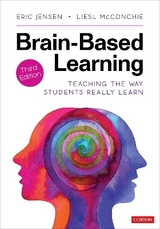
In this second edition of Brain Based Learning: The New Paradigm of Teaching, educator and brain researcher Eric Jensen offers a learning approach that is closely aligned with how the brain naturally learns.
Based on empirical brain research from the disciplines of neuroscience, biology, and psychology, Jensen′s text explains how the relationship between learning and the brain can impact emotions, patterns, gender, meaningfulness, environments, body rhythms, attitudes, enrichment, and assessment, and how it influences the effects of stress and trauma.
The book′s powerful information suggests ways for transforming schools into complete learning organizations by providing students with an optimal learning environment. Implementation of brain-based schooling has proven to increase graduation rates, decrease learning difficulties and discipline problems, and create conditions for the love of learning to flourish.
Eric Jensen is a former teacher who grew up in San Diego, California. With a Ph.D. in Human Development, he synthesizes brain research and develops practical applications for educators. He is listed among the top 30 educators in the world at GlobalGurus.org. Dr. Jensen has authored over 30 books, including Different Brains, Different Learners, Teaching with the Brain in Mind, Turnaround Tools for the Teenage Brain, Teaching with Poverty in Mind, Engaging Students with Poverty in Mind, and Poor Students Rich Students. Dr. Jensen co-founded an academic enrichment program held in 14 countries with over 75,000 graduates. He is a member of the invitation-only Society for Neuroscience and the President’s Club at Salk Institute of Biological Studies. Dr. Jensen provides conference speaking and trainings that can be found at jensenlearning.com. Or, contact: eric@jensenlearning.com.
Preface
Acknowledgments
About the Author
Part 1. Fundamentals of Brain-Based Learning
1. What Is Brain-Based Learning?
2. How Your Student′s Brain Learns
3. Brain Dominance in Learning
4. Rhythms of the Brain
Part 2. Physiological Effects on Learning
5. Biological Differences in Learning
6. The Impact of Physical Movement on the Brain
7. Stress and Threat
Part 3. Sensory Contributions to Learning
8. The Role of Sight in Learning
9. The Role of Touch in Learning
10. The Role of Taste in Learning
11. The Roles of Smell and Acoustics in Learning
12. The Role of Emotions in Learning
Part 4. Neuroscientific Perspective on Teaching and Learning
13. Teacher Communication
14. The Nonconscious Learning Climate
15. Motivation and Rewards
16. Attention and Survival Value
17. Teaching How to Think
18. Memory and Creating Patterns of Meaning
19. Meaning Making
Part 5. Brain-Compatible Classrooms
20. Enriching the Brain
21. Curriculum in a Brain-Compatible Classroom
22. Assessing With the Brain in Mind
23. Brain-Based Reform
References
Index
| Erscheint lt. Verlag | 12.8.2008 |
|---|---|
| Verlagsort | Thousand Oaks |
| Sprache | englisch |
| Maße | 177 x 254 mm |
| Gewicht | 1000 g |
| Themenwelt | Sozialwissenschaften ► Pädagogik |
| ISBN-10 | 1-4129-6256-0 / 1412962560 |
| ISBN-13 | 978-1-4129-6256-8 / 9781412962568 |
| Zustand | Neuware |
| Informationen gemäß Produktsicherheitsverordnung (GPSR) | |
| Haben Sie eine Frage zum Produkt? |
aus dem Bereich


