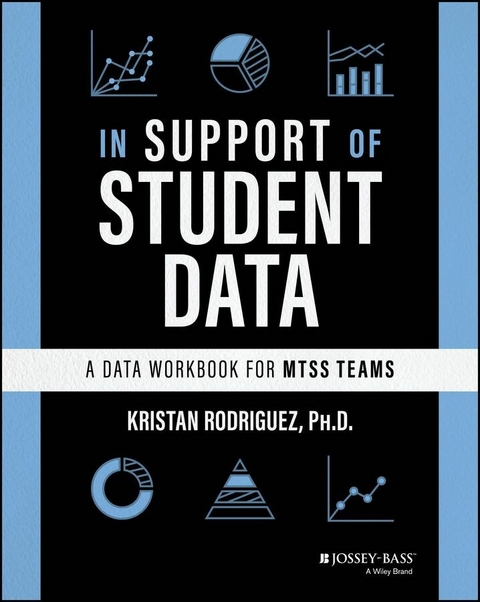
In Support of Student Data (eBook)
363 Seiten
Jossey-Bass (Verlag)
978-1-394-25577-1 (ISBN)
A hands-on workbook that empowers educators to create a more effective and inclusive learning environment
In Support of Student Data: A Data Workbook for MTSS Teams is a practical tool that student support teams can use every day to make meaningful, data-driven decisions. The first section of this book provides a framework and protocols for using data to support MTSS and drive systemic change, helping you align resources such as schedules, staffing, and materials to function effectively within a robust tiered system of support. The second section was built to replace antiquated and reactive pre-referral processes. This workbook walks teams through a clear, step-by-step approach to identifying student needs early and matching them with the right level of support.
After many successful years of supporting individual districts and schools, Dr. Rodriguez introduces her MTSS² framework to the world. The workbook helps educators move away from gatekeeping systems, where students have to fail or meet rigid criteria before receiving help, toward responsive, evidence-based solutions where real-time data drives immediate tiered support. Whether you're designing Tier 2 interventions, reviewing screening data, or crafting individualized student support plans, this guide provides ready-to-use tools.
This workbook includes:
- A modern process for student support teams to collaboratively review data and define timely, tiered supports
- Protocols that guide each stage of intervention planning
- Templates, checklists, and visual tools that simplify decision-making and streamline team meetings
- Real-world examples, analogies, and case studies that make MTSS accessible and actionable
Designed for use by MTSS teams, In Support of Student Data helps organizations shift from using outdated pre-referral systems to a flexible, student-first approach. It's the essential playbook for schools looking to catch students before they fall and build systems that work for all learners.
Dr. Kristan Rodriguez is a nationally recognized educational expert, best-selling author, and award-winning educator, featured on TV, radio, podcasts, and in leading publications. A former teacher, principal, and superintendent, she now consults nationally on MTSS, Special Education, and Universal Design for Learning. As the creator of the MTSS² Framework?, her innovative approach has led to transformative, system-wide change and international recognition.
A hands-on workbook that empowers educators to create a more effective and inclusive learning environment In Support of Student Data: A Data Workbook for MTSS Teams is a practical tool that student support teams can use every day to make meaningful, data-driven decisions. The first section of this book provides a framework and protocols for using data to support MTSS and drive systemic change, helping you align resources such as schedules, staffing, and materials to function effectively within a robust tiered system of support. The second section was built to replace antiquated and reactive pre-referral processes. This workbook walks teams through a clear, step-by-step approach to identifying student needs early and matching them with the right level of support. After many successful years of supporting individual districts and schools, Dr. Rodriguez introduces her MTSS framework to the world. The workbook helps educators move away from gatekeeping systems, where students have to fail or meet rigid criteria before receiving help, toward responsive, evidence-based solutions where real-time data drives immediate tiered support. Whether you're designing Tier 2 interventions, reviewing screening data, or crafting individualized student support plans, this guide provides ready-to-use tools. This workbook includes: A modern process for student support teams to collaboratively review data and define timely, tiered supports Protocols that guide each stage of intervention planning Templates, checklists, and visual tools that simplify decision-making and streamline team meetings Real-world examples, analogies, and case studies that make MTSS accessible and actionable Designed for use by MTSS teams, In Support of Student Data helps organizations shift from using outdated pre-referral systems to a flexible, student-first approach. It s the essential playbook for schools looking to catch students before they fall and build systems that work for all learners.
PROLOGUE
The purpose of this workbook is to guide school and district teams through the intentional design, implementation, and continuous improvement of a multi‐tiered systems of support (MTSS), specifically through the lens of the MTSS² Framework™, a student‐centered, data‐driven approach to ensuring every learner receives the right support at the right time. All references to MTSS² shall be understood as related to the MTSS² Framework™, with all trademark rights inherent within.
The workbook offers an actionable roadmap that helps leadership teams build sustainable systems that respond to real student needs with clarity, compassion, and coherence. Rooted in the most current research and informed by real‐world implementation, this resource is designed to help teams:
- Replace outdated prereferral practices with a proactive, strengths‐based model that centers student growth
- Clarify tiered structures so that Tier 1, Tier 2A, Tier 2B, Tier 2E, and Tier 3 supports are accessible, intentional, and effectively delivered
- Build centralized data systems that help schools move from isolated data points to actionable insight
- Develop systems grids and team routines that ensure support structures are clearly defined and consistently implemented
- Use data to guide placement, planning, and progress monitoring by turning insight into strategy at every tier
- Design intervention plans that are individualized, aligned with need, and embedded in a culture of follow‐through and accountability
- Foster collaborative team structures that distribute ownership and create a shared language for student support
Every Student Succeeds Act (ESSA, 2015) defines a multi‐tiered system of support (MTSS) as “a comprehensive continuum of evidence‐based, systemic practices to support a rapid response to students' needs, with regular observation to facilitate data‐based instructional decision making.”
What Is MTSS and How Does MTSS2 Support It?
While MTSS is not simply a prereferral process, MTSS² is the component within MTSS that focuses specifically on how schools provide individualized support to students who need more than Tier 1 instruction and support.
MTSS helps schools
- Replace outdated prereferral processes with a student‐centered, data‐informed model
- Provide a clear, structured process for delivering tiered support
- Ensure that interventions are matched to student needs and monitored regularly
- Coordinate across roles (general educators, specialists, interventionists) using shared plans and data
- Maintain fluid movement between tiers based on progress, not labels
- Document support with integrity, without gatekeeping access to supports
- Ensure that families' rights under IDEA and Section 504 are not delayed by MTSS²
Who Is This Workbook For?
- District administrators and school committee/school board members: This workbook will help you align your practices and policies and help you target funding to support MTSS.
- School principals and leadership teams: This workbook will help you operationalize MTSS within your building.
- MTSS coordinators and data teams: This workbook will help you manage a cohesive data system to support systemic and individual intervention.
- Curriculum and PD directors: This workbook will guide the MTSS‐based PD needs.
- Individual instructors: This workbook will provide a roadmap for individual student intervention plans.
Core MTSS Implementation Team
This team drives the systems‐level work from Chapter 1 through Chapter 3.
| Role | Typical Members | Responsibilities |
|---|
| Team lead | Principal or AP | Oversees process, ensures time and resources are allocated |
| MTSS coordinator or data lead | Instructional coach, department head, or assistant principal | Manages protocols, organizes meetings, keeps data flowing |
| General education teachers | At least one per grade level or department | Brings classroom‐level instructional data and perspective |
| Interventionist/specialist | Reading/math specialists, tutors, interventionists, counselors, etc. | Offers expertise in intervention design and monitoring |
| Support services representative | Representative special education staff, related service providers, multilingual learner staff, etc. | Ensures alignment with IDEA, inclusion, and access |
| Family/community liaison (optional) | Family engagement coordinator | Elevates stakeholder voices and promotes transparency |
Associated Subteams
- Grade‐level or department data teams: Meets regularly to review student‐level data and implement Tier 1 supports
- MTSS² teams: Develops Tier 2 and 3 intervention plans, along with associated progress monitoring
- Leadership team: Integrates this work into improvement plans, budgeting processes, scheduling, staffing, and materials acquisition
Result of Completing the Workbook
By completing this workbook
- Your MTSS² infrastructure will be codified, from data systems to intervention plans.
- Your teams will operate efficiently, using shared norms, language, and protocols.
- You'll ensure every student has access to timely, targeted, and responsive support.
- You'll have an aligned system that removes barriers, supports educators, and responds to student needs in real time.
How to Use This Workbook
This workbook is designed to be a practical, step‐by‐step guide for implementing a robust multi‐tiered system of support (MTSS), with a particular focus on how schools can replace outdated pre‐referral processes through the use of MTSS².
It focuses on the practical application by providing:
- Embedded protocols you can use with your team tomorrow
- Real‐world examples and analogies to build shared understanding
- Templates and tools built directly into each chapter with no need to flip back and forth
- Opportunities to reflect, plan, collaborate, and monitor your progress
Key Note
This book uses examples and samples of resources throughout. The inclusion of any curriculum, assessment, etc., does not constitute an endorsement of the program or company. Their inclusion in the workbook is for illustrative purposes and does not serve as recommendations for districts or schools' use. How they are used within the book is drawn from how some schools have or may use them and may not be the only way they can be utilized. It also represents the materials available at the time of writing the workbook. The samples are not all‐inclusive, and the absence of a resource from this book does not necessarily mean it is not appropriate for use.
Data Privacy and FERPA
All data‐sharing during team meetings must comply with FERPA and local confidentiality policies.
Legal Disclaimer
This publication is designed as an educational resource and guide to implementing the MTSS² framework and is not intended as legal advice. The information contained herein should not substitute for professional consultation with qualified legal advisors. All organizations must conduct their own due diligence to ensure their MTSS² processes and practices fully comply with applicable district policies, state regulations, and federal laws, including but not limited to the Individuals with Disabilities Education Act (IDEA), Section 504 of the Rehabilitation Act, and the Every Student Succeeds Act (ESSA). Readers should regularly consult with their organization's legal counsel or student support departments to verify compliance and stay informed of current law, regulations, and policy.
A Note on Special Education and Least Restrictive Environment (LRE)
MTSS² is not a substitute for a special education referral or evaluation, nor can it be used to delay or deny a student's access to those services. Instead, MTSS² can provide a wealth of data should a student be referred for evaluation. As schools design and refine data systems to support MTSS, it is essential to ensure that all practices uphold a student's right to be educated in the least restrictive environment (LRE). This means that, to the maximum extent appropriate, students with disabilities are educated alongside their nondisabled peers. When implemented effectively, MTSS² helps ensure that removal from the general education classroom occurs only when necessary, based on data‐informed decisions and in compliance with federal and state special education law.
Table 0.1 Key Frameworks, Laws, and References
...| Table 0.1 summarizes the key frameworks, laws, and resources referenced throughout the MTSS² workbook. |
|---|
| Erscheint lt. Verlag | 5.11.2025 |
|---|---|
| Sprache | englisch |
| Themenwelt | Sozialwissenschaften ► Pädagogik ► Bildungstheorie |
| Schlagworte | data analysis education • data-driven curriculum • Data-Driven Decision Making • data-driven education • education data • K-12 administration • MTSS • principal data • school data • School Data Teams • student data analysis • superintendent data |
| ISBN-10 | 1-394-25577-2 / 1394255772 |
| ISBN-13 | 978-1-394-25577-1 / 9781394255771 |
| Informationen gemäß Produktsicherheitsverordnung (GPSR) | |
| Haben Sie eine Frage zum Produkt? |
 EPUB (Adobe DRM)
Kopierschutz: Adobe-DRM
Adobe-DRM ist ein Kopierschutz, der das eBook vor Mißbrauch schützen soll. Dabei wird das eBook bereits beim Download auf Ihre persönliche Adobe-ID autorisiert. Lesen können Sie das eBook dann nur auf den Geräten, welche ebenfalls auf Ihre Adobe-ID registriert sind.
Details zum Adobe-DRM
Dateiformat: EPUB (Electronic Publication)
EPUB ist ein offener Standard für eBooks und eignet sich besonders zur Darstellung von Belletristik und Sachbüchern. Der Fließtext wird dynamisch an die Display- und Schriftgröße angepasst. Auch für mobile Lesegeräte ist EPUB daher gut geeignet.
Systemvoraussetzungen:
PC/Mac: Mit einem PC oder Mac können Sie dieses eBook lesen. Sie benötigen eine
eReader: Dieses eBook kann mit (fast) allen eBook-Readern gelesen werden. Mit dem amazon-Kindle ist es aber nicht kompatibel.
Smartphone/Tablet: Egal ob Apple oder Android, dieses eBook können Sie lesen. Sie benötigen eine
Geräteliste und zusätzliche Hinweise
Buying eBooks from abroad
For tax law reasons we can sell eBooks just within Germany and Switzerland. Regrettably we cannot fulfill eBook-orders from other countries.
aus dem Bereich